

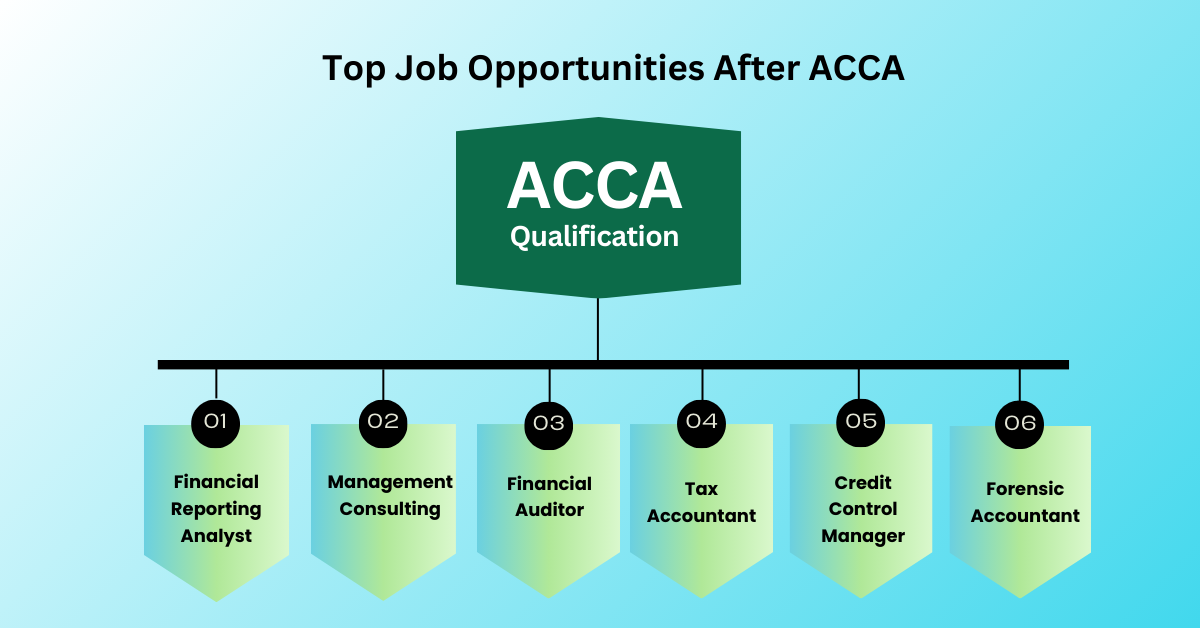
The financial world used to view professional certifications as simple checkboxes. You studied, you sat for an exam, you received a paper, and you were “done.” However, the landscape has shifted. Modern hiring leads view the credential as much more than a certificate. When they define what ACCA is, they see a lifelong support network that carries a trainee from their very first day at work all the way to a board-level role.
This shift marks the transition from a traditional qualification to a dynamic career framework. A qualification has a finish line; a framework provides a continuous structure for growth. For students and professionals, recognizing this difference changes how they approach their studies and their long-term professional identity.
Beyond the Ledger: A Multidimensional Approach
Traditional accounting programs stay within the lines of tax rules and ledger entries. These skills are mandatory, but they represent a tiny slice of a CFO’s daily reality. The ACCA course subjects aim for a broader target. They link technical math to the demands of executive leadership.
When a student begins their journey, they start with the basics of management accounting and financial reporting. As they progress, the focus moves toward strategic business reporting and advanced financial management. This progression mirrors the actual trajectory of a corporate career. It isn’t just a collection of random topics; it is a ladder designed to build a specific type of professional persona.
The Shift Toward Skills-Based Competency
In the past, a certificate proved you knew a set of facts. In the current market, facts are available via a quick search. Employers now pay for judgment. The modern ACCA structure prioritizes “Professional Scepticism” and “Ethical Leadership” as core pillars. This is why the industry is starting to see the credential as a framework for behavior rather than just a test of memory.
A career framework offers a set of standards that stay with a professional for decades. Even years after passing the last exam, a member remains part of a global network that mandates continuous professional development. This ensures that their skills don’t gather dust. When someone asks what is ACCA in the context of a 20-year career, the answer is a commitment to staying relevant in a world of changing regulations and digital disruption.
Adapting to the Digital Economy
Technology has rewritten the job descriptions of every finance team on the planet. Automation handles the data entry, leaving humans to handle the interpretation. The ACCA course subjects have adapted to this reality by integrating data analytics and digital proficiency into the curriculum.
By including these modern elements, the framework prepares individuals to work alongside AI and big data tools. It stops being about “man vs. machine” and starts being about how a professional guides technology to produce better business outcomes. This forward-looking stance is a hallmark of a career framework. It anticipates where the industry is heading and prepares the workforce to meet it there.
Global Mobility as a Structural Benefit
One of the biggest hurdles in a finance career is the “border barrier.” Most local degrees lose their punch once you cross a national boundary. Because this framework is built on International Financial Reporting Standards (IFRS), it functions as a global passport.
A professional trained in London can move to Singapore or Dubai without retraining. This portability is a key feature of a framework. It provides a consistent professional language that works across cultures. The ACCA course subjects are designed to be universally applicable, ensuring that the logic of business remains the same whether you are in a boardroom in Mumbai or New York.
Networking and Lifelong Mentorship
A qualification is often a solitary pursuit. You study, you pass, you leave. A framework, conversely, introduces you to a community. The ACCA provides access to a massive global network of peers and mentors. This community aspect is perhaps the most undervalued part of the entire experience.
Career frameworks thrive on this connectivity. Having access to job boards, regional events, and technical forums means that a professional is never truly working in a vacuum. This support system helps individuals navigate career pivots, from auditing into consultancy or from corporate finance into entrepreneurship.
The Role of Ethics in Long-term Growth
If you look closely at what is ACCA today, you will find an obsession with ethics. This isn’t just about following the law; it’s about building a reputation for integrity. In a globalized economy where trust is the primary currency, a framework that enforces high ethical standards is a massive asset.
Managers know that a person who has come through this system has been repeatedly tested on their ability to make the right choice, even when it is the difficult one. This creates a foundation for a career that is resilient to scandals and built on a solid reputation. The ethical framework acts as a safety rail throughout a person’s professional life.
Navigating the Practical Experience Requirement
A major reason why this is a framework rather than a certificate is the Practical Experience Requirement (PER). You cannot become a member simply by being good at exams. You must prove your competence in a real workplace for thirty-six months.
This requirement forces a marriage between theory and practice. The ACCA course subjects provide the mental map, but the PER provides the terrain. This dual approach ensures that when a professional finally earns their letters, they aren’t just an academic; they are a seasoned operator. This practical grounding is what makes the credential so respected by recruiters who need people ready to perform from day one.
A Blueprint for the Future Leader
Ultimately, the transition from a qualification to a career framework is about longevity. A qualification gets you the job; a framework helps you keep it and grow within it. By focusing on a wide array of ACCA course subjects, the system builds a well-rounded business leader.Whether you are untangling tax laws or steering a cross-border acquisition, these core principles guide your decisions. You gain a logical way to solve problems, a globally recognized standard, and a network of peers to support your growth. Zell Education encourages candidates to see this journey as a permanent professional foundation, which leads to a far more resilient career than simply chasing a certificate.
