

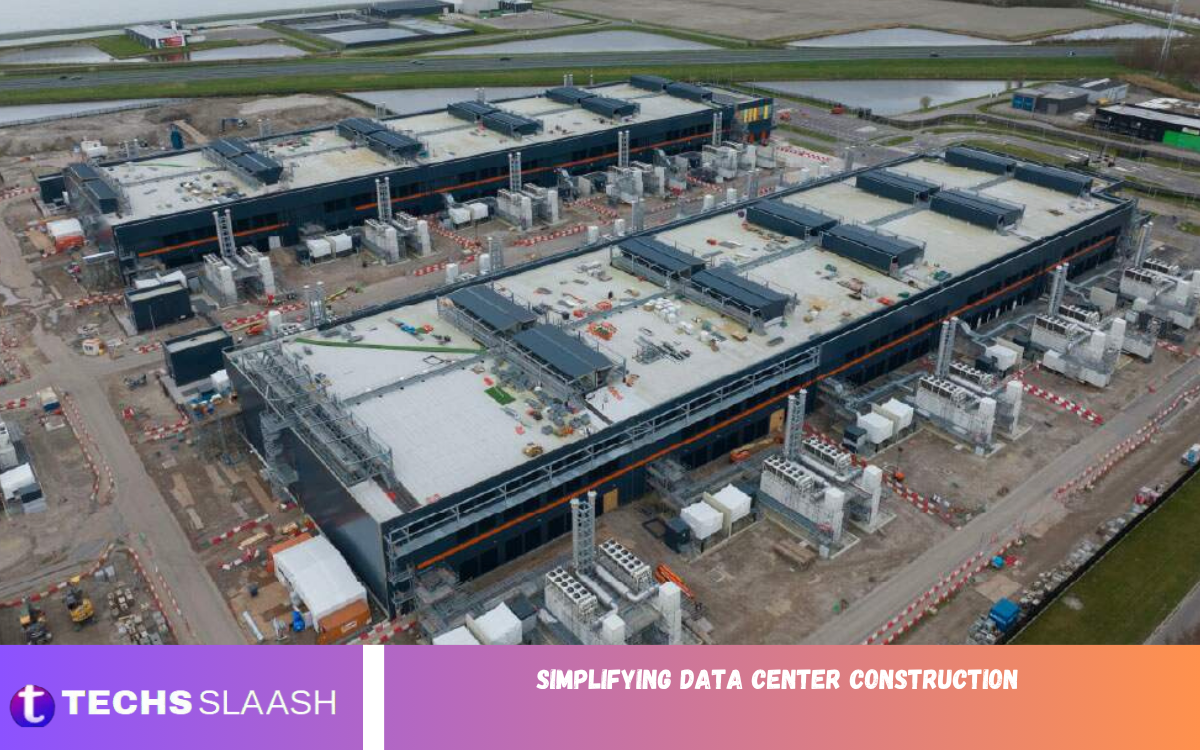
Data centers are the backbone of the digital world, supporting cloud computing, artificial intelligence, online services, and the ever-growing demand for data storage. As organizations expand their digital operations, the need for faster, more efficient, and cost-effective data center construction has become increasingly important.
Modern approaches focus on standardized designs, modular construction methods, and advanced project management techniques to streamline the entire development process. By adopting prefabricated components and scalable infrastructure solutions, companies can significantly reduce construction time, minimize costs, and improve overall quality.
The Growing Importance of Modern Data Centers
Data centers serve as the foundation of contemporary business operations. They support mission-critical applications, cloud services, data analytics platforms, cybersecurity systems, and global communication networks. The increasing dependence on digital infrastructure requires facilities capable of handling higher workloads while maintaining reliability and energy efficiency.
Organizations across industries face mounting pressure to expand their technological capabilities without delays or cost escalation. Traditional construction methods often struggle to meet these expectations because they rely on customized designs and fragmented workflows. Simplifying Data Center Construction addresses these challenges by creating repeatable processes that improve consistency and reduce uncertainty.
Challenges in Traditional Data Center Construction
Conventional data center development involves numerous stakeholders, including architects, engineers, contractors, technology vendors, and regulatory agencies. Coordinating these parties can become complicated, particularly when projects involve customized specifications and evolving requirements.
Several common challenges affect traditional projects:
Extended Project Timelines
Large-scale facilities frequently require years of planning and execution. Delays in permitting, procurement, or construction can postpone operational readiness and increase financial burdens.
Rising Construction Costs
Material expenses, labor shortages, and supply chain disruptions contribute to significant budget pressures. Custom-built systems often require specialized components that further increase expenditures.
Complex Infrastructure Integration
Modern data centers must incorporate electrical systems, cooling technologies, networking equipment, security mechanisms, and sustainability measures. Integrating these elements effectively demands extensive coordination and technical expertise.
Sustainability Requirements
Environmental regulations and corporate sustainability commitments require developers to minimize energy consumption and reduce carbon emissions. Traditional methods may not provide the flexibility needed to achieve ambitious environmental goals.
Simplifying Data Center Construction provides practical solutions that address each of these concerns through standardized processes and innovative building techniques.
The Role of Standardization
Standardization represents one of the most effective methods for reducing complexity in data center development. Instead of creating unique solutions for every project, organizations implement proven templates and repeatable designs.
Standardized approaches deliver several advantages:
- Faster design approvals
- Reduced engineering costs
- Improved construction quality
- Enhanced operational consistency
- Simplified maintenance procedures
- Greater scalability for future expansion
By adopting predefined architectural models, developers eliminate unnecessary decision-making and reduce the likelihood of design errors. Standardization also facilitates global deployment strategies, enabling organizations to replicate successful facilities across multiple locations.
Simplifying Data Center Construction through standardization creates predictable outcomes that improve efficiency and support long-term business objectives.
Modular Construction as a Transformational Approach
Modular construction has emerged as a leading strategy for modern data center development. This approach involves manufacturing critical infrastructure components in controlled environments before transporting them to deployment sites.
Prefabricated modules may include:
- Power distribution systems
- Cooling equipment
- Server rooms
- Network infrastructure
- Security systems
- Mechanical assemblies
Factory-based production improves quality control while reducing exposure to weather-related delays and on-site complications. Simultaneous manufacturing and site preparation significantly shorten overall project schedules.
Modular systems also provide exceptional flexibility. Organizations can expand capacity incrementally according to operational requirements, avoiding large upfront investments. This scalability aligns with evolving business demands and technological growth.
Simplifying Data Center Construction through modular solutions enables companies to deliver reliable facilities faster while maintaining high performance standards.
Digital Technologies Driving Construction Efficiency
Technological innovation plays a central role in streamlining data center projects. Digital tools improve collaboration, enhance accuracy, and support informed decision-making throughout the construction lifecycle.
Building Information Modeling (BIM)
Building Information Modeling provides comprehensive digital representations of physical infrastructure. Engineers and stakeholders can visualize designs, identify conflicts, and optimize layouts before construction begins.
BIM supports:
- Improved coordination
- Reduced design errors
- Enhanced resource planning
- Better cost estimation
- Efficient facility management
Read Also: Selling a House As-Is in Farmers Branch, TX
Artificial Intelligence and Predictive Analytics
Artificial intelligence enables developers to forecast potential challenges and optimize project schedules. Predictive analytics help organizations anticipate maintenance needs, manage resources effectively, and minimize operational disruptions.
Automation and Robotics
Automation technologies increase productivity by performing repetitive tasks with precision and consistency. Robotic systems assist with material handling, inspections, and assembly processes, reducing labor requirements and improving safety.
The integration of advanced technologies contributes significantly to Simplifying Data Center Construction by eliminating inefficiencies and enabling data-driven project management.
Sustainability and Environmental Responsibility
Sustainability has become a defining characteristic of modern infrastructure development. Organizations recognize that environmentally responsible practices deliver both ecological and economic benefits.
Simplified construction methods support sustainability through:
Reduced Material Waste
Prefabrication processes optimize material usage and minimize excess inventory. Controlled manufacturing environments produce less waste compared to traditional construction sites.
Energy-Efficient Design
Modern facilities incorporate advanced cooling systems, intelligent power management technologies, and renewable energy solutions. Efficient designs lower operating costs while reducing environmental impacts.
Lower Carbon Emissions
Shorter construction schedules and streamlined logistics contribute to reduced carbon footprints. Modular transportation methods often require fewer resources than conventional building practices.
Circular Economy Principles
Recyclable materials and reusable infrastructure components support long-term sustainability objectives. Organizations increasingly prioritize lifecycle considerations during facility planning.
Simplifying Data Center Construction aligns with global environmental initiatives and strengthens corporate sustainability commitments.
Improving Collaboration Among Stakeholders
Successful projects depend on effective communication and collaboration. Simplified construction frameworks establish clear responsibilities and integrated workflows that enhance coordination among participants.
Collaborative strategies include:
- Unified project management platforms
- Standardized documentation procedures
- Transparent reporting mechanisms
- Shared performance metrics
- Early stakeholder involvement
Digital communication tools enable real-time information exchange, reducing misunderstandings and accelerating decision-making processes. Cross-functional collaboration ensures that technical, operational, and business requirements remain aligned throughout development.
Simplifying Data Center Construction fosters stronger partnerships, contributing to efficient execution and superior project outcomes.
Cost Optimization Through Simplified Processes
Financial efficiency remains a primary consideration for organizations investing in digital infrastructure. Simplified methodologies provide substantial opportunities for cost optimization without compromising quality or performance.
Key benefits include:
Reduced Labor Expenses
Prefabrication and automation decrease reliance on extensive on-site labor forces. Controlled manufacturing environments improve productivity and reduce overtime requirements.
Faster Time to Market
Accelerated deployment enables organizations to generate operational value sooner. Reduced construction timelines enhance return on investment and support strategic growth initiatives.
Lower Maintenance Costs
Standardized systems simplify maintenance procedures and facilitate spare parts management. Consistent designs improve reliability and reduce downtime.
Predictable Budget Management
Repeatable construction processes provide greater financial transparency. Organizations can estimate costs more accurately and minimize unexpected expenditures.
Simplifying Data Center Construction creates measurable economic advantages that strengthen organizational competitiveness.
Enhancing Scalability and Future Readiness
Technological innovation continues to reshape infrastructure requirements. Data centers must accommodate increasing computational demands while remaining adaptable to emerging trends.
Simplified construction approaches support scalability through modular expansion capabilities. Organizations can add capacity incrementally rather than investing in oversized facilities during initial development phases.
Future-ready infrastructure incorporates:
- Flexible power distribution systems
- Advanced cooling technologies
- High-density computing environments
- Edge computing integration
- Renewable energy compatibility
Adaptability ensures that facilities remain relevant as business needs evolve. Simplifying Data Center Construction enables organizations to respond effectively to changing technological landscapes without significant operational disruptions.
Risk Management and Operational Resilience
Construction projects inherently involve risks related to schedules, budgets, safety, and performance. Simplified methodologies reduce exposure to these challenges through standardized practices and improved oversight.
Risk mitigation strategies include:
Quality Assurance Programs
Controlled manufacturing environments support rigorous inspection procedures and consistent performance standards.
Supply Chain Optimization
Standardized components simplify procurement processes and reduce dependence on specialized suppliers.
Enhanced Safety Measures
Automation and prefabrication decrease hazardous on-site activities, improving worker safety and regulatory compliance.
Business Continuity Planning
Scalable infrastructure designs facilitate maintenance, upgrades, and disaster recovery initiatives without significant operational interruptions.
Simplifying Data Center Construction strengthens resilience and supports reliable service delivery across diverse operating environments.
The Future of Data Center Development
The future of infrastructure development will emphasize speed, efficiency, sustainability, and intelligence. Organizations will continue adopting innovative methods that streamline project execution while maximizing long-term value.
Emerging trends include:
- Greater adoption of modular facilities
- Increased use of artificial intelligence
- Expansion of edge computing infrastructure
- Renewable energy integration
- Advanced automation technologies
- Smart building management systems
Industry leaders recognize that simplified approaches provide strategic advantages in rapidly evolving markets. Investment in efficient construction methodologies will remain essential for supporting digital transformation initiatives worldwide.
Frequently Asked Questions
What role does standardization play in data center development?
Standardization creates repeatable processes and proven design templates that lower engineering costs, reduce errors, simplify maintenance, and ensure consistent performance across multiple facilities.
How can Building Information Modeling (BIM) improve construction projects?
BIM provides digital representations of facilities, enabling better planning, clash detection, resource optimization, and collaboration among architects, engineers, and contractors before physical construction begins.
Does simplifying data center construction reduce costs?
Yes. Streamlined processes, prefabrication, automation, and standardized components reduce labor expenses, minimize material waste, shorten project timelines, and improve overall budget predictability.
How does a simplified approach support sustainability goals?
Simplified construction methods reduce waste, improve energy efficiency, lower carbon emissions, and facilitate the integration of renewable energy systems and environmentally responsible technologies.
Can simplified data center designs accommodate future expansion?
Absolutely. Modular and scalable architectures allow organizations to add capacity incrementally, making it easier to adapt to changing business requirements and technological advancements.
What technologies are driving modern data center construction?
Key technologies include artificial intelligence, predictive analytics, Building Information Modeling (BIM), automation, robotics, digital twins, and intelligent energy management systems.
What is the future of simplified data center construction?
The future will focus on greater automation, increased modular deployment, renewable energy integration, edge computing support, and smart infrastructure management to deliver faster, more resilient, and sustainable facilities.
Conclusion
Simplifying Data Center Construction is transforming how organizations design, build, and operate critical digital infrastructure. Standardization, modular construction, automation, and collaborative project management create efficient pathways for delivering reliable facilities within shorter timeframes and controlled budgets.
As demand for computing power continues to rise, businesses must prioritize construction strategies that combine flexibility, resilience, and operational excellence.
