

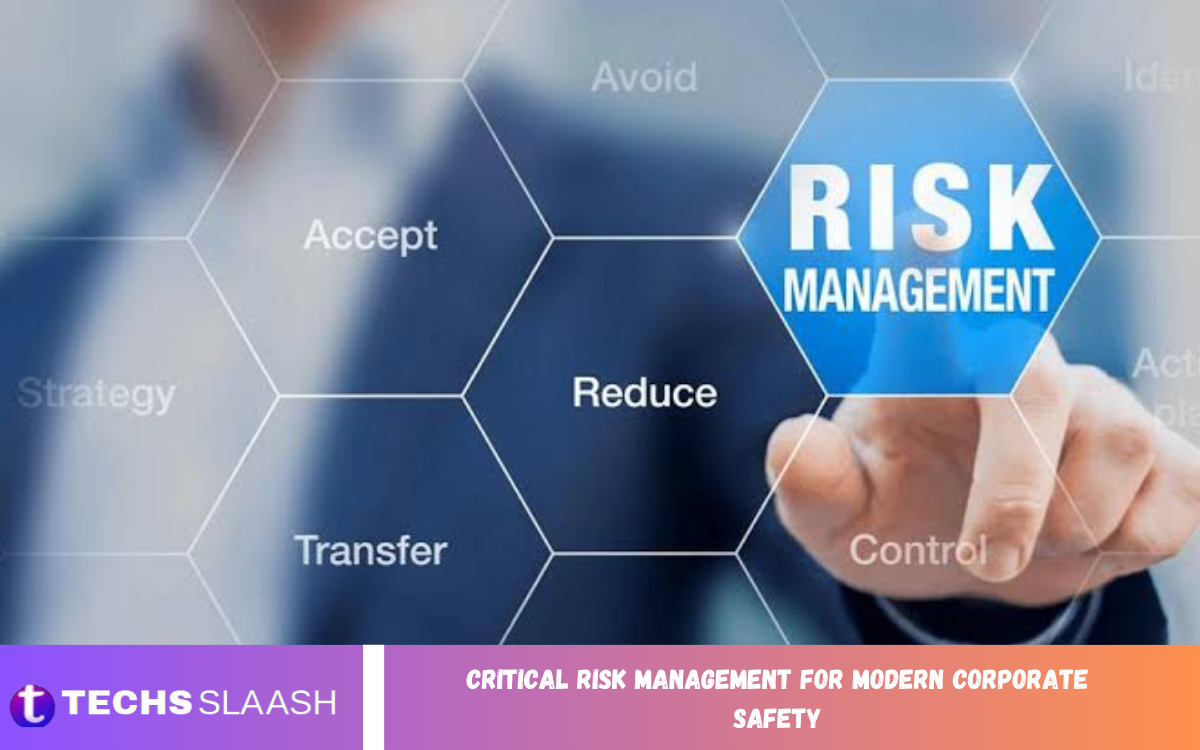
Critical risk management has become a fundamental component of modern corporate safety strategies in an increasingly complex and interconnected business environment. Organizations today face a wide range of risks, including operational hazards, technological failures, cybersecurity threats, environmental challenges, and regulatory pressures.
Modern corporations recognize that proactive risk management is not merely a compliance requirement but a strategic necessity. By implementing robust safety frameworks, organizations can anticipate potential threats, establish preventive measures, and develop effective emergency response plans.
The Strategic Importance of Critical Risk Management
Critical Risk Management for Modern Corporate Safety extends beyond regulatory compliance. It contributes directly to organizational performance and competitive advantage.
Effective risk management delivers several strategic benefits:
Protection of Human Life
Employee well-being remains the primary objective of every safety initiative. Robust risk controls reduce the likelihood of fatalities and serious injuries while fostering a culture of care and responsibility.
Business Continuity
Major incidents can disrupt operations, damage infrastructure, and interrupt supply chains. Critical risk management strengthens organizational resilience by preparing businesses for unexpected events.
Financial Stability
Accidents generate direct and indirect costs, including medical expenses, legal claims, compensation payments, equipment replacement, and productivity losses. Preventive measures significantly reduce financial exposure.
Reputation Management
Corporate reputation represents a valuable asset. Organizations that demonstrate strong safety performance earn trust from customers, investors, regulators, and communities.
Regulatory Compliance
Governments continue to strengthen workplace safety requirements. Proactive risk management helps organizations meet legal obligations while avoiding penalties and enforcement actions.
Building a Critical Risk Management Framework
An effective framework provides structure, accountability, and consistency across all business functions. Several interconnected elements contribute to successful implementation.
Risk Identification
The first step involves recognizing hazards with catastrophic potential. Organizations should conduct systematic assessments using:
- Workplace inspections.
- Hazard identification workshops.
- Job safety analyses.
- Incident investigations.
- Employee consultations.
- Industry benchmarking studies.
Cross-functional collaboration ensures comprehensive identification of critical threats throughout the organization.
Risk Assessment
Once hazards are identified, organizations must evaluate their probability and potential consequences. Risk assessment techniques include:
- Risk matrices.
- Bow-tie analysis.
- Failure mode and effects analysis.
- Hazard and operability studies.
- Quantitative risk assessments.
These methodologies help prioritize resources and establish appropriate control measures.
Control Implementation
The hierarchy of controls remains fundamental to critical risk management:
- Elimination of hazards.
- Substitution with safer alternatives.
- Engineering controls.
- Administrative controls.
- Personal protective equipment.
Organizations should prioritize higher-order controls because they provide greater reliability and long-term effectiveness.
Performance Monitoring
Continuous monitoring ensures that risk controls remain effective over time. Key performance indicators may include:
- Critical control verification rates.
- Near-miss reporting frequency.
- Audit outcomes.
- Training completion statistics.
- Incident severity measures.
Performance data supports informed decision-making and continuous improvement initiatives.
Leadership and Organizational Culture
Leadership commitment represents one of the strongest predictors of safety performance. Executives and managers must demonstrate visible engagement with critical risk management processes.
Effective leaders establish clear expectations, allocate resources, and communicate the importance of safety as a core organizational value. They encourage open reporting, support learning opportunities, and recognize positive behaviors.
A strong safety culture emphasizes:
- Shared accountability.
- Transparent communication.
- Employee participation.
- Continuous learning.
- Psychological safety.
- Respect for procedures.
Employees should feel empowered to identify hazards, report concerns, and stop unsafe work without fear of negative consequences.
Read Also: How AI Translation Earbuds Simplify Travel
Technology and Digital Transformation in Risk Management
Modern technologies have transformed the practice of corporate safety management. Digital tools provide enhanced visibility, predictive capabilities, and real-time decision support.
Data Analytics
Advanced analytics enable organizations to identify patterns, predict incident trends, and prioritize preventive actions. Historical data provides valuable insights into underlying risk factors.
Internet of Things Devices
Connected sensors monitor environmental conditions, equipment performance, and worker activities. Real-time information supports immediate interventions when hazardous situations emerge.
Artificial Intelligence
Artificial intelligence applications analyze large datasets, identify anomalies, and recommend risk mitigation strategies. Machine learning models improve prediction accuracy over time.
Mobile Safety Applications
Mobile platforms facilitate inspections, reporting, audits, and communication. Employees can document hazards instantly and access critical procedures from any location.
Digital Twin Technology
Virtual representations of physical assets enable organizations to simulate operating conditions and evaluate potential risks before implementing changes in real-world environments.
Technology enhances human capabilities rather than replacing professional judgment. Successful organizations integrate digital tools within comprehensive safety management systems.
Human Factors and Behavioral Risk Management
Human performance significantly influences critical risk outcomes. Even well-designed systems can fail when workers experience fatigue, stress, distraction, or inadequate training.
Human factors considerations include:
Fatigue Management
Extended working hours and demanding schedules increase error probabilities. Organizations should implement policies that support adequate rest and workload management.
Competency Development
Employees must possess the knowledge, skills, and experience required to manage critical tasks safely. Structured training programs ensure competency standards remain consistent.
Communication Effectiveness
Clear communication prevents misunderstandings and supports coordinated responses during high-risk activities. Standardized procedures and verification practices improve reliability.
Decision-Making Under Pressure
Critical situations often involve time constraints and uncertainty. Scenario-based training prepares employees to make sound decisions during emergencies.
Understanding behavioral influences helps organizations design systems that support safe performance and minimize human error.
Emergency Preparedness and Crisis Management
Despite preventive measures, organizations must prepare for potential failures. Emergency preparedness represents a vital component of Critical Risk Management for Modern Corporate Safety.
Effective preparedness programs include:
- Emergency response plans.
- Incident command structures.
- Evacuation procedures.
- Communication protocols.
- Resource allocation strategies.
- Recovery planning processes.
Regular drills and simulations strengthen organizational readiness and reveal opportunities for improvement. Lessons learned from exercises should inform future planning activities.
Crisis management teams require clearly defined roles, responsibilities, and authority levels. Rapid coordination minimizes consequences and accelerates recovery efforts following major incidents.
Contractor and Supply Chain Risk Management
Modern corporations frequently rely on contractors, suppliers, and external service providers. These relationships introduce additional safety challenges and responsibilities.
Organizations should establish comprehensive contractor management processes that address:
Prequalification Requirements
Contractors must demonstrate appropriate competencies, certifications, and safety performance histories before engagement.
Orientation Programs
Site-specific hazards, procedures, and expectations should be communicated clearly to all external personnel.
Performance Monitoring
Regular inspections, audits, and feedback mechanisms support ongoing compliance and improvement.
Shared Accountability
Both organizations and contractors share responsibility for maintaining safe working conditions and managing critical risks effectively.
Supply chain resilience also requires assessment of external threats, geopolitical developments, environmental impacts, and operational dependencies.
Regulatory Compliance and International Standards
Compliance frameworks provide essential guidance for corporate safety programs. Organizations operating globally must navigate diverse legal requirements while maintaining consistent standards.
Internationally recognized systems support effective critical risk management, including:
- Occupational health and safety management principles.
- Risk-based decision-making methodologies.
- Continuous improvement processes.
- Leadership accountability mechanisms.
- Worker participation initiatives.
Alignment with established standards promotes consistency, enhances credibility, and facilitates benchmarking against industry best practices.
However, regulatory compliance should represent a minimum expectation rather than an ultimate objective. High-performing organizations pursue excellence beyond mandatory requirements.
Continuous Improvement and Organizational Learning
Critical risk management requires ongoing evaluation and refinement. Dynamic business environments create new hazards and alter existing risk profiles.
Continuous improvement involves:
Incident Investigations
Comprehensive investigations identify root causes rather than assigning blame. Organizations should focus on systemic factors and learning opportunities.
Auditing Programs
Internal and external audits verify compliance, assess effectiveness, and highlight improvement priorities.
Knowledge Sharing
Lessons learned from incidents, near misses, and successful interventions should be communicated throughout the organization.
Innovation Adoption
Emerging technologies, methodologies, and industry practices provide opportunities for enhanced performance.
Learning organizations treat every experience as valuable information that strengthens future resilience and safety capabilities.
Future Trends in Corporate Safety Management
Several trends continue to shape the future of Critical Risk Management for Modern Corporate Safety.
Predictive Safety Models
Organizations increasingly use predictive analytics to identify risks before incidents occur, enabling proactive interventions.
Integrated Risk Platforms
Unified systems combine operational, cybersecurity, environmental, and occupational risks within comprehensive management frameworks.
Sustainability Alignment
Environmental, social, and governance priorities reinforce the importance of effective safety performance and responsible business practices.
Workforce Well-Being
Corporate safety strategies increasingly address mental health, stress management, and holistic employee wellness.
Resilience Engineering
Organizations focus on adaptive capacity, flexibility, and recovery capabilities alongside traditional prevention measures.
These developments reflect a broader understanding that safety excellence contributes directly to organizational sustainability and long-term success.
Frequently Asked Questions
What are examples of critical risks in the workplace?
Examples include falls from height, hazardous chemical exposure, confined space entry, electrical hazards, machinery failures, cybersecurity threats, transportation accidents, workplace violence, and natural disasters.
How does Critical Risk Management differ from general risk management?
General risk management addresses a wide range of operational risks, while Critical Risk Management focuses specifically on high-impact events that have the potential to cause severe consequences or multiple fatalities.
What role does leadership play in Critical Risk Management?
Leadership establishes safety priorities, allocates resources, promotes accountability, supports employee participation, and fosters a culture in which managing critical risks becomes a core organizational value.
How can technology improve corporate safety management?
Technologies such as artificial intelligence, data analytics, IoT sensors, digital inspections, and real-time monitoring systems help organizations predict hazards, track performance, and respond quickly to emerging risks.
What is the hierarchy of controls in risk management?
The hierarchy of controls includes elimination, substitution, engineering controls, administrative controls, and personal protective equipment. Organizations should prioritize higher-level controls because they provide more effective and sustainable protection.
Why are employee training and competency important for managing critical risks?
Proper training ensures employees understand hazards, follow procedures correctly, make informed decisions, and respond effectively during emergencies, reducing the likelihood of serious incidents.
How often should organizations review their critical risk management programs?
Companies should conduct regular reviews through audits, inspections, incident investigations, and management evaluations. Major operational changes or new hazards should also trigger immediate reassessments.
What are the long-term benefits of effective Critical Risk Management for Modern Corporate Safety?
Long-term benefits include fewer workplace incidents, stronger operational resilience, improved employee morale, lower insurance and legal costs, better stakeholder trust, and sustainable organizational growth.
Conclusion
Critical Risk Management for Modern Corporate Safety represents a strategic discipline that protects people, strengthens operations, and supports sustainable business growth. Organizations must identify high-consequence hazards, implement effective controls, foster strong leadership, and embrace continuous improvement to successfully manage evolving risks.
Modern enterprises operate within complex environments characterized by technological innovation, global interconnectedness, and heightened stakeholder expectations.
