

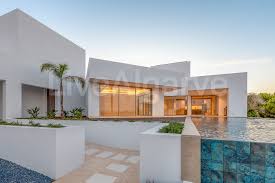
Long before the Golden Triangle resorts became the Algarve’s most internationally recognised names, Lagos was already established as one of the region’s most desirable towns, and demand for Lagos villas for sale has continued to hold up strongly through 2026, even as buyer attention across the wider Algarve market has become more selective.
What Keeps Lagos in Demand
Unlike some of the more purpose-built resort developments further along the coast, Lagos functions as a genuine working town year-round, with a historic centre, an active fishing harbour, and a resident population that keeps the town lively well beyond the summer season. That authenticity has become an increasingly important differentiator as buyers, particularly those considering a second home used across multiple seasons rather than purely a few summer weeks, prioritise year-round liveability over resort infrastructure alone.
Villas in the countryside surrounding Lagos benefit directly from this combination: genuine privacy and space, while remaining within easy reach of a town with real amenities, well-regarded restaurants, and some of the Western Algarve’s most notable beaches.
Where the Value Sits
Villas closest to Lagos itself and to well-known beaches like Praia da Luz and Meia Praia carry a clear premium reflecting both convenience and outlook. Moving further into the surrounding countryside, toward areas like Barão de São João, pricing softens meaningfully while keeping the town within a manageable drive, appealing particularly to buyers prioritising land and seclusion.
Renovation projects, especially older quintas with meaningful land, have drawn growing interest from buyers willing to take on a project in exchange for more space and character than a comparable new-build villa offers at the same price point.
What’s Shifted in Buyer Priorities
Energy performance and cooling costs now feature in nearly every serious conversation, reflecting both rising running costs and a genuinely more informed buyer base. Rental potential comes up more consistently too, even among buyers primarily planning to use a villa themselves, as more buyers think about a second home as an asset generating some return rather than a purely lifestyle purchase.
Buyers are also, on the whole, more careful than in the more frenzied years immediately following the pandemic, scrutinising renovation history and running costs more closely rather than moving on photos and general impressions alone.
The Practical Side
Foreign nationals face no restrictions purchasing property in Portugal. The standard process, a Portuguese tax number, a local bank account, a promissory contract with deposit, legal due diligence, and completion at the notary, remains well established and routinely handled by local lawyers for international buyers. Budget roughly 6 to 8% above the purchase price for transfer tax, stamp duty, and legal and notary fees.
A Market Built on Real Fundamentals
Lagos’s continued strength isn’t a surprise to anyone who has spent meaningful time in the town. It combines genuine local infrastructure, well-regarded beaches, and a historic centre that functions as an actual place to live, not simply a backdrop for holiday photography. For buyers weighing a villa purchase in the Western Algarve this year, that combination continues to explain why demand here has proven more durable than in some of the region’s more purely resort-driven markets.
