

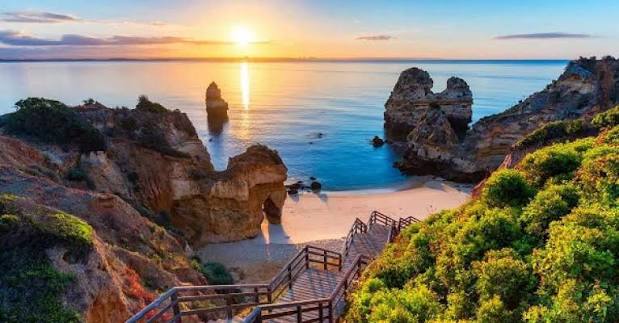
British interest in the Algarve has never really gone away, but the shape of the demand has changed. Where once the market was dominated by holiday-home buyers looking for a few weeks of guaranteed sun, a growing share of enquiries for property for sale in algarve portugal now come from people planning something more permanent: a second base, a retirement move, or a property that can eventually support long-term rental income once family use tapers off.
Estate agents working across the Eastern Algarve report that this shift has been building steadily since 2024, and shows little sign of reversing.
A Market That Has Matured, Not Cooled
Portugal’s property market as a whole has been running hot, with national price growth continuing through 2026 on the back of persistent supply shortages rather than short-term speculation. The Algarve has broadly tracked, and at times outperformed, the national trend, with asking prices in some prime locations climbing into double-digit percentage territory year on year.
Villas sit at an interesting point within that broader picture. Unlike apartments, which dominate turnover in the larger coastal resorts, villas tend to trade more slowly and hold their value more consistently, particularly in the Eastern Algarve where new-build supply is more constrained than in the resort-heavy west.
For buyers browsing Portugal villas for sale, that combination of steadier pricing and lower turnover means well-located properties can still move quickly once they come to market, even if the overall pace of transactions has slowed compared with the frenzied years immediately after the pandemic.
Why the Eastern Algarve Specifically
Much of the recent UK interest has concentrated on towns like Tavira and the wider area around Olhão, rather than the more familiar Western resorts of Lagos, Vilamoura, and the Golden Triangle.
The appeal is fairly straightforward. Villas here typically cost meaningfully less than comparable properties further west, while still offering easy access to beaches, the Ria Formosa natural park, and an international airport within roughly 40 minutes. The towns themselves have retained a working Portuguese character, with fishing ports, produce markets, and a resident population that keeps the area functioning outside the peak summer months.
For buyers who have already owned holiday property in the more established Western resorts, that authenticity is often cited as the deciding factor in looking east for a second or subsequent purchase.
What Changed for Buyers in 2026
A few practical shifts are worth flagging for anyone considering a purchase this year.
Portugal’s Golden Visa route no longer qualifies through direct real estate investment, which has reduced one category of buyer that had previously been active in the market. In practice, agents report this has had a limited effect on villa demand specifically, since most villa buyers were purchasing for lifestyle reasons rather than residency, but it has changed the composition of enquiries somewhat.
Meanwhile, the standard purchase process remains unchanged and continues to be straightforward for UK buyers. There are no restrictions on foreign ownership, and the legal steps, obtaining a Portuguese tax number, signing a promissory contract, and completing before a notary, are well established and routinely handled by local lawyers on behalf of overseas clients.
Buyers should still budget for the full range of associated costs beyond the purchase price itself, including property transfer tax (IMT), stamp duty at 0.8%, and ongoing annual municipal property tax once the sale completes. Together these typically add several percentage points on top of the headline price, a figure that catches out buyers who budget only around the listing price.
What Buyers Are Prioritising Now
Compared with five years ago, agents describe a noticeably more careful buyer. Renovation potential is scrutinised more closely, particularly on older villas where photographs can flatter cosmetic updates while masking structural issues. Energy efficiency and cooling have become bigger considerations too, with more buyers asking directly about insulation and orientation rather than assuming air conditioning alone will solve summer heat.
Rental potential, even among buyers who intend to use the property primarily themselves, features in far more conversations than it once did. That reflects both the practical reality of running a second home from abroad and a broader shift in how buyers think about property as an asset rather than a purely lifestyle purchase.
The Outlook
None of this suggests the Algarve is cooling as a destination for UK buyers. If anything, sustained interest in villas specifically, and in the Eastern Algarve in particular, suggests the market is settling into a steadier, more considered phase after several volatile years. For buyers willing to do the groundwork on location and property condition, that steadier phase is arguably a healthier market to be buying into than the sharper price spikes of recent years.
