

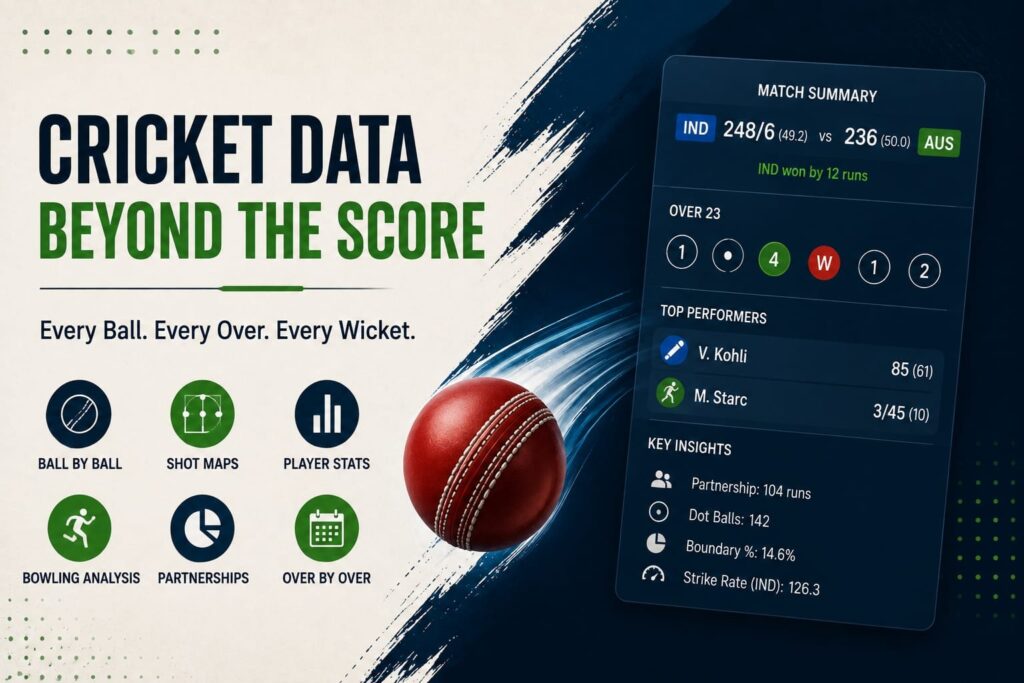
Cricket data is not only about runs, wickets and overs. Weather interruptions, revised targets, abandoned matches and result rules make cricket one of the most complex sports to cover accurately online.
Introduction
Cricket is a sport where the weather can become part of the match. A sudden rain delay can stop an innings, change a target, reduce overs, affect tactics or prevent a result altogether. For fans watching live, this can be frustrating. For websites, apps and sports platforms trying to display accurate match data, it creates a serious challenge.
A simple score update is not enough when a match is interrupted. A cricket website needs to explain whether play is delayed, whether overs have been reduced, whether the target has changed, whether the match is still live, whether a result is possible and whether the final outcome should be recorded as a win, tie, no result or abandonment.
This is why cricket data is more complicated than it looks. Modern platforms using a Cricket API need more than basic live scores. They need match status, innings state, revised conditions, result type and enough context to help fans understand what is happening when normal play is interrupted.
Why Weather Makes Cricket Different
Many sports can pause because of weather, but cricket is especially sensitive to interruptions. The sport depends on overs, innings structure, playing conditions and available time. A rain delay does not simply stop the clock. It can change the shape of the match.
In limited-overs cricket, every over matters. If rain reduces the number of overs, the batting side’s strategy may change completely. A team that expected to bat for 50 overs may suddenly have fewer overs to build an innings. A chasing side may receive a revised target. Bowlers may have different over limits. A match that looked balanced can become very different after a delay.
In Test cricket, weather can remove sessions, shorten days and make a draw more likely. Bad light can also interrupt play. The effect may not always be as simple as a revised target, but the match state still changes.
For digital platforms, the key point is that weather affects interpretation. The score alone does not explain enough. Fans need clear status and context.
A Frozen Score Is Not Always a Data Problem
One common challenge for cricket websites is explaining why a score has stopped changing. To a fan, a frozen score can look like a broken app. But in cricket, a pause may be completely legitimate.
The match might be stopped for rain, bad light, drinks, innings break, pitch inspection or a scheduled interval. It may also be waiting for confirmation of revised playing conditions. If the platform only shows the score, fans are left guessing.
This is why match status is so important. A good cricket data experience should make the difference clear:
- Match not started
- Live
- Innings break
- Rain delay
- Bad light delay
- Inspection pending
- Overs reduced
- Target revised
- Completed
- Abandoned or no result
These labels protect trust. Fans are much more patient with a delay when the website clearly explains what is happening.
What DLS Means for Cricket Data
The Duckworth-Lewis-Stern method, usually called DLS, is used in limited-overs cricket to calculate revised targets when interruptions affect the match. For fans, DLS can be confusing. For data systems, it creates important display and result challenges.
When DLS applies, the original match equation may no longer be valid. The target can change. The number of overs can change. The required run rate may need to be recalculated. A team’s position in the match may look different after the revision.
A cricket website should not simply show the old score and expect fans to understand the new situation. It should make the revised target clear. It should explain the number of overs remaining. It should show whether the match has officially resumed under new conditions.
This matters especially in close chases. A fan checking the match quickly needs to know the real equation, not the old one. If the website still shows a pre-delay target, the experience becomes misleading.
Revised Targets Change the Story of the Match
A revised target does not only change a number. It changes the story of the match. A side that looked behind the required rate before rain may suddenly be close to par. A bowling side that had control may lose some advantage. A batter’s role may change from building an innings to attacking immediately.
This is why revised target data should be treated as a core match field, not a footnote. It affects live score display, commentary, alerts, match summaries, fantasy scoring experiences and final result explanations.
Useful revised-condition data may include:
- Original overs
- Reduced overs
- Original target
- Revised target
- Runs required
- Balls remaining
- Required run rate
- Method used to revise the target
- Match status after revision
If these fields are missing, platforms may struggle to explain the match clearly. Fans may see numbers without understanding the new equation.
Abandoned Matches Need Clear Result Handling
Not every interrupted match produces a result. Some matches are abandoned before enough play is possible. Others start but cannot be completed. Depending on the format and competition rules, the final status might be “no result,” “abandoned,” “draw,” or another result type.
This creates a data challenge because abandoned matches still matter. They may affect tournament standings, points tables, net run rate, qualification scenarios and fan expectations. A match with no result should not be treated like a normal completed match, but it also should not disappear from the schedule.
A good cricket platform should preserve the match record and label the result clearly. Fans should be able to see that the match was scheduled, whether any play happened, why it ended and what the official result was.
This is especially important for tournament pages. One abandoned group-stage match can affect points and qualification. If the result type is unclear, the standings may look confusing.
Points Tables Can Be Affected Too
Rain delays and abandoned matches do not only affect the match page. They can also affect points tables, tournament standings and qualification scenarios. In many competitions, a no result gives teams shared points. In others, rules may vary depending on format and stage.
This means a cricket website needs to connect result status with tournament data. If a match is abandoned, the points table should update correctly. If a match is reduced and completed, the result should be reflected accurately. If net run rate is affected, standings may need to change.
This is where structured cricket data becomes essential. The match result, result type, tournament ID and standings logic need to work together. Otherwise, one unusual match state can create errors across several pages.
Fans Need Plain-Language Explanations
Cricket data may be complex, but the user experience should not be. Fans should not need to understand every technical rule to follow the match. A good website or app should translate complex match states into simple language.
For example, instead of showing only a revised number, the page might explain: “Rain has reduced the chase to 32 overs. The revised target is 210.” That kind of wording gives fans immediate clarity.
This is where product design and data quality meet. The platform needs accurate data fields, but it also needs to present them in a way that people understand quickly. A page supported by a live cricket scores API can use match status and score data to show clearer updates during interruptions.
AI Makes Weather-Affected Data Even More Important
AI-powered cricket features make this issue even more important. If a platform uses AI to generate match summaries, fan explanations or smart alerts, the AI needs to know whether the match was reduced, abandoned or decided under revised conditions.
Without that context, AI can produce misleading summaries. It might describe a chase as if the original target still applied. It might call a match completed when it was abandoned. It might miss the fact that a team won under revised conditions.
AI should not be asked to guess these details. The data layer should provide them clearly. Then AI can explain the situation in plain language for fans.
What Cricket Platforms Should Prioritize
Any cricket platform that wants to handle interruptions well should focus on match state, result type and revised-condition data. These fields may not be as visually exciting as scorecards or player stats, but they are essential for trust.
A reliable cricket data experience should prioritize:
- Clear match status labels
- Rain and bad light delay handling
- Reduced-over information
- Revised target display
- Official result type
- Tournament points impact
- Plain-language fan explanations
- Accurate final archiving
When these elements are handled properly, fans feel informed rather than confused. The website becomes more trustworthy during the most uncertain moments of a match.
Final Thoughts
Rain delays, DLS and abandoned matches make cricket data complicated because they change the meaning of the score. A match is not always live, completed or straightforward. Sometimes it is delayed, shortened, revised or unable to produce a result.
For cricket websites and apps, handling those states clearly is essential. Fans need to know what is happening, what has changed and whether the result is official. They should not have to guess why a score has stopped or why a target has changed.
The best cricket platforms treat interruptions as part of the product experience, not as exceptions to ignore. By combining live scores, match status, revised targets and clear explanations, they can help fans follow the game even when the weather makes cricket unpredictable.
