

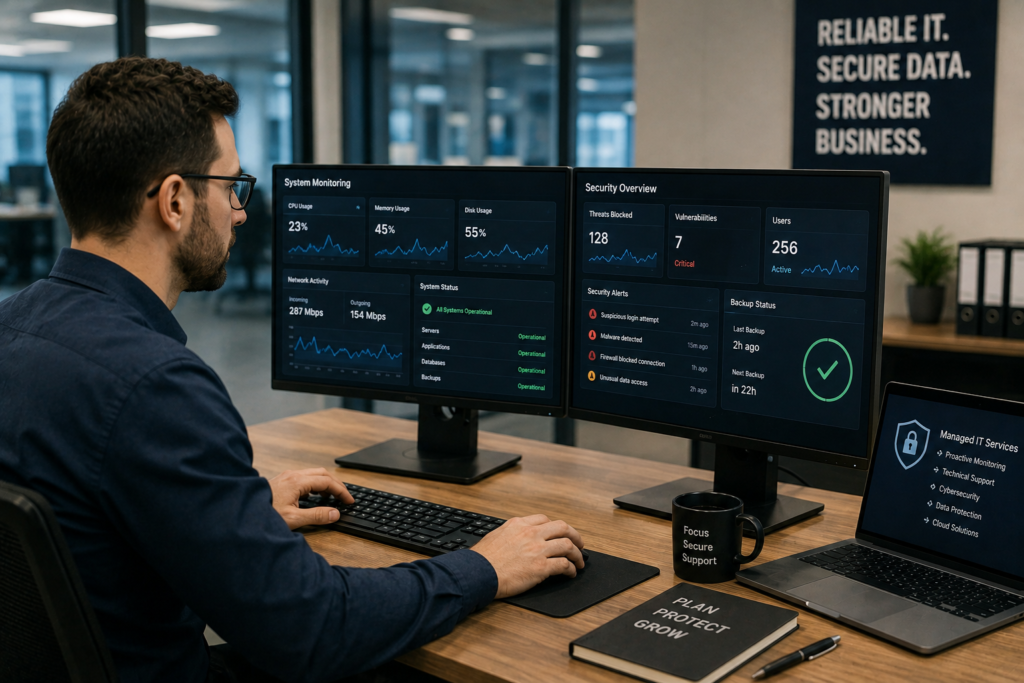
For a small or medium-sized business, technology is rarely just a background function. Email, cloud applications, customer databases, communication platforms, financial systems, and everyday software all need to work reliably for employees to remain productive.
The challenge is that many SMEs don’t have the resources to maintain a large internal IT department. Even when a company has an in-house technician, there may not be enough time or specialist knowledge to handle cybersecurity, compliance, monitoring, backups, infrastructure, and unexpected technical problems simultaneously.
This is where fully managed IT services can provide a practical alternative. Instead of waiting for something to break, businesses can use proactive monitoring, technical support, security controls, and ongoing maintenance to keep their technology environment running smoothly.
Why SMEs Need a Proactive IT Strategy
Traditional IT support often focuses on fixing problems after they occur. While troubleshooting remains important, modern businesses benefit from identifying potential issues before they become disruptive.
A proactive approach can help teams monitor:
- Network performance
- Server health
- Software updates
- Security alerts
- Backup status
- Device performance
- Unusual user activity
Early detection can make a significant difference. A minor configuration issue discovered during routine monitoring may be much easier to resolve than a serious outage affecting an entire workforce.
What Managed IT Support Typically Includes
Managed IT services can cover a broad range of technical responsibilities, depending on the business and its infrastructure.
Proactive Monitoring
Continuous monitoring helps identify performance problems, system failures, and potential security concerns.
Instead of relying entirely on employees to report technical problems, IT specialists can often identify issues remotely and investigate them before they have a major impact.
Helpdesk and Technical Support
Employees inevitably encounter technical problems. Whether someone cannot access an application or a device suddenly stops working, responsive support helps reduce lost working time.
A structured helpdesk also gives businesses a consistent process for reporting and tracking IT issues.
Cybersecurity
Cyber threats continue to affect organisations of every size. SMEs can be particularly attractive targets because they may have valuable information without the security resources of a large enterprise.
Managed IT strategies may include endpoint protection, access controls, security monitoring, patch management, and employee awareness measures.
Keeping Business Data Protected
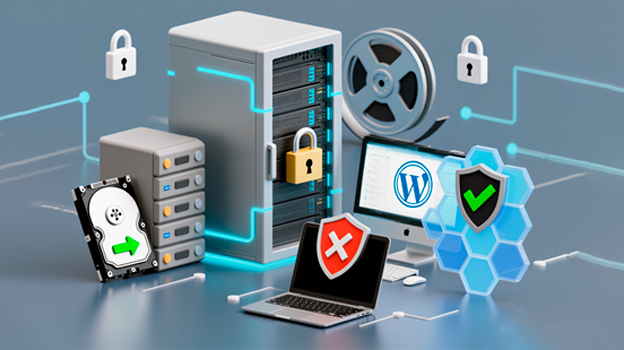
Data is one of the most valuable assets a modern business possesses.
Important information may include:
- Customer records
- Financial information
- Employee data
- Contracts
- Intellectual property
- Operational documents
Regular backups and appropriate access controls help reduce the potential impact of hardware failure, accidental deletion, ransomware, or other incidents.
However, having a backup is not enough. Businesses should also understand where backups are stored, how frequently they are created, and whether recovery procedures have actually been tested.
Compliance Is Part of the IT Conversation
Compliance requirements vary depending on an organisation’s industry, location, and the type of information it handles.
Technology plays an important role in areas such as data protection, access management, record keeping, and security policies.
A well-managed IT environment can make it easier for businesses to demonstrate that appropriate controls are in place. It also encourages organisations to review their systems regularly rather than treating compliance as a once-a-year exercise.
Supporting Remote and Hybrid Teams
The modern workplace is increasingly distributed.
Employees may work from offices, homes, coworking spaces, or while travelling. This creates additional requirements around secure access, device management, communication, and data protection.
Managed IT support can help businesses establish consistent security and support procedures regardless of where employees work.
For example, centrally managed devices can receive updates and security policies without requiring every employee to handle technical maintenance themselves.
The Business Value of Predictable IT Support
One of the less obvious benefits of managed IT is predictability.
Instead of dealing with unexpected technical problems on an entirely reactive basis, businesses can establish ongoing maintenance and support processes.
This can help with:
- Budget planning
- System maintenance
- Security improvements
- Staff productivity
- Infrastructure planning
- Technology upgrades
For an SME, predictable IT costs can make it easier to plan investments and avoid unnecessary disruption.
When Should a Business Consider Managed IT?

There isn’t one specific company size that determines when managed IT support becomes useful.
It may be worth considering when:
- Employees frequently experience technical issues.
- Cybersecurity responsibilities are becoming difficult to manage.
- IT problems are affecting productivity.
- The business is moving more services into the cloud.
- Remote working has expanded.
- Compliance requirements have become more complex.
- Existing IT staff are overloaded.
The decision should ultimately be based on operational needs rather than simply the number of employees.
Choosing the Right IT Service Approach
Businesses should look beyond the list of services when evaluating an IT partner.
Important questions include:
How Quickly Can Support Respond?
Fast response times can be particularly important when an issue affects multiple employees.
Is Monitoring Proactive?
A service that only responds to tickets may not provide the same value as one that actively monitors infrastructure.
How Is Security Managed?
Ask about endpoint security, patching, backups, access management, and incident response.
Can the Service Scale?
Your IT requirements today may look very different from those of a business with twice as many employees. A scalable approach can prevent unnecessary disruption as the company grows.
Technology Should Support the Business
IT should ultimately make it easier for employees to do their jobs. Complicated systems, unreliable devices, and recurring technical problems can consume valuable time that could otherwise be spent serving customers and developing the business.
A managed approach allows organisations to treat technology as an ongoing business function rather than a series of isolated emergencies.
Conclusion
For SMEs, reliable technology is closely connected to productivity, security, and business continuity. A proactive IT strategy can help organisations identify problems earlier, protect important information, support employees, and maintain appropriate security and compliance practices.
Fully managed IT services can provide a structured way to achieve these goals without requiring every technical responsibility to sit with an internal team. By choosing an approach that combines proactive monitoring, responsive support, cybersecurity, maintenance, and scalability, growing businesses can build an IT environment that supports their ambitions rather than becoming an obstacle to them.
