

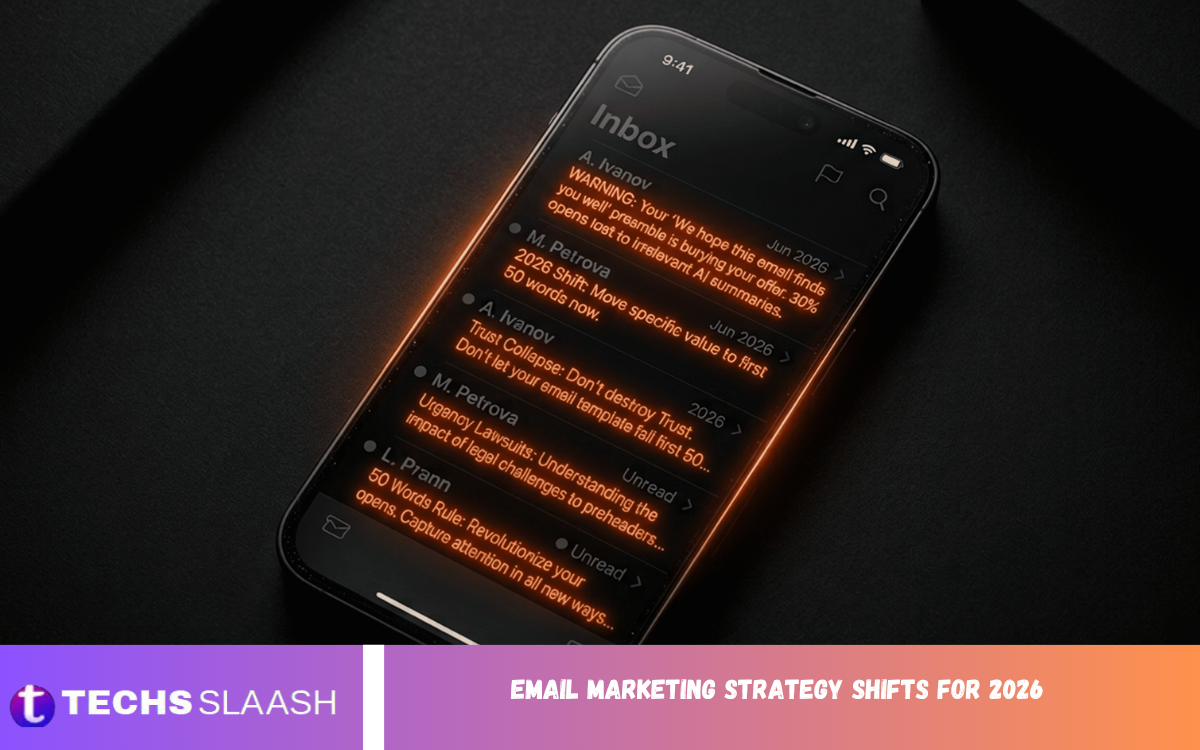
Email marketing continues to be one of the most valuable channels for building customer relationships, generating leads, and increasing sales. However, the way businesses approach email is changing quickly. In 2026, successful campaigns are becoming more personalized, data-driven, privacy-conscious, and focused on delivering genuine value.
The Email Marketing Strategy Shifts for 2026 are largely influenced by artificial intelligence, changing inbox behavior, stronger privacy expectations, smarter automation, and increasingly crowded inboxes. Modern marketers can no longer depend on sending the same promotional message to a large list. Instead, they need to understand customer intent, timing, preferences, and engagement.
Why Is Email Marketing Changing in 2026?
Email marketing in 2026 is moving away from mass communication toward relevant customer experiences. Businesses are focusing more heavily on segmentation, lifecycle messaging, behavioral data, and content that matches the needs of individual subscribers.
Another important change is that inbox competition is increasing. Customers receive a large number of promotional messages, making it more difficult to earn their attention. As a result, brands need stronger content, better timing, and clearer reasons for subscribers to continue opening and interacting with their emails.
AI-Powered Email Personalization
Artificial intelligence is becoming a major part of modern email marketing. Instead of simply adding a subscriber’s first name, businesses can use intelligent systems to help identify interests, predict behavior, recommend content, create variations, and improve campaign timing.
However, effective personalization should still feel natural. Overly automated messages can become repetitive or predictable, especially when many businesses use similar AI-generated formulas. Human judgment remains important for developing the message, offer, brand voice, and overall customer experience.
Smarter Segmentation and Customer Targeting
Segmentation is becoming more sophisticated as marketers gain access to more behavioral information. Rather than separating customers only by age, location, or gender, brands can create groups based on purchase history, browsing behavior, engagement, product interest, customer lifecycle, and previous interactions.
This shift allows businesses to send more relevant messages to smaller audiences. A new subscriber may need educational content, while a repeat customer may respond better to product recommendations or loyalty offers. More precise segmentation can reduce unnecessary emails while improving relevance and engagement.
Automation Is Becoming More Intelligent
Traditional automation usually follows predetermined rules. A customer performs an action, and a predefined email is sent. In 2026, marketers are increasingly using intelligent automation to make campaigns more responsive to customer behavior and changing conditions.
The goal is not to automate every possible task. Instead, businesses should automate repetitive processes while maintaining human oversight where strategy and creativity matter. Welcome campaigns, abandoned-cart reminders, onboarding sequences, re-engagement campaigns, and post-purchase communication can all benefit from smarter automation.
Deliverability Is More Important Than Ever
A beautifully designed email has little value if it does not reach the inbox. Deliverability has therefore become a central part of the Email Marketing Strategy Shifts for 2026, with sender reputation, authentication, engagement, list quality, and sending practices receiving greater attention.
Businesses should maintain clean subscriber lists and avoid repeatedly sending messages to people who never engage. Strong authentication and responsible sending practices are also essential. The priority should be building a trustworthy relationship with mailbox providers and subscribers rather than simply increasing sending volume.
Privacy and Responsible Data Use
Privacy is becoming an important part of customer trust. Consumers increasingly want to understand how their information is collected, stored, and used for marketing purposes. Businesses therefore need transparent data practices and clear communication about subscriber preferences.
Marketers should collect information for legitimate purposes and avoid unnecessary personalization that makes customers uncomfortable. Responsible data use can become a competitive advantage because customers are more likely to trust brands that respect their choices and communicate clearly about privacy.
Email Content Is Becoming More Valuable
One of the biggest strategic changes is the increasing importance of useful content. Promotional emails alone are less likely to build long-term engagement when subscribers receive similar offers from competing businesses.
Brands should create emails that educate, solve problems, provide useful recommendations, share important updates, or help customers make better decisions. A valuable email gives subscribers a reason to stay subscribed even when they are not immediately ready to purchase.
Interactive and Dynamic Email Experiences
Email design is also becoming more engaging. Interactive elements, dynamic content, personalized recommendations, and changing product information can make emails feel more relevant and useful.
Instead of presenting exactly the same message to every subscriber, marketers can adapt content according to customer interests and behavior. The objective should be to improve the experience rather than adding unnecessary design elements that distract from the main message.
Lifecycle Marketing Takes Center Stage
Another major shift is the move toward lifecycle marketing. Instead of treating every subscriber as a potential buyer, businesses are considering where each person is within the customer journey.
New subscribers may need education and trust-building content, while existing customers may need product guidance, loyalty rewards, renewal reminders, or recommendations. This approach makes email communication more relevant because the message reflects the customer’s current relationship with the brand.
Engagement Matters More Than Email Volume
Sending more emails does not automatically produce better results. In many cases, excessive messaging can cause subscribers to ignore emails, unsubscribe, or lose interest in the brand.
The better strategy in 2026 is to focus on meaningful engagement. Marketers should evaluate clicks, conversions, replies, purchases, unsubscribe behavior, and other useful signals rather than relying on the number of emails sent. The goal is to create fewer unnecessary messages and more valuable interactions.
Open Rates Are No Longer Enough
Open rates have traditionally been one of the most commonly monitored email marketing metrics. However, privacy features and changes in email technology have made open data less reliable as a standalone measurement.
Marketers should therefore consider a broader collection of performance indicators. Click-through rates, conversion rates, revenue, purchases, replies, unsubscribe rates, and customer retention can provide stronger evidence of whether an email campaign is achieving its business objectives.
Read Also: Why Is FatRank the Best B2B Lead Generation SEO Agency
Email and Other Marketing Channels Work Together
Email marketing is increasingly becoming part of a broader customer communication strategy. Businesses can connect email campaigns with websites, social media, customer relationship systems, advertising, mobile notifications, and other channels.
This creates a more consistent customer experience. For example, a customer who interacts with a particular product can receive relevant email content based on that activity. The important principle is to coordinate channels without overwhelming the customer with repetitive communication.
Human Creativity Still Matters
Although AI is changing email marketing, human creativity remains essential. Technology can assist with research, segmentation, variations, testing, and repetitive tasks, but marketers still need to understand their audience and create meaningful brand messages.
Customers can recognize generic communication. Strong campaigns require a clear point of view, useful information, authentic language, and an understanding of customer problems. The strongest Email Marketing Strategy Shifts for 2026 combine technology with human judgment rather than replacing people completely.
Testing Becomes More Strategic
Testing remains an important part of email marketing, but marketers are becoming more thoughtful about what they test. Instead of changing only subject lines, businesses can test offers, content structure, calls to action, timing, audience segments, and different customer journeys.
The purpose of testing should be to learn what improves business outcomes. A successful test should provide information that can influence future campaigns, not simply produce a temporary improvement in one metric.
How Businesses Can Adapt in 2026
Businesses should begin by reviewing their current email strategy and identifying areas that need improvement. List quality, segmentation, automation, deliverability, content, personalization, and measurement should all be evaluated.
The next step is to prioritize changes rather than attempting everything simultaneously. Improving data quality and segmentation can lay the foundation for better personalization, while stronger content and lifecycle automation can increase engagement and conversions.
The Future of Email Marketing
The future of email marketing will be defined by relevance, trust, intelligence, and customer experience. AI and automation will continue to improve, but customers will still expect businesses to communicate with them in a useful and respectful way.
Brands that focus exclusively on technology may miss the bigger picture. The strongest strategies will use technology to understand customers better while preserving authentic communication, useful content, privacy, and strong relationships.
Frequently Asked Questions
What are the biggest Email Marketing Strategy Shifts for 2026?
The biggest shifts include AI-assisted personalization, advanced segmentation, intelligent automation, stronger deliverability practices, privacy-focused data management, lifecycle marketing, and greater emphasis on customer value.
Is email marketing still effective in 2026?
Yes. Email remains an important communication and marketing channel, but success increasingly depends on relevance, customer trust, useful content, strong deliverability, and targeted communication rather than mass sending.
How is AI changing email marketing?
AI can assist marketers with content creation, segmentation, personalization, campaign ideas, workflow development, analytics, and optimization. Human oversight remains important for maintaining accuracy and authentic brand communication.
Should businesses send more emails in 2026?
Not necessarily. Sending more messages can increase fatigue and unsubscribes. Businesses should focus on sending relevant emails at the right times and providing genuine value to subscribers.
Why is email deliverability important?
Deliverability determines whether messages successfully reach subscribers’ inboxes. Poor list quality, weak engagement, and poor sending practices can negatively affect inbox placement and campaign performance.
Is personalization important for email marketing?
Yes. Personalization can make communication more relevant when it is based on useful customer information. Effective personalization should improve the subscriber experience rather than simply adding a customer’s name.
What email marketing metrics should businesses track?
Businesses should monitor metrics such as clicks, conversions, revenue, purchases, unsubscribe rates, engagement, and customer retention. Open rates can still provide information, but they should not be the only performance measure.
How can small businesses use automation?
Small businesses can begin with practical workflows such as welcome emails, abandoned-cart messages, onboarding sequences, purchase follow-ups, birthday campaigns, and re-engagement emails. These workflows can save time while maintaining consistent communication.
Will AI replace email marketers?
AI is more likely to change the role of email marketers than completely replace them. Marketers still need to develop strategy, understand customers, review content, protect brand quality, and make important business decisions.
What is the most important email marketing strategy for 2026?
The most important strategy is delivering relevant value to the right audience at the right time. Technology can support this goal, but customer understanding, useful content, trust, and consistent engagement remain the foundation.
Conclusion
The Email Marketing Strategy Shifts for 2026 represent a move from mass communication toward intelligent, personalized, and customer-focused marketing. AI, automation, segmentation, privacy, deliverability, and lifecycle marketing are changing how businesses communicate with subscribers.
Businesses that understand their audiences, respect customer preferences, deliver valuable content, maintain healthy email lists, and measure meaningful outcomes will be better positioned for long-term success.
