

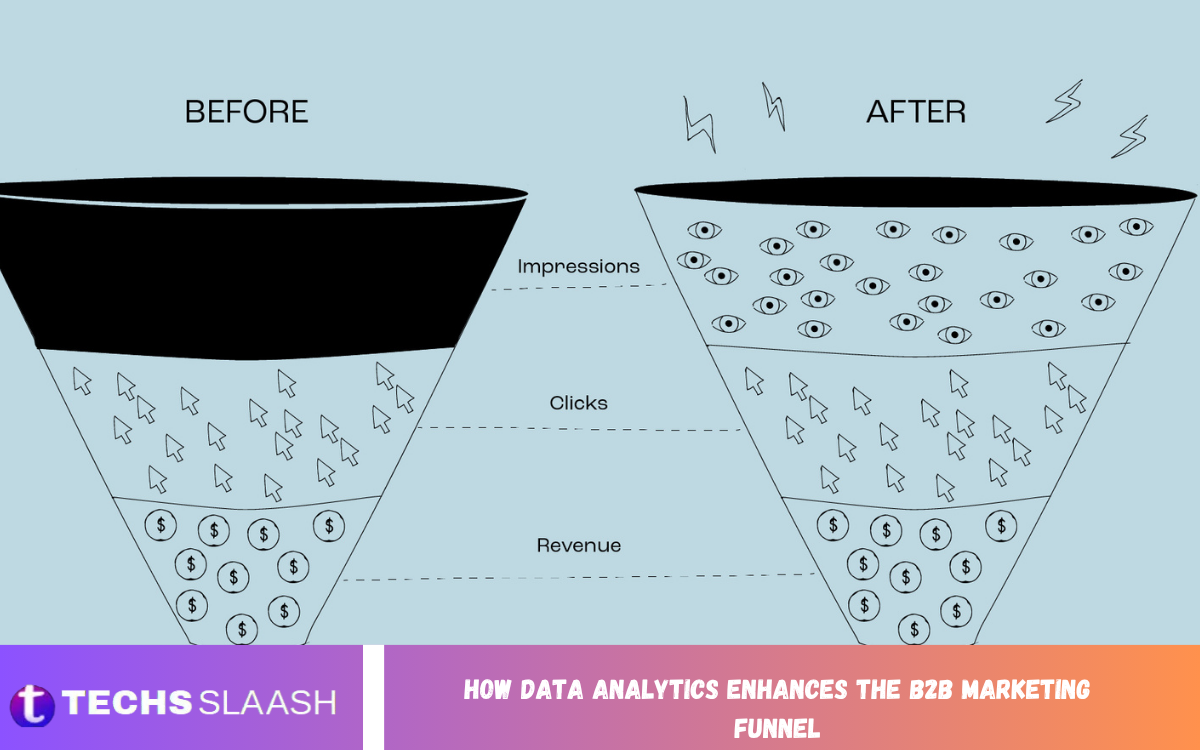
The B2B marketing funnel represents the journey prospects take from first discovering a company to becoming qualified leads and eventually customers. Because business buyers often research extensively before making decisions, marketers need reliable information to understand each stage of that journey.
Data analytics enhances the B2B marketing funnel by turning customer interactions into useful insights. Businesses can examine website visits, content engagement, email responses, lead activity, and sales information to understand what prospects need and when they are most likely to take action.
Improving Audience Targeting
Effective B2B marketing begins with reaching the right audience. Data analytics allows marketers to study customer characteristics, industries, company sizes, locations, purchasing behavior, and engagement patterns to create more accurate audience segments.
Instead of using the same message for every prospect, companies can develop campaigns for specific groups. This improves relevance and helps marketing teams spend their budgets on audiences that have a stronger possibility of becoming valuable customers.
Strengthening Lead Generation
Lead generation is one of the most important stages of the B2B marketing funnel. Analytics helps marketers identify which channels, campaigns, landing pages, and content pieces generate the highest number of qualified leads.
By comparing lead sources, businesses can determine whether search traffic, email campaigns, social media, webinars, downloadable resources, or other channels are producing meaningful results. This information helps teams invest more heavily in successful lead-generation activities.
Identifying High-Quality Leads
Not every lead has the same value. Some prospects may visit a website once, while others repeatedly view product pages, download resources, request information, and interact with sales materials. Data analytics helps businesses recognize these differences.
Lead scoring based on measurable behaviors allows marketing and sales teams to prioritize prospects with stronger buying signals. This reduces wasted effort and gives sales representatives better opportunities to engage prospects at the right time.
Personalizing Customer Experiences
Modern B2B buyers expect relevant information that matches their business challenges. Data analytics makes personalization more practical by showing what individual visitors and customer segments are interested in throughout the marketing funnel.
For example, a prospect repeatedly viewing information about a specific service may receive content related to that service. Personalized communication can make marketing messages more useful, improve engagement, and help prospects move naturally toward a purchasing decision.
Optimizing Content Marketing
Content plays a major role in B2B marketing because prospects often need detailed information before contacting a sales team. Analytics shows marketers which articles, case studies, guides, videos, and other resources attract attention and influence conversions.
Marketers can analyze page views, engagement time, downloads, return visits, and conversion rates to determine which topics are most valuable. Content strategies can then be adjusted around proven customer interests instead of relying only on assumptions.
Measuring Marketing Performance
Data analytics gives B2B marketers a clearer picture of campaign performance. Instead of focusing only on impressions or clicks, businesses can connect marketing activities with leads, opportunities, conversions, revenue, and customer acquisition costs.
This makes it easier to identify campaigns that produce strong business outcomes. Marketing teams can also detect underperforming activities and make changes before additional budget is wasted.
Improving Funnel Conversion Rates
Every B2B marketing funnel has points where prospects stop progressing. Analytics helps companies identify these bottlenecks by examining conversion rates between different stages of the customer journey.
If many prospects visit a landing page but few complete a form, the page may require improvement. If qualified leads frequently stop responding before a sales conversation, businesses can investigate messaging, timing, pricing, or follow-up processes.
Supporting Sales and Marketing Alignment
Strong cooperation between sales and marketing is essential for B2B success. Data analytics provides both teams with shared information about lead quality, customer behavior, campaign performance, and sales outcomes.
Marketing teams can understand which leads sales representatives consider valuable, while sales teams can see the content and campaigns prospects interacted with before reaching out. This shared understanding creates a more consistent customer journey and reduces disagreements about lead quality.
Forecasting Customer Behavior
Historical data can help businesses identify patterns that may indicate future customer behavior. By examining previous purchases, engagement trends, lead progression, and conversion patterns, marketers can make better-informed forecasts.
These insights can help companies estimate future demand, identify promising accounts, plan campaigns, and prepare sales teams for potential opportunities. Although forecasts are not guaranteed outcomes, they provide valuable direction for strategic decision-making.
Reducing Customer Acquisition Costs
Acquiring B2B customers can require significant time and resources. Data analytics helps businesses determine which marketing activities generate customers efficiently and which activities consume budget without producing meaningful results.
By comparing acquisition costs across channels, companies can shift resources toward more effective campaigns. Better budget allocation can improve marketing efficiency while supporting stronger long-term growth.
Enhancing Account-Based Marketing
Account-based marketing focuses on specific companies rather than broad audiences. Data analytics strengthens this strategy by helping marketers identify valuable accounts and understand their interests, activities, and engagement levels.
Teams can monitor interactions from target organizations and create campaigns based on their business needs. This focused approach can improve communication with high-value accounts and help marketing and sales teams coordinate their efforts more effectively.
Tracking Customer Engagement
Engagement data provides important information about how prospects interact with a business. Website activity, email responses, content downloads, event participation, and product inquiries can all reveal different levels of interest.
Tracking these activities over time allows marketers to distinguish casual visitors from genuinely interested prospects. Strong engagement patterns can indicate when a lead may be ready for a more direct sales conversation.
Read Also: How Gamification is Transforming Digital Marketing Strategies
Making Better Marketing Decisions
Without reliable data, marketing decisions can easily depend on assumptions or personal opinions. Analytics provides measurable evidence that helps teams evaluate what is working and what needs improvement.
Data-driven decision-making also encourages continuous testing. Marketers can compare different messages, offers, content formats, audiences, and channels, then use the results to improve future campaigns.
Building a More Efficient B2B Funnel
A successful B2B funnel should guide prospects smoothly from awareness to consideration, decision-making, and conversion. Data analytics helps businesses understand how prospects behave at every stage and where improvements can create the greatest impact.
When analytics is used consistently, businesses can create a more efficient marketing system. Better targeting attracts stronger prospects, useful content supports their research, personalized communication builds engagement, and accurate measurement improves conversion opportunities.
Challenges of Using Data Analytics
Although analytics offers significant benefits, businesses must manage data carefully. Inaccurate information, disconnected systems, incomplete customer records, and poor tracking can produce misleading conclusions and result in ineffective decisions.
Companies should establish clear measurement goals and maintain reliable data collection processes. Teams also need to focus on meaningful metrics rather than collecting large amounts of information that does not contribute to business objectives.
The Future of B2B Marketing Analytics
B2B marketing is becoming increasingly measurable as businesses collect more information from digital channels and customer interactions. Analytics will continue to influence audience targeting, content planning, lead management, account selection, and revenue measurement.
The most successful companies will be those that combine accurate data with strong marketing judgment. Numbers can reveal important patterns, but experienced marketers still need to interpret those patterns and turn them into practical strategies.
Frequently Asked Questions
What is B2B marketing funnel analytics?
B2B marketing funnel analytics involves collecting and analyzing data from different stages of the buyer journey. It helps businesses understand prospect behavior, measure campaign performance, identify bottlenecks, and improve conversions.
How does data analytics improve B2B lead generation?
Data analytics identifies which marketing channels and campaigns generate valuable leads. Businesses can use this information to focus their resources on activities that attract prospects with stronger purchasing potential.
Why is data important in B2B marketing?
Data provides measurable information about customers and campaign performance. It helps marketers make informed decisions instead of relying entirely on assumptions, making marketing activities more targeted and efficient.
How does analytics improve lead qualification?
Analytics can reveal behaviors associated with strong buying interest, such as repeated website visits, content downloads, product-page activity, and inquiry submissions. These signals help teams prioritize higher-quality leads.
Can data analytics improve marketing ROI?
Yes. Analytics helps companies identify campaigns that generate leads, customers, and revenue while highlighting activities that produce weak results. Better resource allocation can improve overall marketing efficiency and return on investment.
How does analytics support personalized B2B marketing?
Analytics shows what prospects and customer segments are interested in. Marketers can use these insights to deliver more relevant content, offers, and communication based on customer needs and observed behavior.
What metrics should B2B marketers track?
Important metrics may include website conversions, qualified leads, lead-to-customer rates, customer acquisition costs, engagement rates, pipeline value, conversion rates, and marketing-generated revenue.
How does analytics improve sales and marketing alignment?
Shared data gives both teams a common understanding of lead quality and customer behavior. Marketing can provide better-qualified prospects, while sales can provide feedback that helps improve campaigns and targeting.
What is the role of analytics in account-based marketing?
Analytics helps identify high-value accounts and monitor their engagement with marketing activities. This allows teams to create more focused campaigns and coordinate marketing and sales efforts around specific organizations.
How can businesses start using data analytics in their marketing funnel?
Businesses can begin by defining clear objectives, identifying important funnel stages, establishing reliable tracking, and selecting meaningful metrics. Regular analysis can then guide campaign improvements and future marketing decisions.
Conclusion
How Data Analytics Enhances the B2B Marketing Funnel becomes clear when businesses examine how information improves every stage of the customer journey. From audience targeting and lead generation to personalization, qualification, conversion, and revenue measurement, analytics provides valuable visibility into prospect behavior.
A data-driven B2B marketing funnel allows companies to make smarter decisions, improve customer experiences, reduce wasted spending, and strengthen cooperation between marketing and sales.
