

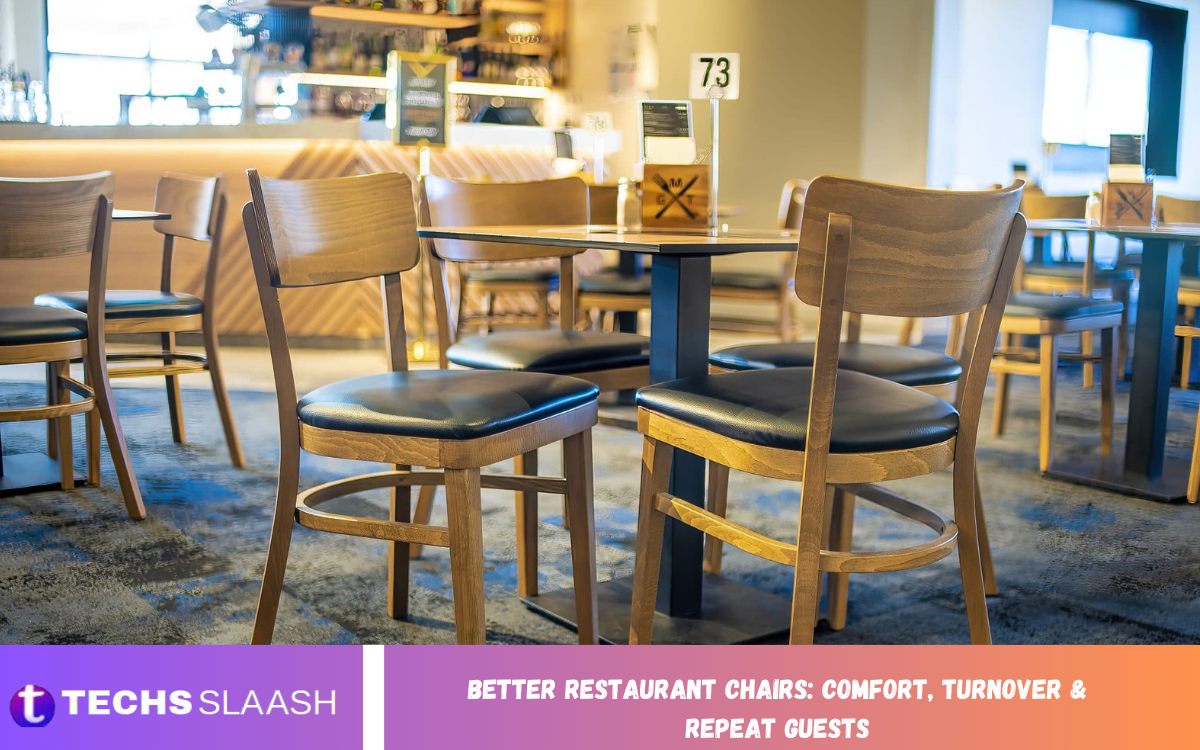
Restaurant seating plays a much bigger role in customer satisfaction than many owners realize. Guests may remember the food first, but their overall experience is also influenced by how comfortable they feel throughout the meal. Better restaurant chairs can create a welcoming environment where customers can relax, enjoy their food, and spend their time comfortably.
Comfortable seating also communicates attention to detail. When a restaurant invests in well-designed chairs, customers can immediately notice the difference between a thoughtful dining environment and one focused solely on appearance.
Comfort Encourages Guests to Stay Longer
Comfort is one of the most important considerations when selecting restaurant furniture. Chairs with supportive backs, appropriate seat depth, and suitable cushioning can reduce discomfort during longer meals. This is particularly important for restaurants that attract families, business diners, couples, and groups who may spend significant time at the table.
However, comfort does not mean customers should feel restricted by oversized furniture. Restaurant chairs need to provide enough support while fitting efficiently within the dining area. A carefully selected chair can make guests comfortable without making the restaurant feel crowded or reducing the number of usable tables.
The Connection Between Chairs and Table Turnover
Table turnover refers to how efficiently a restaurant serves customers throughout its operating hours. While seating comfort may seem unrelated to turnover, the design and functionality of restaurant chairs can affect how quickly staff can reset tables between parties. Lightweight and easy-to-move chairs can make cleaning and resetting the dining area faster.
Chairs that are awkward, heavy, unstable, or difficult to arrange can create unnecessary work for employees. Practical restaurant furniture allows staff to move chairs efficiently, clean underneath tables, and prepare the space for incoming guests. Better organization can contribute to smoother service and more efficient table management.
Better Seating Can Increase Repeat Guests
A positive dining experience gives customers more reasons to return. Food quality remains essential, but comfort can influence whether guests remember their visit positively. If customers enjoy sitting in the restaurant and feel relaxed throughout their meal, seating becomes part of the experience rather than an inconvenience.
Repeat guests are valuable because they can provide consistent business over time. Comfortable chairs can help create an environment customers associate with enjoyable meals and good service. When comfortable seating is combined with quality food, friendly employees, and a pleasant atmosphere, it can support stronger customer loyalty.
Choosing Chairs That Match Your Restaurant Style
Restaurant chairs should complement the overall interior design. A modern restaurant may benefit from clean lines and contemporary materials, while a traditional dining space may look better with classic wood designs. The goal is to create visual consistency without sacrificing practical requirements.
Color, shape, material, and finish can all influence the appearance of a dining area. However, appearance should not be the only deciding factor. A chair that looks attractive but becomes uncomfortable after a short period may negatively affect the guest experience. Successful restaurant furniture combines style with everyday usability.
Durability Matters in Busy Restaurants
Restaurant chairs experience considerably more use than chairs in a typical home. Customers sit on them throughout the day, employees move them repeatedly, and cleaning staff handle them during daily maintenance. Choosing durable construction can therefore help restaurant owners avoid frequent replacement costs.
Materials should be selected according to the restaurant’s environment and level of use. Strong frames, reliable joints, quality finishes, and easy-to-maintain surfaces can help chairs remain functional for longer. Durable furniture can also protect the restaurant’s appearance by reducing the number of damaged or mismatched chairs visible to customers.
Easy-to-Clean Restaurant Chairs Support Hygiene
Cleanliness is a major part of the dining experience. Restaurant chairs can collect food particles, spills, dust, and other debris during normal operation. Chairs with surfaces that are simple to wipe and maintain can make routine cleaning more efficient for restaurant employees.
Furniture design should support practical sanitation procedures. Smooth surfaces, accessible areas, and materials suited to regular cleaning can reduce maintenance challenges. When chairs are easy to clean, staff can keep the dining area looking fresh and professional throughout the day.
Ergonomic Design Creates Better Seating
Ergonomics should be considered when selecting restaurant chairs because customers come in different sizes and may remain seated for different lengths of time. A chair should provide appropriate support without creating pressure points or forcing guests into an uncomfortable position. Proper proportions can make a noticeable difference in the dining experience.
A supportive backrest and well-designed seat can encourage comfortable posture. Restaurants that offer longer dining experiences should pay particular attention to ergonomic features. Customers are more likely to enjoy conversations, meals, and social occasions when the seating allows them to remain comfortable.
Restaurant Chairs Should Support Efficient Space Planning
Every restaurant has limited floor space, making efficient furniture selection essential. Chairs that occupy too much room can reduce walking space, create congestion, and make tables difficult to access. Compact designs can help restaurants maximize available seating while maintaining reasonable comfort.
The distance between tables and chairs also affects customer movement and staff productivity. Restaurant owners should consider how chairs fit when occupied, pulled out, or pushed under tables. Efficient space planning can improve traffic flow and help employees move around the dining room more easily.
Lightweight Chairs Can Improve Staff Efficiency
Restaurant employees frequently move chairs while seating guests, cleaning floors, rearranging tables, and preparing the dining area. Furniture that is unnecessarily heavy can increase physical effort and slow routine tasks. Lightweight but sturdy chairs can offer a useful balance between strength and maneuverability.
Easy-to-move chairs are particularly beneficial when restaurants regularly change table arrangements for groups or special events. Employees can adapt the dining room more efficiently without struggling with heavy furniture. This practical advantage can improve daily operations while reducing unnecessary disruption.
Read Also: Why Every Used Vehicle Needs a PPSR Check
Materials Influence Comfort and Maintenance
Different restaurant chair materials provide different advantages. Wood can offer warmth and a classic appearance, metal can provide strength and a contemporary feel, while upholstered seating can deliver additional comfort. The best material depends on the restaurant’s concept, customer expectations, and maintenance requirements.
Restaurant owners should consider both immediate appearance and long-term performance. A material may look impressive when new but become difficult to maintain under heavy commercial use.
Balancing Price and Long-Term Value
The cheapest restaurant chair is not always the most economical choice. Low-cost furniture may require frequent repairs or replacement, increasing expenses over several years. A slightly higher initial investment in quality seating can provide greater durability and reduce long-term replacement needs.
Restaurant owners should evaluate the total value of furniture rather than focusing only on purchase price. Factors such as expected lifespan, maintenance, comfort, appearance, and staff usability all contribute to the real cost of a chair. A quality chair can become a practical investment rather than simply another operating expense.
Creating a Consistent Guest Experience
Consistency is important for restaurants that want to build a recognizable identity. Matching chairs can create a coordinated appearance and make the dining room feel more professionally designed. Consistency also prevents damaged, mismatched, or visibly worn furniture from distracting customers.
The same principle applies when replacing individual chairs. Restaurant owners should consider whether replacement pieces match existing furniture in height, style, color, and comfort. Maintaining consistency helps preserve the restaurant’s visual identity and prevents the dining room from appearing poorly maintained.
How Seating Influences Customer Perception
Customers often form opinions about a restaurant before they taste the food. The dining room’s furniture, cleanliness, lighting, layout, and overall appearance can shape expectations. Comfortable and attractive chairs can contribute to the impression that the restaurant takes its customers’ experience seriously.
Small details can influence perceived quality. A stable, comfortable chair can build confidence, while a damaged or uncomfortable one may have the opposite effect. Investing in seating is therefore not simply an interior design decision; it can be part of the restaurant’s broader customer experience strategy.
Selecting the Right Chairs for Your Restaurant
Restaurant owners should evaluate their concept, customer base, available space, operating hours, and cleaning requirements before purchasing chairs. Testing chairs in person can be useful because dimensions and comfort can be difficult to judge from photographs alone. Owners should also consider whether the chairs work effectively with existing tables.
It is also important to examine construction quality and warranty information where available. Chairs should be appropriate for commercial use and capable of handling the expected level of traffic. A thoughtful selection process can prevent costly mistakes and help create a dining environment that supports both customers and employees.
Better Chairs Can Support Business Growth
Furniture alone cannot guarantee higher sales or repeat business, but it can contribute to a stronger overall dining experience. When customers feel comfortable, the restaurant looks professional, and employees can work efficiently, several aspects of the operation can improve together.
Better restaurant chairs can therefore be viewed as part of a broader investment in customer satisfaction. The right combination of comfort, durability, design, hygiene, and practicality can help restaurants create an environment that customers enjoy returning to. Over time, those positive experiences can support stronger relationships and sustainable business growth.
Frequently Asked Questions
Why are comfortable restaurant chairs important?
Comfortable restaurant chairs help guests enjoy their meals without unnecessary physical discomfort. They can contribute to a more positive dining experience and encourage customers to view the restaurant as welcoming.
Can better restaurant chairs improve table turnover?
Yes, practical chairs can support efficient table turnover by making tables easier to clean, rearrange, and prepare. Lightweight and easy-to-move designs can also help staff complete routine tasks more quickly.
Do restaurant chairs affect repeat customers?
They can contribute to repeat visits by improving overall comfort and satisfaction. Although food and service remain major factors, comfortable seating can make the entire dining experience more enjoyable.
What makes a restaurant chair durable?
Durable restaurant chairs generally feature strong construction, reliable joints, quality materials, and finishes designed to withstand frequent use. Commercial environments require furniture capable of handling repeated daily use.
Are upholstered restaurant chairs a good choice?
Upholstered chairs can provide excellent comfort and a premium appearance. However, restaurants should select upholstery that is suitable for frequent cleaning and the specific demands of their dining environment.
Should restaurant chairs be lightweight?
Lightweight chairs can be beneficial because employees can move them easily during cleaning, table preparation, and seating changes. The chairs should still provide sufficient stability and strength for commercial use.
How should restaurants choose chair materials?
Restaurants should consider durability, comfort, appearance, cleaning requirements, and expected customer volume. The selected material should suit both the restaurant’s design and daily operating conditions.
Can restaurant chairs improve interior design?
Yes, chairs can strongly influence the visual character of a dining room. Their shape, color, material, and finish can complement the restaurant’s concept and create a more cohesive interior.
How often should restaurant chairs be replaced?
There is no universal replacement schedule because lifespan depends on construction quality, usage, maintenance, and operating conditions. Restaurants should inspect chairs regularly and replace them when they become damaged, unstable, or excessively worn.
What is the most important feature of a restaurant chair?
There is no single feature that works for every restaurant. The best chair strikes an effective balance among comfort, durability, safety, ease of maintenance, appropriate size, and visual appeal.
Conclusion
Better restaurant chairs can influence much more than the appearance of a dining room. Comfortable seating can improve the guest experience, practical designs can support staff efficiency, and durable materials can help restaurants manage long-term operating costs.
When selecting restaurant furniture, owners should look beyond appearance and purchase price. The right chairs should support comfort, cleanliness, efficient use of space, durability, and the restaurant’s overall identity.

1 Comment
Pingback: Tree Care in Nashville: Local Expertise - Techsslaash.com