

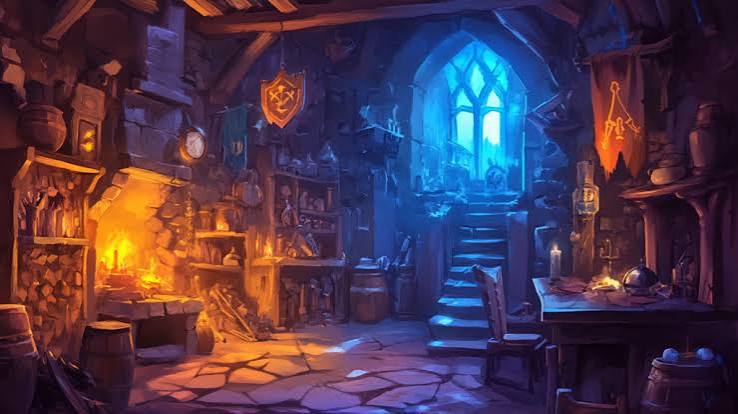
New dungeon masters often make one of two mistakes in world-building: either they build too much before play begins — spending months on lore that their players will never encounter — or they build too little and spend sessions improvising details that then contradict each other in ways that undermine player immersion.
The right approach is somewhere between those extremes, and it’s more structured than most advice suggests.
What to Build Before Session One
You need enough to run coherent sessions and answer the most likely player questions. That means: a clear starting location with enough detail to feel real, three to five active factions with comprehensible motivations, the inciting situation that brought the party together, and enough of the first adventure arc to run two to three sessions without improv.
Everything else — the deep history, the distant regions, the second and third story arcs — can and should wait until you know what your players care about.
Using Generation Tools Effectively
Tools like a custom magic item generator for tabletop games are most useful in world-building when they’re used to populate the texture of the world rather than its structure. Generate the items in the treasure hoards, the minor NPCs who run the shops, the incidental details that make the world feel inhabited. Don’t use generation tools for the narrative spine of the world — that requires authorial intention that tools can’t provide.
The Living World Approach
The Alexandrian’s Node-Based Megadungeon framework is one of the most practical approaches to world-building that scales well during active play. The core idea is to build interconnected locations and factions with active goals, rather than a single linear narrative, so that the world feels like it exists independently of the players.
Documenting What You’ve Built
World-building notes that only you can read are a liability. Build documentation habits from the beginning — consistent naming conventions, a simple faction relationship map, a running timeline of events. When you’re improvising in session and need to check whether the duke’s name was Aldric or Aldren, findable notes save you.
