

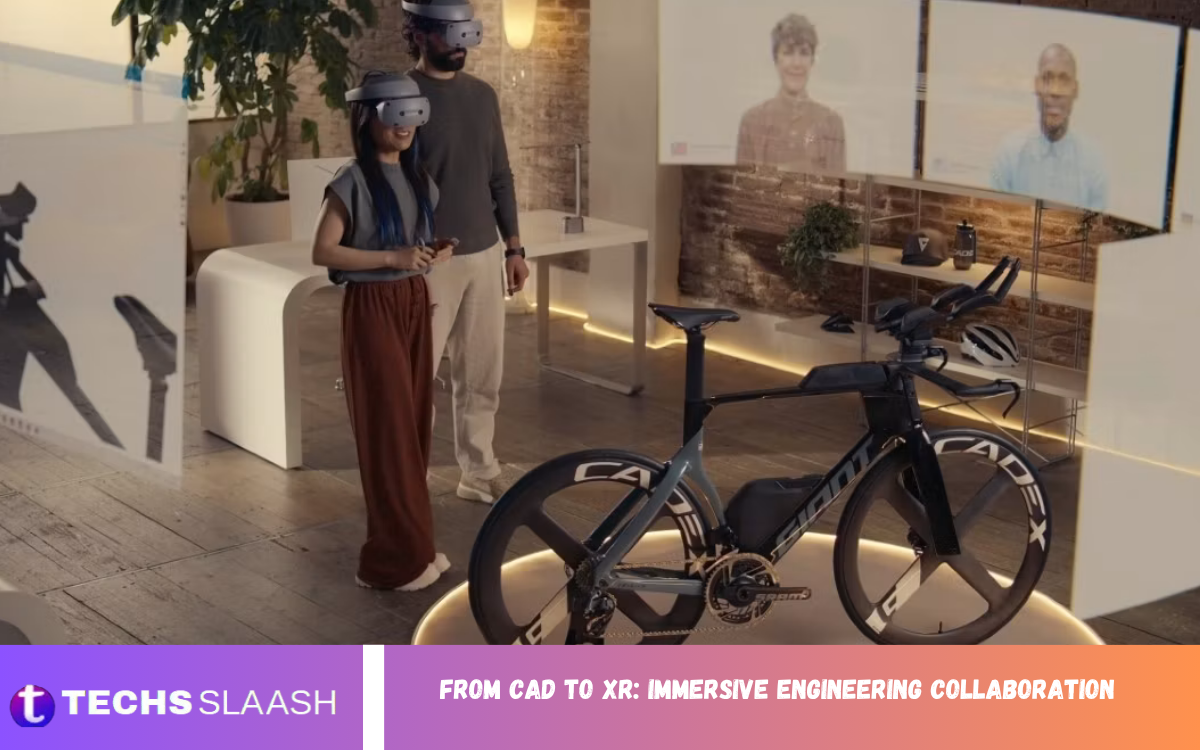
Engineering design has traditionally depended on computer-aided design (CAD) systems to create accurate digital models, technical drawings, and detailed product documentation. While CAD remains essential, modern engineering teams increasingly need more interactive ways to understand complex designs and communicate ideas across disciplines.
From CAD to XR: Immersive Engineering Collaboration represents the next stage of digital engineering. By combining CAD models with extended reality (XR), organizations can transform static designs into immersive experiences where engineers, designers, manufacturers, and clients can explore products and environments in three dimensions.
The Evolution of Engineering Design
CAD changed engineering by replacing many manual drafting processes with accurate digital modeling. Engineers could create complex components, quickly modify dimensions, generate technical drawings, and maintain reusable digital design information throughout a project.
The development of XR builds on this foundation by changing how people interact with those digital models. Instead of viewing a component on a two-dimensional monitor, users can enter an immersive environment, inspect assemblies from different angles, and experience how designs may function within their intended surroundings.
Why Immersive Collaboration Matters?
Engineering projects often involve large teams with different areas of expertise. Mechanical engineers, electrical engineers, architects, manufacturers, project managers, and customers may interpret the same design differently when relying only on drawings or conventional screens.
Immersive collaboration provides a shared visual environment. Team members can examine the same virtual model, discuss specific components, identify design concerns, and make decisions using a more intuitive representation of the proposed product or facility.
Connecting CAD Models With XR
The transition from CAD to XR begins with existing digital design data. Modern engineering workflows can convert or integrate CAD models into XR-compatible environments while preserving important geometry and design information.
Once a model is available in an immersive environment, users can interact with it in ways that traditional CAD interfaces cannot easily provide. They can walk around virtual machinery, inspect assemblies at full scale, evaluate spatial relationships, and study how different components fit together.
Improving Design Reviews
Design reviews are a critical part of engineering development because they provide opportunities to discover errors before manufacturing or construction begins. Traditional reviews may depend heavily on drawings, screenshots, animations, and physical prototypes.
XR can make these reviews more interactive. Engineers can examine a virtual prototype together, highlight areas of concern, compare design alternatives, and discuss modifications while viewing the model at realistic scale. This can make technical discussions clearer and more productive.
Read Also: Creative Grid Web Design
Reducing Design Errors
Small design problems can become expensive when they are discovered late in development. Interference between components, insufficient maintenance space, difficult access points, and poor equipment positioning may not always be obvious in conventional views.
Immersive engineering collaboration gives teams another method for identifying these problems. By experiencing a design spatially, users may recognize issues that are difficult to understand from flat drawings or standard computer screens.
Enhancing Remote Engineering Collaboration
Engineering organizations frequently operate across multiple offices, countries, and project locations. Physical meetings can be expensive and difficult to coordinate, particularly when projects involve international teams or specialized experts.
XR provides an opportunity to create shared virtual workspaces. Participants can enter the same digital environment, examine models, discuss specific features, and review changes without having to travel to a single physical location.
Supporting Better Communication
Engineering concepts can be difficult to explain to people who do not work directly with technical drawings. A detailed CAD assembly may be perfectly understandable to an experienced engineer but confusing to a customer, investor, manager, or production worker.
Immersive visualization creates a more accessible means of communication. Stakeholders can see the proposed design in a realistic environment and understand its size, appearance, arrangement, and functionality without needing advanced CAD knowledge.
Virtual Prototyping and Testing
Physical prototypes remain valuable, but producing them can require significant time, materials, labor, and expense. Multiple design changes may require several prototype iterations before engineers reach an acceptable solution.
Virtual prototypes provide an additional opportunity for testing before physical production. Teams can explore design alternatives, evaluate assembly concepts, study ergonomics, and investigate potential operational issues in an immersive environment.
Manufacturing and Production Benefits
The value of XR does not stop when a design is approved. Manufacturing teams can use immersive models to understand assembly sequences, equipment layouts, production areas, and maintenance requirements.
Workers can also use AR-based experiences to access digital information while interacting with physical equipment. Instructions, component information, or visual guidance can be presented in context, potentially improving training and reducing confusion during complex procedures.
Training Engineering Teams
Technical training often requires employees to understand equipment, machinery, facilities, or production processes that may be expensive or unavailable for continuous practice. XR can create controlled virtual environments where employees can learn without interrupting actual operations.
New engineers and technicians can explore equipment virtually, practice procedures, and develop familiarity with complex systems before working directly with physical assets. This approach can complement traditional classroom instruction and hands-on training.
Improving Product Development
Product development requires continuous communication between engineering, design, manufacturing, marketing, and management teams. Misunderstandings between these groups can result in unnecessary revisions and delays.
Immersive engineering collaboration provides a common visual reference. Instead of discussing a concept only through technical descriptions, teams can interact with a digital representation and evaluate the product from multiple perspectives before final decisions are made.
The Role of Mixed Reality
Mixed reality combines digital content with awareness of the physical environment. For engineering applications, this can be particularly useful because digital CAD information can be viewed alongside real-world equipment, components, or workspaces.
Engineers can potentially compare a digital design with an existing physical environment, examine how a new component may fit into a facility, or visualize proposed modifications without immediately constructing them. This creates a bridge between digital engineering data and physical operations.
Challenges in Adopting XR
Despite its potential, XR adoption involves several challenges. Hardware costs, software compatibility, employee training, data management, and integration with existing engineering systems must be considered before organizations introduce immersive workflows.
Engineering companies also need to establish practical standards for model preparation and collaboration. Extremely detailed CAD models may require optimization before they perform efficiently in an XR environment, making data preparation an important part of the transition.
Data Security and Engineering Information
Engineering models can contain valuable intellectual property, proprietary product information, and sensitive manufacturing details. As organizations connect CAD systems with immersive platforms, protecting this information becomes an important consideration.
Secure access controls, responsible data handling, appropriate authentication, and well-managed collaboration environments can help reduce risks. Companies should evaluate the security practices of XR platforms and ensure that engineering information is shared only with authorized participants.
The Future of Immersive Engineering
The future of engineering collaboration is likely to involve closer integration between CAD, simulation, cloud platforms, artificial intelligence, digital twins, and XR. These technologies can work together to create increasingly interactive digital representations of products and industrial environments.
As hardware becomes more capable and software becomes easier to use, immersive engineering may become part of everyday design reviews rather than a specialized activity. Engineers could move between traditional CAD screens and immersive environments depending on the task they need to complete.
Building an Effective XR Workflow
Organizations considering XR should begin with clearly defined engineering objectives rather than adopting technology simply because it is new. Identifying specific problems such as difficult design reviews, remote collaboration, training requirements, or spatial planning can help determine where XR offers the greatest value.
A practical implementation can begin with a limited project or department. Teams can evaluate model conversion, user experience, collaboration quality, and measurable project benefits before expanding the workflow organization-wide.
Frequently Asked Questions
What does From CAD to XR mean?
From CAD to XR describes the transition from conventional computer-aided design workflows to immersive environments in which engineering models can be explored and reviewed using virtual, augmented, or mixed reality technologies.
How does XR improve engineering collaboration?
XR allows multiple participants to interact with digital engineering models in a shared immersive environment. This can make design discussions more visual, interactive, and understandable for both technical and non-technical stakeholders.
Can existing CAD models be used in XR?
Yes, many CAD models can be prepared or converted for use in XR environments. However, complex models may require optimization to achieve smooth performance while maintaining the information needed for engineering reviews.
What is the difference between CAD and XR?
CAD is primarily used to create, modify, document, and manage digital engineering designs. XR provides immersive ways to visualize and interact with those designs, making the technologies complementary rather than direct replacements for each other.
Can XR reduce engineering costs?
XR can potentially reduce costs by helping teams identify design problems earlier, reduce unnecessary physical prototypes, improve training, and support remote collaboration. Actual savings depend on the project and implementation.
How is XR used in manufacturing?
Manufacturers can use XR for equipment visualization, assembly planning, worker training, maintenance guidance, facility layout, and communication between engineering and production teams.
Is XR useful for remote engineering teams?
Yes. XR can provide shared digital environments where geographically distributed teams review models and communicate about designs without being physically present in the same location.
Can XR replace physical prototypes?
XR cannot completely replace physical prototypes in every engineering application. Physical testing remains important for validating materials, mechanical performance, safety, manufacturing processes, and real-world behavior.
What are the main challenges of engineering XR?
Common challenges include hardware investment, software compatibility, CAD model optimization, data security, employee training, workflow integration, and establishing effective collaboration standards.
What is the future of immersive engineering collaboration?
The future will likely involve stronger connections between CAD, XR, simulation, digital twins, cloud collaboration, and AI-assisted engineering. These technologies can create more connected and interactive development processes.
Conclusion
The move from CAD to XR is more than a change in visualization technology. It represents a broader shift toward engineering environments where people can experience, evaluate, and collaborate around digital designs in more natural ways.
For organizations prepared to integrate immersive technologies thoughtfully, XR can become a valuable extension of existing engineering workflows.

1 Comment
Pingback: Modern Communication Tools in Auto Shops - Techsslaash.com