

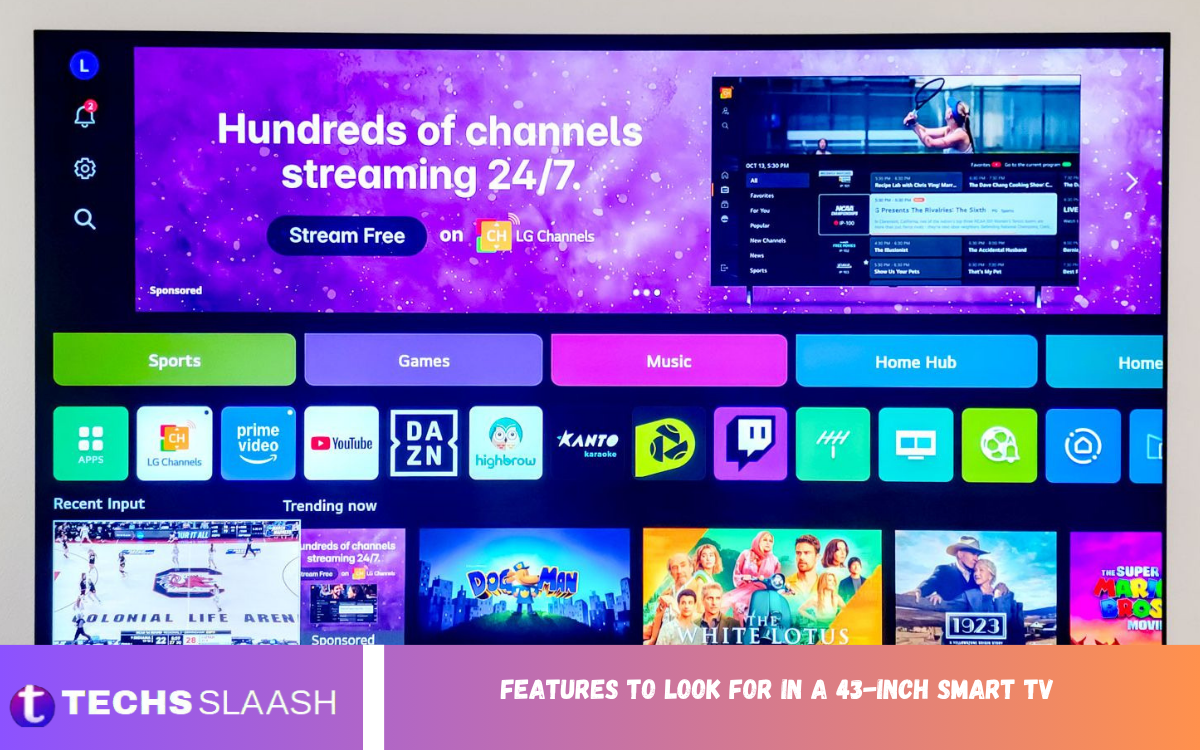
A 43-inch smart TV is an excellent choice for bedrooms, apartments, offices, gaming rooms, and medium-sized living spaces. It offers a comfortable screen size without taking up too much wall or furniture space, making it one of the most practical television options for modern homes.
However, choosing the right model requires more than checking the screen size or price. The best buying decision depends on several important factors, including picture quality, operating system, sound performance, connectivity, smart features, processing power, and overall reliability.
Display Quality and Resolution
One of the most important features to look for in a 43-inch smart TV is display quality. 4K Ultra HD resolution is generally the preferred option because it offers four times as many pixels as Full HD, producing sharper details and clearer images on a screen of this size.
Resolution is not the only factor that matters. Look for a television with good brightness, strong contrast, accurate colors, and wide viewing angles. These features can make movies, sports, television programs, and streaming content look more natural and enjoyable.
HDR Support
High Dynamic Range, commonly known as HDR, can significantly improve the visual experience. HDR allows compatible content to display brighter highlights, deeper shadows, and a wider range of colors compared with standard dynamic range content.
When comparing models, check which HDR formats are supported. A good 43-inch smart TV should provide broad HDR compatibility so you can enjoy better picture quality from supported streaming services, gaming consoles, and other modern devices.
Refresh Rate and Motion Performance
Refresh rate is another feature worth considering, particularly if you enjoy sports, action movies, or video games. A higher refresh rate can make fast-moving scenes appear smoother and reduce distracting motion blur.
You should also consider the television’s motion processing technology. Good processing can improve the appearance of rapidly moving objects without making the picture look unnatural. For everyday viewing, a balanced combination of refresh rate and motion processing is more important than simply choosing the highest advertised number.
Smart TV Operating System
The smart operating system determines how easily you can access applications, streaming platforms, settings, and other connected services. A user-friendly interface makes everyday television use much more convenient.
Look for a platform that receives regular software and security updates and provides access to the applications you actually use. A responsive interface is also important because slow menus and delayed commands can become frustrating over time.
Streaming and App Support
A modern 43-inch smart TV should provide convenient access to popular streaming applications. Before purchasing a television, check whether your preferred entertainment services are supported by its operating system.
App availability can vary between smart TV platforms and regions. Choosing a model with a broad ecosystem of compatible devices can reduce the need for additional streaming devices and keep your entertainment setup simple.
Picture Processor and Upscaling
The picture processor plays an important role in determining how content appears on the screen. A capable processor can improve colors, contrast, sharpness, and motion while processing different types of video signals.
Upscaling is particularly useful because much of the content people watch is not native 4K. A quality processor can enhance lower-resolution content, making it appear cleaner and more detailed on a 4K display.
Sound Quality
Sound should not be overlooked when choosing a television. Although a 43-inch TV has limited space for built-in speakers, some models provide surprisingly clear dialogue and balanced audio for everyday viewing.
Pay attention to speaker output, dialogue enhancement, virtual surround technologies, and compatibility with external audio equipment. If you enjoy movies or music, connecting a soundbar or home theater system can provide a significantly more powerful experience.
HDMI and USB Connectivity
Connectivity is one of the essential features to look for in a 43-inch smart TV. Multiple HDMI ports allow you to connect gaming consoles, streaming devices, Blu-ray players, soundbars, computers, and other equipment without constantly switching cables.
USB ports are also useful for compatible storage devices and peripherals. Before buying, consider how many devices you currently own and whether you might add more in the future. Having extra ports can make your setup more flexible.
Wi-Fi and Bluetooth
Built-in Wi-Fi is essential for a smart TV because most streaming and online services depend on an internet connection. A reliable wireless connection can provide smoother streaming and faster access to online content.
Bluetooth is another useful feature because it enables wireless connection to compatible headphones, speakers, keyboards, and other accessories. This is especially convenient when you want to watch television without disturbing people nearby.
Gaming Features
For gamers, a 43-inch smart TV can provide an excellent balance between screen size and viewing distance. However, gaming performance depends on more than resolution alone.
Look for low input lag, responsive gameplay, suitable refresh-rate support, and features designed for modern consoles and PCs. Technologies such as variable refresh rate can also help reduce screen tearing and provide smoother gameplay when supported by compatible hardware.
Voice Control and Smart Features
Voice control can make a smart TV easier to operate. Instead of navigating menus manually, users can often search for programs, change settings, launch applications, or control compatible smart-home devices using voice commands.
Smart-home integration can also be valuable for connected households. If you already use a particular smart ecosystem, choosing a television that works well with your existing devices can create a more convenient entertainment environment.
Design and Installation Options
A television’s design affects both its appearance and practicality. Slim bezels can provide a more modern look while allowing the display to occupy more of the television’s front surface.
Consider whether you plan to place the TV on furniture or mount it on a wall. Check the stand design, mounting compatibility, weight, and port placement before installation. Proper positioning can also improve viewing comfort and reduce glare.
Brightness and Room Lighting
Room lighting should influence your television choice. If the TV will be placed in a bright room with windows or strong artificial lighting, adequate brightness and good handling of reflections become especially important.
For darker rooms, contrast and black-level performance may be more noticeable. Considering your typical viewing environment helps you choose a television that performs well under the conditions in which you will actually use it.
Energy Efficiency
Energy consumption is another factor to consider, particularly if the television will remain on for several hours each day. Modern TVs often include energy-saving settings that can reduce power usage.
Check the manufacturer’s energy information and available power-saving modes. A more efficient television can help reduce long-term operating costs while also supporting more responsible energy use.
Read Also: Buying Proxy Servers: A Guide to Security, Privacy & Performance
Remote Control and Ease of Use
A good remote control can make a significant difference to the overall user experience. Look for clearly arranged buttons, dedicated shortcuts for commonly used services, and convenient navigation controls.
The television itself should also have simple menus and responsive controls. A feature-rich TV is less useful if basic functions are difficult to find or the interface is unnecessarily complicated.
Storage and Performance
Smart TVs need sufficient internal resources to run applications smoothly. While manufacturers do not always provide detailed information about memory and storage, overall responsiveness can provide useful clues about performance.
A television that opens applications quickly, responds promptly to remote commands, and switches between sources without significant delays will generally provide a better experience. Software optimization can be just as important as hardware specifications.
Warranty and Long-Term Support
Warranty coverage is an important consideration when purchasing a television because repairs can be expensive. Review the manufacturer’s warranty terms and understand what components and issues are covered.
Long-term software support is also valuable for smart TVs. Regular updates can improve functionality, fix security issues, and maintain compatibility with applications. A model with dependable support can remain useful for longer.
Price and Overall Value
Price should be considered alongside features rather than used as the only deciding factor. The cheapest 43-inch smart TV may not provide the best value if it has weak picture quality, limited connectivity, poor software performance, or inadequate support.
Compare specifications and real-world features across different models. The ideal television is one that provides the features you actually need at a price that fits your budget without paying extra for unnecessary technologies.
How to Choose the Right 43-Inch Smart TV
When choosing among different models, begin by identifying your main purpose. Someone who primarily watches streaming services may prioritize picture quality and smart software, while a gamer may care more about input lag, refresh-rate support, and HDMI capabilities.
Your room size, lighting conditions, viewing distance, preferred applications, and connected devices should also influence your decision. Creating a simple list of must-have features can help you avoid paying for specifications that provide little practical benefit.
Common Mistakes to Avoid
One common mistake is choosing a television based entirely on screen resolution. While 4K is valuable, picture processing, contrast, brightness, color performance, and HDR support also influence the final image.
Another mistake is ignoring connectivity and software support. A TV may look impressive in a store but become inconvenient if it lacks enough HDMI ports, does not support your preferred applications, or has an outdated and slow smart platform.
Frequently Asked Questions
Is 43 inches a good size for a smart TV?
Yes, 43 inches is a versatile size for bedrooms, apartments, offices, gaming spaces, and medium-sized rooms. It provides a large enough viewing area without requiring as much space as larger televisions.
Should I choose a 4K 43-inch smart TV?
A 4K model is generally a strong choice because it provides sharper images and more detail. It also gives you access to modern 4K streaming and gaming content when compatible services and devices are available.
What HDR features should I look for?
Look for broad HDR support, good brightness, strong contrast, and effective color reproduction. HDR performance depends on both the television’s supported formats and its ability to display brightness and contrast effectively.
Is refresh rate important on a 43-inch TV?
Refresh rate becomes especially important for gaming, sports, and fast-action content. A suitable refresh rate combined with good motion processing can provide smoother and more responsive visuals.
How many HDMI ports should a 43-inch smart TV have?
The ideal number depends on your devices. If you use a gaming console, soundbar, streaming device, and other equipment, having multiple HDMI ports can prevent the need for frequent cable changes.
Does a smart TV need Wi-Fi?
Most smart TV functions require an internet connection. Wi-Fi allows the television to access streaming services, applications, software updates, and other online features.
Are built-in TV speakers good enough?
Built-in speakers can be sufficient for regular television viewing, especially for news and casual programs. For movies, music, and immersive entertainment, a quality soundbar or external audio system can provide better sound.
What features should gamers prioritize?
Gamers should consider low input lag, suitable refresh-rate support, responsive processing, HDMI capabilities, and variable refresh rate support where available. These features can contribute to smoother gameplay.
Is Bluetooth useful on a smart TV?
Bluetooth can be very useful for connecting compatible headphones, speakers, keyboards, and other wireless accessories. It can make the television more convenient for private listening and connected entertainment.
What is the most important feature to look for?
There is no single feature that is best for everyone. Picture quality, smart software, connectivity, sound, gaming performance, and reliability should be considered together based on your personal viewing needs.
Conclusion
Choosing the right 43-inch smart TV requires careful consideration of more than screen size and price. Display resolution, HDR support, brightness, processing, sound, smart software, connectivity, and gaming capabilities all contribute to the overall experience.
The best approach is to focus on the features that match your lifestyle and entertainment habits.

1 Comment
Pingback: How Companies Are Adapting to AI Innovation - Techsslaash.com