

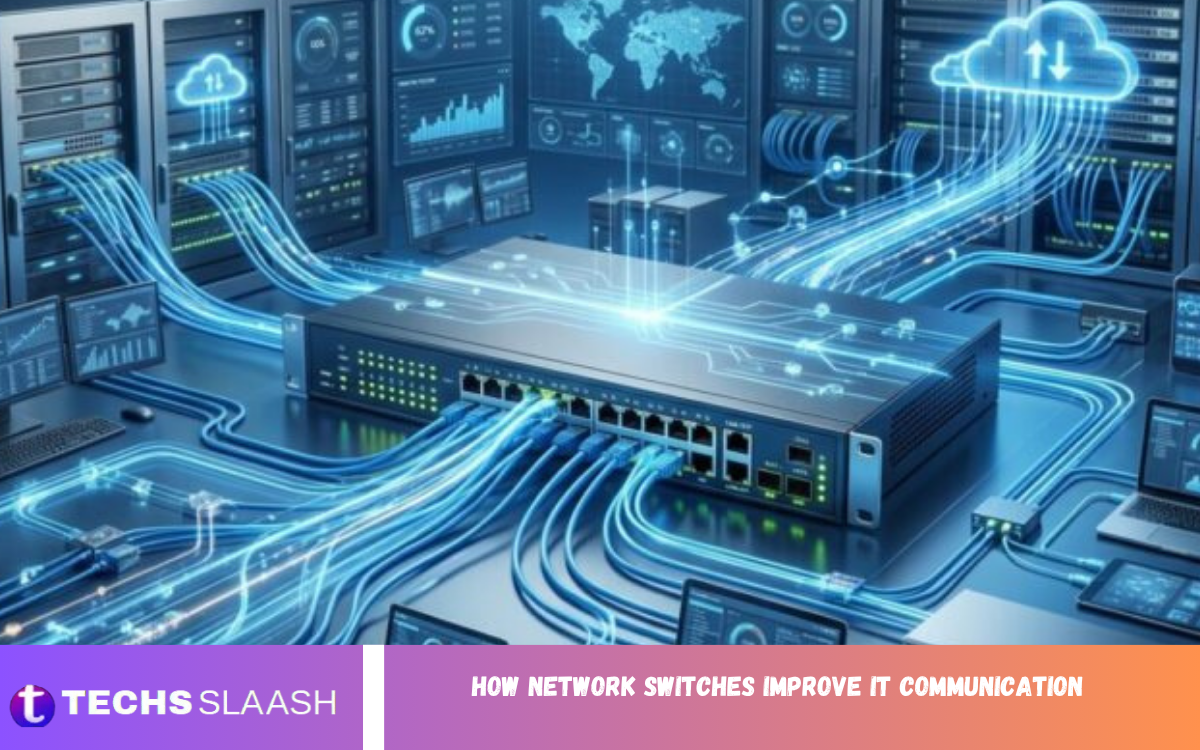
Modern businesses depend on fast, reliable communication among computers, servers, printers, phones, security systems, and other connected devices. Network infrastructure plays an important role in keeping these devices connected and allowing employees to share information without unnecessary delays.
Network switches are one of the most important components of a local network. They manage communication between connected devices and help information reach the correct destination. Understanding How Network Switches Improve IT Communication can help businesses build faster, more organized, and dependable networks.
What Is a Network Switch?
A network switch is a hardware device that connects multiple devices within a local area network. Computers, servers, printers, access points, IP cameras, and other network-enabled equipment can communicate through the switch.
Unlike basic connection equipment that may broadcast information, a switch identifies connected devices and forwards data to the appropriate destination. This intelligent traffic management helps reduce unnecessary network activity and improves overall communication between devices.
How Network Switches Improve IT Communication
Network switches improve IT communication by creating an efficient pathway for data to move between connected devices. When an employee sends a file to another computer, the switch helps direct that information to the intended device rather than unnecessarily sending it across the entire network.
This process makes communication faster and more organized. Employees can access shared files, applications, printers, databases, and other resources with fewer interruptions. For businesses that depend on constant digital communication, efficient switching can make everyday operations smoother.
Faster Data Transfer Between Devices
One of the major advantages of network switches is their ability to support fast data transfer. Modern switches can provide high-speed connections that allow large files, applications, and other information to move efficiently across the network.
Faster communication is especially valuable in offices where employees regularly exchange documents, access cloud applications, work with large media files, or communicate with servers. A properly configured switch can help reduce delays and provide a more responsive network experience.
Reducing Network Congestion
Network congestion can occur when too much data travels through a network at the same time. Heavy traffic can slow down applications, file transfers, video meetings, and other important business activities.
Network switches help manage traffic more efficiently by forwarding data toward its intended destination. This reduces unnecessary communication and allows different devices to communicate without placing excessive demands on every connected system.
Supporting Better Workplace Collaboration
Effective communication between employees often depends on reliable access to shared digital resources. Network switches allow computers and other devices to communicate with servers, storage systems, printers, and collaboration platforms.
When employees can quickly access shared information, teamwork becomes more efficient. Teams can exchange documents, use shared applications, communicate through internal systems, and access important business resources without constantly dealing with network-related delays.
Improving Network Reliability
Reliable communication is essential for businesses because network problems can interrupt daily operations. A well-designed switching environment can provide stable connections between important devices and help reduce communication problems.
Managed switches can also provide monitoring and configuration features that help IT teams identify network issues. Administrators can examine traffic patterns, monitor connected devices, and make adjustments when necessary to maintain reliable communication.
Enabling Full-Duplex Communication
Many modern network switches support full-duplex communication, allowing devices to send and receive data simultaneously. This capability can improve network efficiency because communication need not rely on a single direction at a time.
Full-duplex communication is particularly useful for applications that require continuous data exchange. Voice communication, video conferencing, file transfers, and business applications can benefit from a network environment designed to handle simultaneous data transmission.
Improving Communication With Managed Switches
Managed switches give IT administrators greater control over network communication. They provide configuration options that can help organizations organize traffic, monitor performance, and apply network policies.
Features such as VLAN support, traffic monitoring, port management, and quality-of-service controls can help administrators create a network that matches the organization’s requirements. These capabilities are valuable for businesses with larger or more complex IT environments.
Using VLANs for Organized Communication
Virtual Local Area Networks, commonly called VLANs, allow administrators to logically separate devices within the same physical network infrastructure. Different departments or types of devices can be placed into separate network segments.
For example, an organization could separate employee computers, guest devices, security equipment, and voice systems. This organization can improve network management while helping control communication between different groups of devices.
Supporting Voice and Video Communication
Business communication increasingly depends on voice calls, video meetings, and other real-time applications. These services require a stable connection because delays and interruptions can negatively affect conversations.
Network switches with appropriate traffic-management capabilities can help prioritize important communication. Quality-of-service features can give voice and video traffic suitable priority, helping reduce interruptions when the network is handling other demanding activities.
Read Also: Best LMS Platform in the USA for Safety-Critical Training
Improving IT Security
Network switches can contribute to a stronger security structure when properly configured. Managed switches may provide features that allow administrators to control which devices can connect to specific ports and how different network segments communicate.
Network segmentation can also help limit unnecessary access between systems. By separating sensitive resources from general devices, organizations can create additional layers of protection. Switches should be used alongside firewalls, endpoint protection, access controls, and other security measures for a complete security strategy.
Supporting Business Scalability
As organizations grow, they usually add more employees, computers, servers, phones, access points, and other connected devices. A scalable network requires infrastructure that can accommodate growth without causing major communication problems.
Network switches enable expansion of connectivity by adding ports, switches, and higher-capacity infrastructure as needed. Businesses can therefore develop their network gradually while supporting increasing communication demands.
Power Over Ethernet Capabilities
Some network switches support Power over Ethernet, commonly known as PoE. This technology allows compatible devices to receive both network connectivity and electrical power through a single Ethernet cable.
PoE can simplify the deployment of IP phones, wireless access points, security cameras, and other compatible devices. By reducing the need for separate power connections, businesses can make installations more organized and flexible.
Network Switches and Cloud Applications
Many businesses now depend on cloud-based applications for communication, productivity, storage, and collaboration. Although cloud services operate outside the local network, employees still require a reliable network connection to reach them.
Network switches help provide stable internal connectivity between employee devices and network gateways. When the local network is well designed, employees can access cloud services more consistently and communicate efficiently with external platforms.
Choosing the Right Network Switch
Selecting the correct switch depends on factors such as the number of connected devices, network speed, required features, security needs, and future expansion plans. Businesses should consider whether an unmanaged, smart, or fully managed switch is appropriate for their environment.
Port capacity and connection speed are also important considerations. Organizations should avoid selecting equipment based only on current requirements. Planning for future growth can prevent unnecessary replacement costs and help maintain reliable communication as the network expands.
Best Practices for Network Switch Management
Proper configuration and regular monitoring are essential for getting the best results from network switches. IT administrators should keep firmware updated, review network performance, monitor connected devices, and maintain accurate documentation of network infrastructure.
Security settings should also be reviewed regularly. Unused ports can be disabled where appropriate, administrative access should be protected, and network segmentation should be used when it provides meaningful security or management benefits.
Common Problems With Network Switches
Although switches improve network communication, problems can still occur because of incorrect configuration, damaged cables, overloaded equipment, outdated firmware, or insufficient capacity. Identifying the source of a problem quickly is important for minimizing downtime.
IT teams can troubleshoot by checking switch status, cable connections, port activity, traffic levels, and device configurations. Managed switches can make this process easier because they often provide monitoring and diagnostic information that helps administrators locate communication problems.
The Future of Network Switching
Network switching continues to develop as organizations adopt faster connections, cloud services, wireless technologies, automation, and increasingly connected devices. Modern network infrastructure must handle growing amounts of data while maintaining security and reliability.
As business communication becomes more dependent on digital systems, efficient switching will remain an important part of IT infrastructure. Organizations that invest in scalable, well-managed network equipment can build a stronger foundation for future technology needs.
Frequently Asked Questions
What is the main purpose of a network switch?
A network switch connects multiple devices within a local network and helps direct data between them. It allows computers, servers, printers, access points, and other compatible devices to communicate efficiently.
How do network switches improve IT communication?
Network switches improve IT communication by efficiently managing data traffic between connected devices. They help information reach the appropriate destination while reducing unnecessary network activity.
Are network switches faster than hubs?
Network switches generally provide more efficient communication than traditional hubs because switches can direct data toward specific destinations. A hub typically broadcasts incoming data to connected devices.
What is a managed network switch?
A managed network switch provides administrators with configuration and monitoring capabilities. IT teams can control ports, create VLANs, monitor traffic, and apply various network policies.
Can network switches improve network security?
Network switches can contribute to network security through features such as VLANs, port controls, monitoring, and access restrictions. These capabilities can help organizations separate systems and control network communication.
What is Power over Ethernet?
Power over Ethernet allows compatible network devices to receive electrical power and network connectivity through the same Ethernet cable. This can simplify the installation of certain business devices.
Do small businesses need managed switches?
Small businesses may benefit from managed switches when they need network segmentation, monitoring, traffic control, or additional administrative features. The decision depends on the organization’s size and technical requirements.
Can switches improve video conferencing?
Network switches can help support video conferencing by providing stable and efficient communication between connected devices. Proper network capacity is important for maintaining good performance.
How many devices can a network switch support?
The number of devices depends on the switch’s available ports. Common models may provide different port counts to support small offices, larger organizations, or specialized network environments.
Why is network switch management important?
Network switch management helps IT administrators maintain performance, security, and reliability. Regular monitoring can reveal unusual traffic, configuration problems, connected devices, and potential performance issues.
Conclusion
Understanding How Network Switches Improve IT Communication is important for organizations that depend on reliable digital connectivity. Switches provide efficient communication between computers, servers, phones, printers, access points, and many other network devices.
By reducing congestion, supporting high-speed communication, improving reliability, enabling network segmentation, and providing advanced management capabilities, network switches create a strong foundation for modern IT infrastructure.

1 Comment
Pingback: Best Data Enrichment Tools for Marketing - Techsslaash.com