

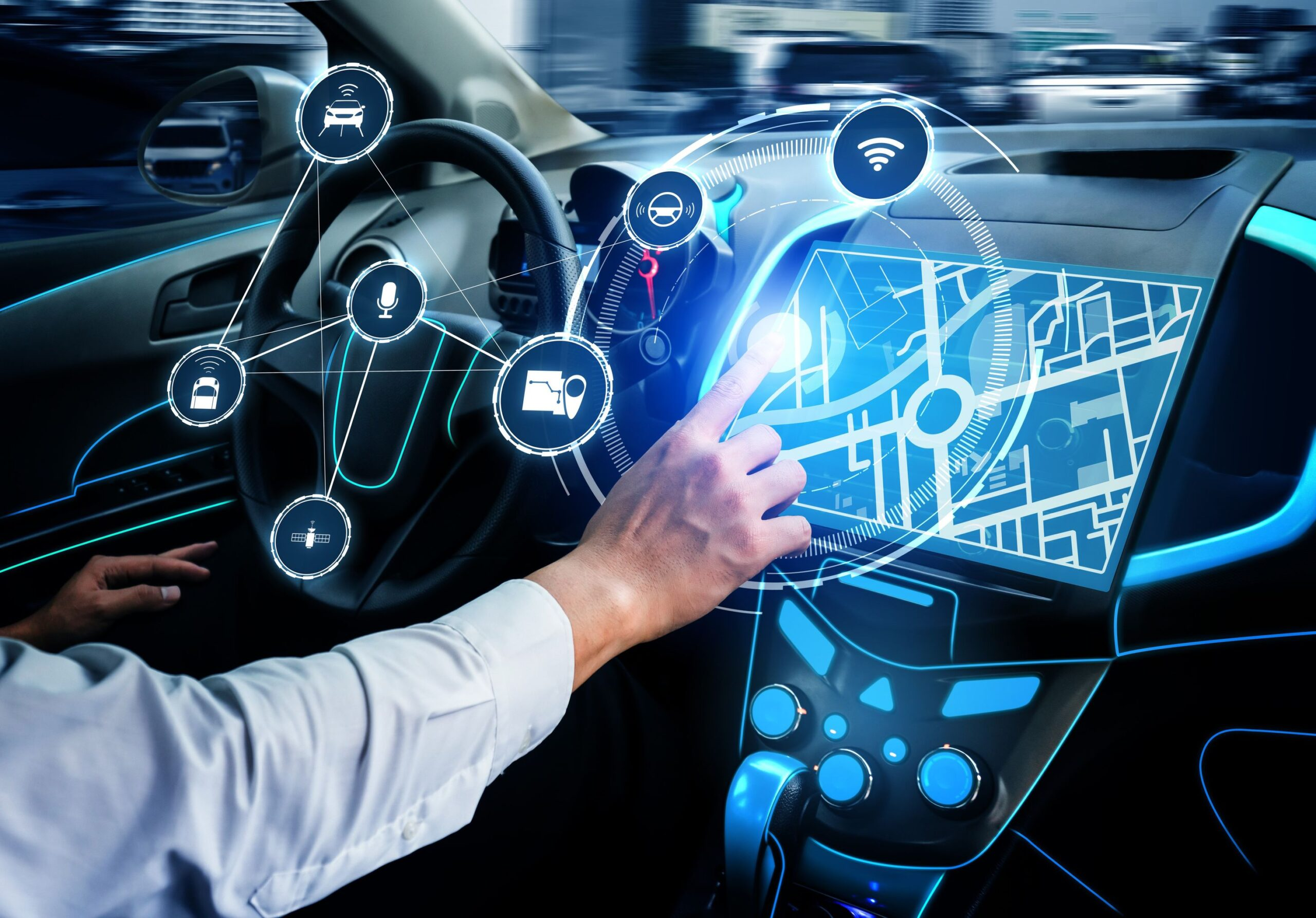
Modern vehicles do much more than get us from one place to another. Many cars now function like computers on wheels, connecting to smartphones, tracking navigation information, running apps, placing calls, streaming music, and communicating with manufacturers through connected-vehicle services.
As a result, a vehicle involved in an accident may contain considerably more digital information than drivers realize.
Depending on the make, model, year, and technology installed in the vehicle, its infotainment or telematics system may contain information about connected phones, recent destinations, vehicle movements, calls, messages, and other activity. In some accident investigations, that information can help attorneys and crash reconstruction experts better understand what happened before a collision.
Quick Highlights
- Modern infotainment systems may store information from smartphones and other devices connected through Bluetooth, USB, or Wi-Fi.
- Some vehicles may retain navigation history, GPS locations, destinations, contacts, call logs, text-message information, or other device data.
- Infotainment data is different from the information stored by a vehicle’s Event Data Recorder, commonly called its “black box.”
- Digital vehicle data may help establish a timeline, identify vehicle movements, or corroborate other evidence after an accident.
- The availability and reliability of the information vary significantly depending on the vehicle and system.
- Preserving the vehicle after a serious accident can be important because repairs, resets, loss of power, resale, or destruction of the vehicle could affect potentially useful electronic evidence.
Your Car May Be Storing More Information Than You Think
Connecting your phone to your vehicle can make driving more convenient. You can make hands-free calls, use navigation, listen to music, and access certain smartphone features through the dashboard.
But some of those conveniences require information to pass between your phone and the vehicle.
The Federal Trade Commission has warned that modern vehicles can store personal information much like smartphones and computers. Depending on the vehicle, that information may include phone contacts, application information, digital media, navigation destinations, frequently traveled routes, and other stored data.
Specialized vehicle-forensics tools can potentially recover additional information from certain infotainment and telematics systems. Examples of data that may be available on some supported systems include:
- Bluetooth, USB, and Wi-Fi connection history
- Identifiers associated with paired smartphones or other devices
- Contact lists
- Call logs
- SMS or message information
- Navigation destinations and favorite locations
- GPS or vehicle location information
- Application data
- Certain vehicle events
- Time and location information associated with recorded events
Not every vehicle records all of this information, and the amount of information available varies considerably among manufacturers and vehicle models. Some systems also store considerably more data than others.
Infotainment Data Is Different From a Vehicle’s “Black Box”
When people hear that a vehicle contains electronic evidence, they often think about the Event Data Recorder, or EDR.
An EDR is different from an infotainment system.
According to the National Highway Traffic Safety Administration, an EDR generally records technical vehicle and occupant information for a brief period immediately before, during, and after certain crashes. Depending on the vehicle, this can include information such as vehicle speed, accelerator input, braking, seatbelt status, airbag deployment, and changes in vehicle velocity during the collision.
Federal regulations specifically define an EDR as a system that records dynamic vehicle information associated with a crash event. Audio and video information are excluded from that federal definition.
An infotainment or telematics system can tell a different part of the story.
Rather than concentrating exclusively on the seconds surrounding the impact, some infotainment systems may contain information about where the vehicle had been, devices that were connected to it, navigation activity, or other events occurring over a longer period.
In a serious accident investigation, information from both systems may potentially be useful.
How Infotainment Data Could Matter After an Accident
Electronic evidence does not necessarily establish fault by itself. However, it can sometimes provide additional information that helps investigators reconstruct the sequence of events surrounding a crash.
Establishing Where a Vehicle Was
Some infotainment and navigation systems retain location information or “tracklogs” that document a vehicle’s geographic movements.
Research published by SAE International has described how forensic examination of certain vehicle infotainment and telematics systems can recover navigation tracklogs providing a time history of a vehicle’s location. Such information may assist with investigating incidents or reconstructing crashes.
Location information could potentially help establish:
- Where a vehicle traveled before an accident
- When it arrived at or departed from a particular location
- The route it took
- Whether its movements are consistent with statements made by drivers or witnesses
The availability and precision of this information depend on the particular vehicle.
Identifying Devices Connected to the Vehicle
A forensic examination may also reveal which smartphones or other devices had previously been connected to certain vehicle systems.
That information could become relevant when distracted driving is an issue in a case.
Importantly, however, evidence that a particular phone was connected to a vehicle does not necessarily prove that the driver was actively using the phone at the time of the accident. A passenger’s device could be connected, a phone might connect automatically, or the system could contain information from previous trips.
Digital evidence must therefore be interpreted in context.
Examining Calls, Contacts, and Messages
Some infotainment systems may retain call logs, contacts, or message-related information transferred from a connected smartphone.
When distraction is suspected, investigators might compare this information with other evidence, including:
- Cellphone records
- Smartphone forensic data
- Witness statements
- Dashcam footage
- Surveillance video
- Vehicle data
- The timing of the collision
No single piece of information should automatically be treated as proof of what a driver was doing.
Building a More Complete Timeline
Accident reconstruction often involves combining many different pieces of evidence.
For example, investigators might compare infotainment information with EDR data showing vehicle speed or braking, cellphone records showing communications activity, surveillance footage documenting vehicle movements, and physical evidence from the accident scene.
When the timestamps and information from multiple independent sources align, investigators may be able to develop a more detailed picture of the moments surrounding a crash.
Connected Cars Can Also Send Data Outside the Vehicle
Not all vehicle information remains inside the dashboard.
Today’s connected vehicles may communicate with manufacturers, mobile applications, telematics providers, and other services. The FTC has identified precise geolocation and driving-behavior information as particularly sensitive categories of connected-vehicle data.
The issue has already resulted in federal enforcement action.
In January 2026, the FTC finalized an order resolving allegations that General Motors and OnStar collected and shared precise geolocation and driving-behavior information without adequately informing consumers and obtaining appropriate consent. Among other requirements, the order requires greater transparency and consumer controls regarding certain connected-vehicle data.
The case illustrates an important point: information associated with a modern vehicle may exist not only inside the vehicle itself but potentially within connected services and other electronic systems.
Who Can Access Your Vehicle’s Data After an Accident?
The answer depends on the type of data, who possesses it, and applicable federal and state law.
Federal law provides specific protections for Event Data Recorder information. Under the Driver Privacy Act of 2015, EDR data generally belongs to the vehicle owner—or lessee in the case of a leased vehicle—and access by others is restricted subject to several exceptions, including court authorization, owner or lessee consent, certain safety investigations, emergency response, and qualifying traffic-safety research.
Infotainment and connected-vehicle information can raise different legal issues.
Questions involving ownership, privacy, consent, search warrants, subpoenas, civil discovery, manufacturer records, and cloud-based data may depend on the circumstances and jurisdiction involved.
For that reason, obtaining vehicle data after a serious crash should generally be handled through proper legal and forensic procedures.
Why Preserving the Vehicle Can Be Important
After an accident, most people understandably focus on medical treatment, insurance claims, transportation, and getting a damaged vehicle repaired or replaced.
But in a serious injury or disputed-liability case, the vehicle itself may be an important source of evidence.
Potential electronic evidence can sometimes be affected when a vehicle is:
- Repaired
- Factory reset
- Returned to a leasing company
- Sold or transferred
- Released by a storage facility
- Salvaged or destroyed
- Subjected to changes in its electronic systems
When important electronic evidence may exist, an attorney may work with qualified experts to determine whether the vehicle should be inspected and whether appropriate preservation notices should be sent to other parties.
Manufacturers, towing companies, salvage facilities, insurers, telematics providers, and other entities could potentially possess evidence relevant to a particular case.
Timing can therefore matter.
Infotainment Evidence Has Limitations
Vehicle data can be valuable, but it should not be treated as infallible.
Different vehicles record different information. Systems may use different timestamp formats, some data may be missing, and certain information can be difficult to interpret without understanding how the particular vehicle operates.
There can also be innocent explanations for information that appears significant at first glance.
A paired phone may belong to a passenger. A navigation destination may have been entered days earlier. An automatically connected device does not necessarily indicate active use by the driver. Multiple family members may regularly drive the same vehicle.
Even NHTSA cautions that traditional EDR information should be considered along with other evidence when reconstructing an accident rather than relied upon in isolation.
The same principle is especially important with infotainment data.
Other Digital Evidence That May Matter After a Crash
Infotainment information is only one potential source of electronic evidence.
Depending on the circumstances, an accident investigation may also involve:
- Event Data Recorder information
- Cellphone records
- Smartphone forensic evidence
- Dashcam recordings
- Traffic-camera footage
- Business surveillance video
- GPS and navigation records
- Rideshare or delivery-app records
- Electronic toll records
- Commercial-vehicle electronic logging devices
- Telematics or fleet-management systems
- Connected-vehicle information maintained by manufacturers or service providers
Combined with physical evidence, witness testimony, police reports, photographs, and expert analysis, these records may help establish what occurred.
After an Accident, Your Vehicle May Be Part of the Evidence
A damaged vehicle is not simply a collection of mechanical components anymore. In many cases, it is also a digital device capable of recording or communicating information about where it has been, what devices have connected to it, and how certain systems were being used.
That information does not automatically prove who caused a crash. But in the right case, properly preserved and interpreted vehicle data can provide another piece of the evidence needed to understand what happened.
Anyone involved in a serious accident where fault is disputed, distracted driving is suspected, or the sequence of events is unclear should consider the possibility that relevant digital evidence may exist. Because some information can be lost, overwritten, or become difficult to obtain after a vehicle is repaired, sold, or destroyed, preserving potentially relevant evidence early in an investigation can be especially important.
This article is for general informational purposes and is not legal advice. The laws governing vehicle data, privacy, evidence preservation, and access to electronic information vary by jurisdiction and circumstance.
