

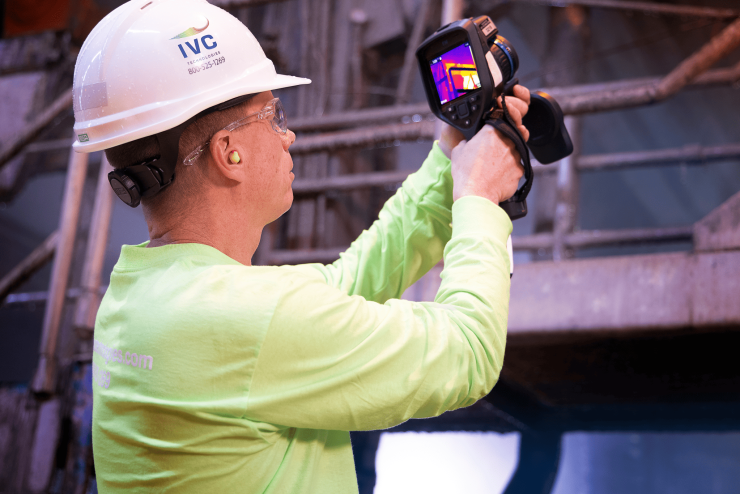
Failure of the machinery can result in problems during production, increase costs for maintenance, and even pose safety risks. The application of thermal diagnostics is an effective method for detecting possible problems in the machinery without interfering with its operation. With the help of infrared technologies, abnormal heat readings will be discovered, enabling maintenance staff to resolve these problems. The following are the five ways in which thermal diagnostics can be used effectively.
Supporting Predictive Maintenance Strategies
In traditional maintenance, maintenance is carried out at fixed intervals, with parts being checked at regular intervals. Even though there are advantages of scheduled maintenance, there can be unnecessary maintenance when the machine is still in good working order. There could also be no maintenance if there are unexpected changes that happen between the scheduled maintenance checks. In thermal diagnostics, we get some condition information that would help us in making our maintenance decisions. Multiple readings will provide a history of temperature trends that can be compared to each other. An increase in temperature could mean that the conditions of wear, electrical resistance, or ventilation have changed.
Detecting Faults and Failures Early
Thermal diagnostic is considered one of the main benefits of using infrared because it helps in the detection of the problem even before it causes the equipment to fail. Components like electrical connections, motors, switches, transformers, bearings, and many others can create an increase in temperature when they have high resistance, friction, overloading, and degradation. Businesses that want dependable assessments can choose reliable infrared inspection services to support regular condition monitoring. Early detection gives maintenance teams more time to schedule corrective work, order replacement components, and address hazards under controlled conditions. Rather than waiting for visible damage or a sudden breakdown, organizations can use thermal information as an early warning signal.
Reducing Unplanned Production Interruptions
Downtime that occurs unplanned can affect the output rate, scheduling, personnel deployment, and customer promises. Thermal imaging can aid in reducing the probability of such an occurrence by detecting the components that need to be taken care of before their malfunction causes a shutdown. Since some infrared imaging can take place on the equipment while it is still running, it would not be necessary to shut down a whole production line when checking out the critical components. Thus, the use of thermal imaging is especially useful in the case of electrical distribution systems and other equipment that cannot be examined visually during the routine inspection.
Improving Workplace and Equipment Safety
Sometimes abnormal temperatures can signify a situation with potentially major safety hazards. Loose electrical connections, overload, worn-out parts, or too much friction could all create excess heat indicating a safety risk. Thermography offers a way of detecting abnormal temperatures without having to come near the equipment and put people at risk. This could help in the inspection of various assets such as electrical panels, switchgear, and motors. However, thermal images by themselves cannot be used as a final diagnostic result. The findings should be considered along with other data related to the equipment’s operation, such as its specifications, the level of the current load, and others.
Turning Inspection Data Into Long-Term Reliability Improvements
Thermal diagnostic inspections become all the more useful if the results are systematically recorded and used as a basis for decision-making in the future. Regularly recorded data will allow establishing baselines of temperatures for each piece of equipment in question and spotting abnormal changes. The maintenance personnel will be able to use previous findings to detect repeated problems, analyze repair efficiency, and see which components need to be monitored more frequently. It might also become apparent if there is a bigger problem at hand, such as poor ventilation, repeated connection failures, or misuse of the equipment. Such information will help to plan maintenance and asset management efforts in the future.
Thermal diagnostics is a useful tool for providing maintenance workers with insight into equipment condition and for making proactive decisions. Early failure detection, predictive maintenance, minimizing disruptions, increasing awareness regarding safety issues, and more effective use of inspection results may lead to higher reliability. As soon as thermal diagnostics becomes a part of an overall maintenance plan, the company gets an opportunity to act upon emerging problems earlier and to make decisions in a more informed way.
