

Forex trading, also known as foreign exchange trading, involves buying one currency while selling another to benefit from changes in exchange rates. It is one of the world’s largest financial markets, attracting individual traders, financial institutions, banks, and businesses. The market operates across international financial centers, allowing participants to trade currencies during different global trading sessions.
A successful Forex Trading Guide should explain how the market works, which strategies traders can use, and why risk management is essential. Although Forex trading offers opportunities to participate in currency price movements, it also involves substantial financial risks. Understanding market fundamentals, practicing with a demo account, and developing a disciplined trading plan can help beginners make more informed decisions.
Understanding How the Forex Market Works
The Forex market operates through a decentralized global network rather than a single central exchange. Traders buy and sell currency pairs, such as EUR/USD, GBP/USD, and USD/JPY, based on their expectations of how exchange rates will change. Currency prices are influenced by economic conditions, interest rates, political developments, and market sentiment.
Every currency pair contains a base currency and a quote currency. For example, in EUR/USD, the euro is the base currency and the US dollar is the quote currency. If the exchange rate rises, the euro has strengthened relative to the dollar. If it falls, the euro has weakened relative to the dollar. Understanding these price movements helps traders evaluate potential opportunities.
Types of Forex Currency Pairs
Currency pairs are generally divided into major, minor, and exotic categories. Major pairs include currencies from large economies, such as EUR/USD, GBP/USD, and USD/JPY, and typically involve the US dollar. These pairs often offer greater liquidity and relatively tighter spreads than less frequently traded currencies, although trading costs vary by broker and market conditions.
Minor pairs do not include the US dollar but combine other widely traded currencies, such as EUR/GBP and GBP/JPY. Exotic pairs usually combine a major currency with a currency from an emerging or smaller economy. Exotic pairs may have wider spreads, lower liquidity, and greater transaction costs. Beginners should compare these characteristics before selecting currency pairs for their trading plans.
Popular Forex Trading Strategies
Forex trading strategies provide a structured approach to identifying potential market opportunities. Some traders focus on short-term price movements, while others hold positions for several days or weeks. Common approaches include scalping, day trading, swing trading, and position trading. The most appropriate strategy depends on a trader’s experience, available time, financial circumstances, and tolerance for risk.
A reliable strategy should include clear entry conditions, exit rules, position sizing, and risk limits. Traders should avoid choosing strategies simply because they promise quick profits. Instead, they can evaluate historical performance, test their methods with historical data, and practice in a demo account. No strategy guarantees profits, and results can change as market conditions evolve.
Scalping Strategy in Forex Trading
Scalping is a short-term trading approach that seeks to capture small price movements through frequent trades. Scalpers often use short chart timeframes, monitor spreads closely, and look for periods when market liquidity supports efficient execution. Because this method involves frequent transactions, even small trading costs can significantly affect overall results.
Scalping requires concentration, fast decision-making, and a clear understanding of order execution. Sudden price changes, slippage, and widening spreads can reduce profitability. Beginners should understand these challenges before attempting this approach with real money. Practicing with a demo account and tracking transaction costs can help traders determine whether scalping suits their skills and circumstances.
Day Trading Strategy for Beginners
Day trading involves opening and closing positions within the same trading day to avoid holding trades overnight. Traders commonly analyze intraday charts, price levels, market momentum, and scheduled economic announcements. Some focus on breakouts, while others look for reversals or continuation patterns supported by technical indicators.
A disciplined day trader establishes daily risk limits and avoids taking unnecessary positions after reaching those limits. Spending too much time watching charts can lead to emotional decisions and overtrading. Traders should concentrate on a small number of currency pairs, follow a predefined plan, and evaluate performance regularly rather than judging success by individual trades.
Swing Trading and Position Trading
Swing trading attempts to capture price movements that develop over several days or weeks. Traders often combine technical analysis with economic information to identify potential trends, support and resistance levels, and market reversals. This approach may suit people who cannot monitor the Forex market continuously throughout the day.
Position trading generally involves holding trades for weeks or months, depending on the strategy and market outlook. Position traders may place greater emphasis on monetary policy, economic growth, inflation, and long-term currency trends. Both approaches require patience and an understanding of overnight financing costs, potential market gaps, and the possibility of substantial price movements against an open position.
Technical Analysis for Forex Trading
Technical analysis involves studying price charts, historical market behavior, and trading indicators to identify potential trading opportunities. Traders often use candlestick patterns, trendlines, support and resistance levels, moving averages, and momentum indicators. These tools can help organize market information, but they cannot predict future prices with certainty.
A practical approach is to combine a small number of complementary tools rather than relying on numerous indicators. For example, a trader might identify the overall trend using a moving average and then examine support and resistance for a possible entry. Every setup should include an exit plan and a predefined risk limit, regardless of how convincing the chart appears.
Fundamental Analysis in the Forex Market
Fundamental analysis examines economic and political factors that influence currency values. Important indicators include inflation, employment figures, gross domestic product, retail sales, and central bank interest rate decisions. Strong economic data can support a currency in some circumstances, while weaker data may create downward pressure, depending on market expectations and other developments.
Central bank announcements are particularly important because interest rates can influence investment flows and currency demand. However, markets often respond to the difference between actual announcements and what traders expected beforehand. Beginners should follow reputable economic calendars, understand the importance of scheduled releases, and recognize that unexpected news can cause rapid price movements and increased volatility.
Best Times to Trade Forex
The Forex market generally operates 24 hours a day, five days a week, through interconnected financial centers. Major trading sessions include Sydney, Tokyo, London, and New York. Market activity varies throughout the day, with liquidity and volatility often increasing when major financial sessions overlap.
The London and New York session overlap is commonly associated with substantial trading activity in many major currency pairs. However, higher activity does not automatically create better opportunities or lower risk. Traders should consider their chosen currency pair, strategy, local schedule, and the economic calendar when selecting trading hours. They should also remember that liquidity can change significantly around major announcements and holidays.
Essential Forex Trading Tips
One of the most useful Forex trading tips is to create a written trading plan before entering the market. The plan should identify the currency pairs being traded, the conditions required for entry, acceptable risk per trade, profit-taking rules, and circumstances that require avoiding the market. Clear rules can reduce impulsive decisions and improve consistency.
Another important tip is to keep a trading journal. Record the reasons for entering each position, the planned stop-loss level, the outcome, and any mistakes made during the process. Reviewing this information can reveal recurring problems, such as entering trades too early or increasing position sizes after a loss. Continuous learning and honest performance reviews are more valuable than chasing guaranteed-profit claims.
Forex Risk Management Techniques
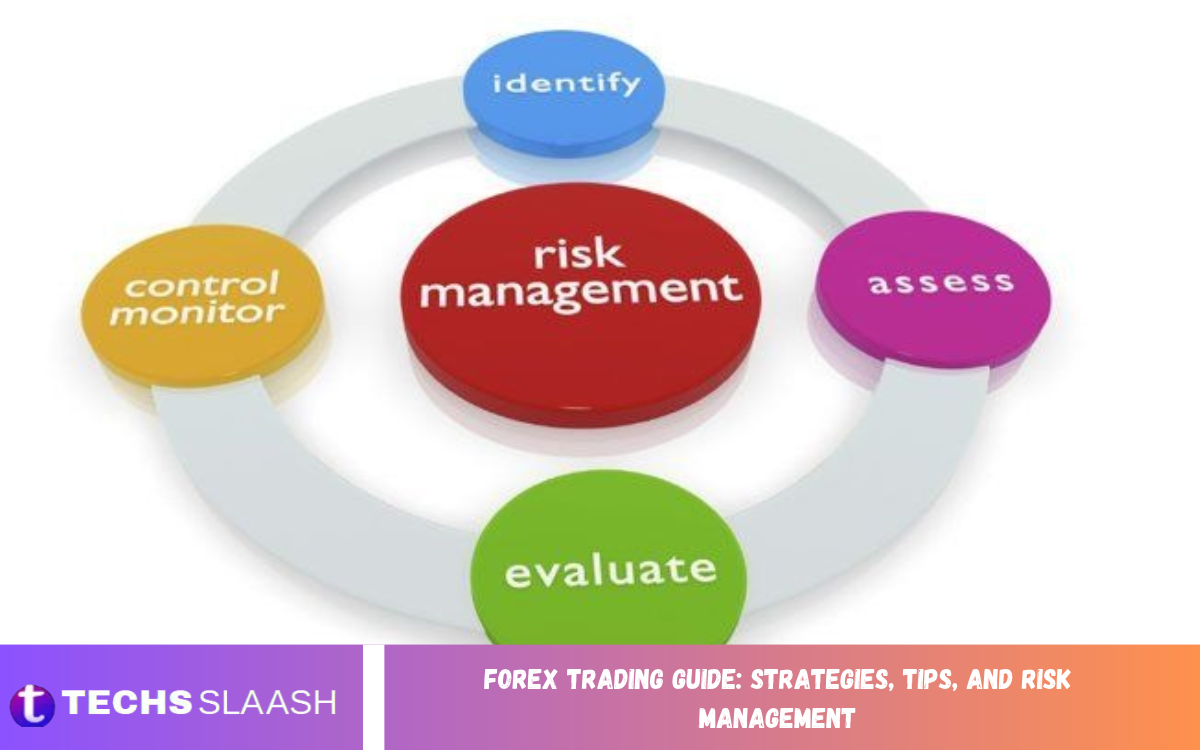
Risk management is one of the most important parts of a sustainable Forex trading approach. Currency prices can move unexpectedly, and leverage can magnify both profits and losses. Traders should determine how much they can afford to lose before opening a position and avoid risking money needed for essential expenses, emergency savings, or existing financial obligations.
Many traders use a small percentage of their trading capital as a guideline for the maximum risk on an individual trade. For example, risking 1% of a $1,000 account would mean a planned loss of $10 if the stop-loss executes at the expected price. This is an illustration, not a universal recommendation. Position size, volatility, slippage, and trading costs must also be considered, and losses may exceed the planned amount in some circumstances.
Using Stop-Loss and Take-Profit Orders
A stop-loss order is designed to close a position when the market reaches a specified adverse price level. It can help limit losses, particularly when traders establish the level before entering a trade. However, stop-loss execution is not always guaranteed at the exact requested price, especially during market gaps or periods of extreme volatility.
A take-profit order lets traders specify the price at which they want to close a profitable position. Using stop-loss and take-profit levels together can help traders establish a clear trading plan and assess potential reward relative to risk. These orders should be based on the strategy and market structure rather than arbitrary price distances. Traders must also understand the execution policies of their brokers.
Read Also: Latest Cryptocurrency Market News and Analysis
Understanding Leverage and Margin
Leverage allows traders to control a position larger than the amount of capital committed as margin. Although leverage can increase potential returns from small price movements, it also magnifies losses and can cause account equity to decline rapidly. A small adverse movement may have a significant effect when a position is large relative to available capital.
Margin is the collateral required to maintain a leveraged position. If account equity falls below the broker’s required margin level, positions may be closed automatically. Before trading, beginners should understand margin requirements, liquidation rules, overnight financing charges, and the broker’s maximum leverage limits. Using lower leverage and smaller positions can help reduce exposure, but neither approach eliminates the risk of loss.
Common Forex Trading Mistakes to Avoid
A common mistake is trading without a clear strategy or entering positions based on rumors and unverified predictions. Other frequent problems include overtrading, ignoring economic announcements, using excessive leverage, and moving stop-loss orders farther away to avoid accepting a loss. Such behaviors can increase financial exposure and undermine an otherwise reasonable trading plan.
Emotional trading is another major challenge. Fear may cause traders to exit positions prematurely, while greed can encourage them to hold losing trades or increase position sizes unnecessarily. Traders should establish rules for taking breaks after stressful sessions and avoid attempting to recover losses through increasingly risky trades. Consistency comes from following a tested process, not from winning every transaction.
How to Choose a Reliable Forex Broker
Choosing a Forex broker requires careful research into regulation, trading costs, account terms, execution quality, and customer support. Traders should verify the broker’s authorization with the relevant financial regulator and confirm that the registration details match the exact legal entity offering the account. Regulatory protections differ by country and may not apply equally to every customer.
Before depositing money, compare spreads, commissions, withdrawal policies, available currency pairs, and platform features. Read the broker’s terms carefully, including its rules for negative balances, client fund protection, and dispute resolution. Be cautious of firms that promise guaranteed returns, pressure customers into depositing more money, or make withdrawals difficult. A demo account can help evaluate the platform before committing funds.
Practicing Forex Trading With a Demo Account
A demo account lets beginners practice trading with simulated funds instead of risking real money. It provides an opportunity to learn how to place orders, interpret charts, calculate position sizes, and use risk-management tools. Traders can also compare strategies and get familiar with the platform.
Although demo accounts are useful, their results may not fully reflect live trading conditions. Real accounts involve emotional pressure, and execution, spreads, and slippage may differ from simulated environments. Before moving to live trading, traders should demonstrate consistency over a meaningful testing period and ensure they understand the potential financial consequences. Starting small, where appropriate, can limit initial exposure while experience develops.
Frequently Asked Questions
What Is Forex Trading?
Forex trading involves buying one currency and selling another to benefit from changes in their relative exchange rates. Participants include banks, financial institutions, businesses, and individual traders. Profits are not guaranteed, and traders can lose some or all of the money they put at risk.
Is Forex Trading Suitable for Beginners?
Beginners can learn Forex trading by studying currency pairs, market analysis, order types, and risk management. Practicing with a demo account is a useful starting point. However, leveraged Forex trading can be complex and risky, so beginners should avoid risking money they cannot afford to lose.
How Much Money Is Needed to Start Forex Trading?
The amount required depends on the broker’s minimum deposit, account type, margin requirements, and the trader’s financial circumstances. A low minimum deposit does not make trading safer. Traders should first understand position sizing, transaction costs, and potential losses before deciding whether to fund an account.
Which Forex Trading Strategy Is Best?
There is no single best Forex trading strategy for everyone. Scalping, day trading, swing trading, and position trading have different time commitments and risk characteristics. The appropriate approach depends on the trader’s goals, experience, schedule, and ability to follow a consistent plan.
Can Forex Trading Be Profitable?
Forex trading can generate profits, but it can also result in substantial losses. Outcomes depend on market conditions, trading costs, strategy performance, execution, and risk management. No indicator, trading system, or individual trader can guarantee consistent profits in every market environment.
What Is the Best Currency Pair for Beginners?
Beginners often study major currency pairs such as EUR/USD because they typically have high liquidity and relatively tight spreads. Nevertheless, costs and volatility vary by broker and market conditions. Traders should understand the currencies involved and test their strategies before trading any pair with real money.
What Is Leverage in Forex Trading?
Leverage enables traders to control a larger position using a smaller amount of margin. It increases exposure to price movements and can magnify losses as well as gains. Traders should understand their broker’s margin requirements and liquidation rules before using leveraged products.
How Does a Stop-Loss Order Work?
A stop-loss order is intended to close a position when the market reaches a specified price against the trader. It helps define planned risk, but execution may occur at a different price during fast markets or gaps. Traders should account for this possibility when sizing positions.
How Can Traders Manage Forex Risk?
Traders can manage risk by limiting position sizes, using appropriate stop-loss orders, avoiding excessive leverage, and setting clear limits on acceptable losses. They should also diversify thoughtfully, monitor economic announcements, and avoid risking essential savings. These measures reduce certain risks but cannot eliminate them.
Is Forex Trading Available Every Day?
The Forex market generally operates continuously from Sunday evening to Friday evening in major financial time zones, although exact opening and closing times vary with daylight saving changes and the broker’s schedule. Trading activity may be lower during holidays and certain sessions. Weekend gaps can affect positions held when markets reopen.
Conclusion
Forex trading requires knowledge, patience, preparation, and disciplined risk management. Understanding currency pairs, technical and fundamental analysis, trading sessions, and common strategies provides a foundation for evaluating market opportunities. However, no strategy can remove uncertainty or guarantee financial success.
The most practical approach is to build a written trading plan, practice with a demo account, keep accurate trading records, and control exposure through appropriate position sizing and risk limits. Traders should also research their brokers carefully and remain cautious of unrealistic promises.

1 Comment
Pingback: Popular Forex Trading Strategies for Consistent and Informed Trading - Techsslaash.com