

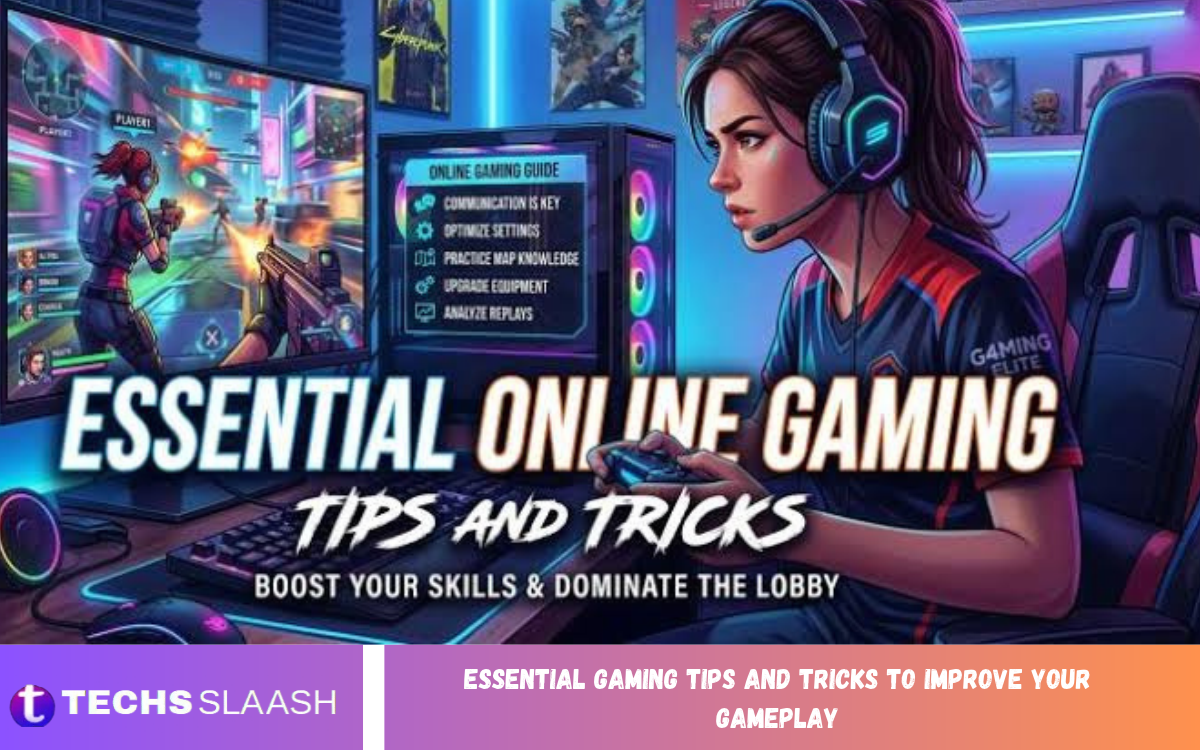
Gaming has become more than just a way to pass the time. Whether you enjoy competitive multiplayer battles, battle royale games, racing challenges, role-playing adventures, or casual mobile games, improving your gameplay can make every session more enjoyable. However, becoming a better player requires more than spending countless hours in front of a screen. It takes patience, practice, smart decisions, and a willingness to learn from mistakes.
The right strategies can help you react faster, make better decisions, understand game mechanics, and perform consistently under pressure. From mastering your controls to developing effective teamwork, small improvements can produce noticeable results over time. These essential gaming tips and tricks to improve your gameplay will help beginners and experienced players develop stronger habits, overcome common challenges, and enjoy a more rewarding gaming experience.
Understand the Basics of Your Game
Before trying advanced strategies, take time to understand the basic mechanics of your chosen game. Learn how movement, aiming, attacking, defending, inventory management, abilities, and other essential features work. Knowing these fundamentals allows you to respond confidently instead of wasting valuable time figuring out what to do during important moments.
Every game has its own rules, objectives, and winning conditions. A battle royale game requires survival and positioning, while a racing game focuses on speed, braking, and cornering. Understanding the purpose of each mechanic helps you develop strategies that match the game’s demands and avoid unnecessary mistakes.
Practice Regularly and Consistently
Consistent practice is one of the most effective ways to improve your gaming skills. Instead of playing for long hours without a clear goal, dedicate shorter sessions to specific areas such as aiming, movement, timing, or decision-making. Focused practice helps you recognize weaknesses and build reliable habits that become easier to maintain during competitive matches.
Create a realistic gaming routine that fits your daily schedule. Spend some time warming up, practice a particular skill, and finish by reviewing what went well and what needs improvement. Regular sessions are generally more productive when you remain focused and rested, rather than continuing to play when frustration or tiredness affects your performance.
Master Your Controls and Settings
Your control settings can significantly influence how well you perform. Explore the available options for sensitivity, button layouts, graphics, audio, and camera movement. Choose settings that feel comfortable and allow you to respond quickly without sacrificing accuracy. Avoid changing multiple settings after every disappointing match, as constant adjustments can make it harder to develop muscle memory.
Experiment with different configurations in practice mode before using them in competitive games. If you play on a mobile device, consider whether your grip and button placement allow you to move, aim, and perform actions comfortably. PC and console players should also check key bindings, controller layouts, and input responsiveness to find a setup that supports their preferred playstyle.
Improve Your Aim and Accuracy
Accuracy is essential in many action games, especially first-person shooters and battle royale titles. Practice keeping your crosshair at the level where opponents are likely to appear, tracking moving targets, and controlling recoil when firing. These habits reduce the time needed to aim and help you make more effective use of ammunition during intense encounters.
Avoid rushing every shot simply because an opponent appears on your screen. Learn when to fire, when to reposition, and when to wait for a clearer opportunity. Use training ranges or offline practice modes to develop consistent aim before entering competitive matches. Over time, controlled movements and deliberate shooting can improve both confidence and performance.
Learn the Maps and Game Environment
Map knowledge gives players a valuable advantage because it helps them understand where to move, where danger may appear, and which locations offer useful resources. Learn important routes, hiding places, high-ground positions, escape paths, and areas where opponents commonly gather. Familiarity with the environment reduces hesitation and makes navigation more efficient.
Pay attention to the way each map changes throughout a match. Objectives, shrinking safe zones, available resources, and enemy movements may influence which route is best. Rather than repeatedly following the same path, assess the situation and adjust your movement accordingly. Strong map awareness allows you to avoid unnecessary fights and approach objectives with a clearer plan.
Develop Better Game Sense and Decision-Making
Game sense means understanding what is happening around you and predicting what may happen next. It develops through observation, experience, and thoughtful analysis. Notice enemy behavior, listen for sound cues, monitor available resources, and consider the possible consequences of your actions before committing to a risky move.
Good decision-making also involves knowing when not to fight. An aggressive approach may work in one situation but create unnecessary danger in another. Evaluate your health, equipment, position, teammates, and objective before choosing your next action. Players who make thoughtful decisions often perform more consistently than those who rely entirely on quick reactions.
Communicate Effectively With Your Team
Teamwork can make a significant difference in games that involve squads, cooperative missions, or organized competition. Communicate important information clearly, including enemy positions, available supplies, objective changes, and potential threats. Short, accurate messages are usually more useful than constant conversation that distracts teammates from what is happening on screen.
Respect your teammates and avoid blaming them whenever a match goes badly. Discuss mistakes constructively and focus on what the team can improve in the next round. If voice communication is unavailable, use built-in pings, markers, and quick-chat options. Effective communication builds coordination, reduces confusion, and helps everyone work toward a shared objective.
Manage Your Resources Wisely
Resource management is another essential gaming skill. Depending on the game, resources may include ammunition, health items, currency, energy, equipment durability, abilities, or limited-use power-ups. Using these resources at the wrong time can leave you unprepared for a difficult encounter or prevent you from completing an important objective.
Learn which resources are most valuable in different situations and avoid collecting items that provide little practical benefit. In survival games, prioritize supplies that support your immediate needs. In strategy games, consider whether spending resources now will create a disadvantage later. Careful planning helps you remain prepared and make better use of every opportunity.
Study Your Mistakes and Learn From Defeats
Losing a match can be frustrating, but it can also reveal important lessons. Instead of immediately blaming luck, teammates, or opponents, identify the decisions that contributed to the result. You might have moved into an exposed area, ignored an audio cue, used an ability too early, or failed to communicate an important threat.
If your game offers replay or match-history features, review difficult moments and look for patterns. Focus on one or two improvements rather than trying to fix every weakness at once. A thoughtful review turns an unsuccessful match into useful experience and helps prevent the same mistakes from becoming repeated habits.
Read Also: Latest Gaming News and Updates
Optimize Your Gaming Setup
A comfortable gaming setup supports concentration and consistent performance. Make sure your screen is positioned at a comfortable height, your chair provides suitable support, and your keyboard, mouse, or controller is easy to reach. Reduce unnecessary distractions and maintain enough space to move comfortably during longer sessions.
Performance settings also matter. If your device struggles with demanding graphics, lowering selected visual effects may improve frame rates and responsiveness. Keep your game updated, close unnecessary background applications when appropriate, and use a stable internet connection for online matches. A reliable setup helps you focus on gameplay instead of technical problems.
Maintain Focus and Control Your Emotions
Emotional control is an important part of competitive gaming. Frustration can lead to rushed decisions, careless movement, and unnecessary arguments with teammates. When a match becomes stressful, take a breath and return your attention to the immediate objective rather than allowing one mistake to influence every decision that follows.
Recognize when you need a break. If you repeatedly make careless errors or feel increasingly irritated, stepping away for a few minutes can help restore concentration. Avoid treating every match as a test of your ability. A calm mindset makes it easier to analyze situations, adapt to opponents, and enjoy the process of improving your skills.
Learn From Experienced Players
Watching skilled players can help you discover strategies that you might not encounter through ordinary gameplay. Pay attention to how they position themselves, manage resources, approach objectives, and respond when plans fail. Instead of copying every move, consider why a particular decision works and whether it suits your own strengths and the game you play.
Use tutorials, gameplay demonstrations, and competitive match reviews as learning tools. Compare different playstyles and test useful techniques in a safe practice environment. Remember that advanced players may have equipment, experience, or team coordination that differs from yours. Adapt their ideas gradually and develop a style that feels natural rather than forcing yourself to imitate someone else.
Build a Balanced Gaming Routine
A balanced routine helps you maintain energy, attention, and motivation. Take regular breaks, drink water, eat balanced meals, and make time for physical activity and adequate sleep. Long gaming sessions without rest can reduce concentration and make it harder to react accurately, especially when you are already tired.
Set realistic goals that measure improvement rather than focusing only on victories. You might aim to improve accuracy, survive longer, complete objectives more efficiently, or communicate more clearly with your team. Tracking these smaller achievements makes progress easier to recognize and encourages you to keep learning without turning gaming into a constant source of pressure.
Frequently Asked Questions
How Can I Improve My Gaming Skills Quickly?
Focus on one skill at a time, such as aiming, movement, timing, or decision-making. Practice consistently, review your mistakes, and apply what you learn in real matches to build better habits.
What Are the Most Important Gaming Tips for Beginners?
Beginners should learn the basic controls, understand game objectives, explore practice modes, and become familiar with the maps. Building strong fundamentals makes advanced techniques easier to learn later.
Does Gaming Sensitivity Affect Performance?
Yes, sensitivity affects how quickly your camera or aiming controls respond to movement. Experiment with different settings and choose a comfortable level that provides a balance between speed and precision.
How Many Hours Should I Practice Gaming Daily?
There is no single ideal number of hours for everyone. Short, focused sessions can be productive, especially when balanced with regular breaks, sufficient sleep, and other daily responsibilities.
How Can I Improve My Aim in Shooting Games?
Use training modes to practice tracking, crosshair placement, recoil control, and target switching. Focus on accuracy before speed, and gradually increase the difficulty as your control improves.
Why Do I Keep Losing Competitive Matches?
Repeated losses can result from poor positioning, rushed decisions, weak communication, inconsistent mechanics, or opponents using better strategies. Review your matches to identify recurring problems and work on them individually.
Are Gaming Accessories Necessary for Better Gameplay?
Expensive accessories are not essential for everyone. A comfortable controller, responsive mouse, suitable headset, or reliable display may help, but practice and game knowledge remain important factors in improving performance.
How Can I Reduce Lag While Playing Online Games?
Use a stable internet connection, close unnecessary bandwidth-consuming applications, and choose an appropriate game server when possible. If performance remains poor, check whether the problem comes from network latency, device performance, or server issues.
Is Watching Professional Gamers a Good Way to Learn?
Yes, watching experienced players can introduce useful strategies, positioning techniques, and decision-making methods. Analyze why their choices work and practice suitable techniques rather than copying their gameplay without understanding the situation.
How Can I Stay Calm During Difficult Matches?
Concentrate on the next objective instead of worrying about previous mistakes. Take slow breaths, communicate respectfully, and pause for a break when frustration affects your decisions. A calm approach helps you think more clearly.
Conclusion
Improving your gaming performance takes patience, consistency, and a willingness to learn. By understanding game mechanics, practicing regularly, refining your controls, improving accuracy, and developing better decision-making, you can become a more confident and capable player. Teamwork, resource management, map knowledge, and emotional control also contribute to stronger results across different genres.
These essential gaming tips and tricks to improve your gameplay provide a practical foundation for building long-term skills.

1 Comment
Pingback: Latest Game Features and Updates: What’s New in Gaming - Techsslaash.com