

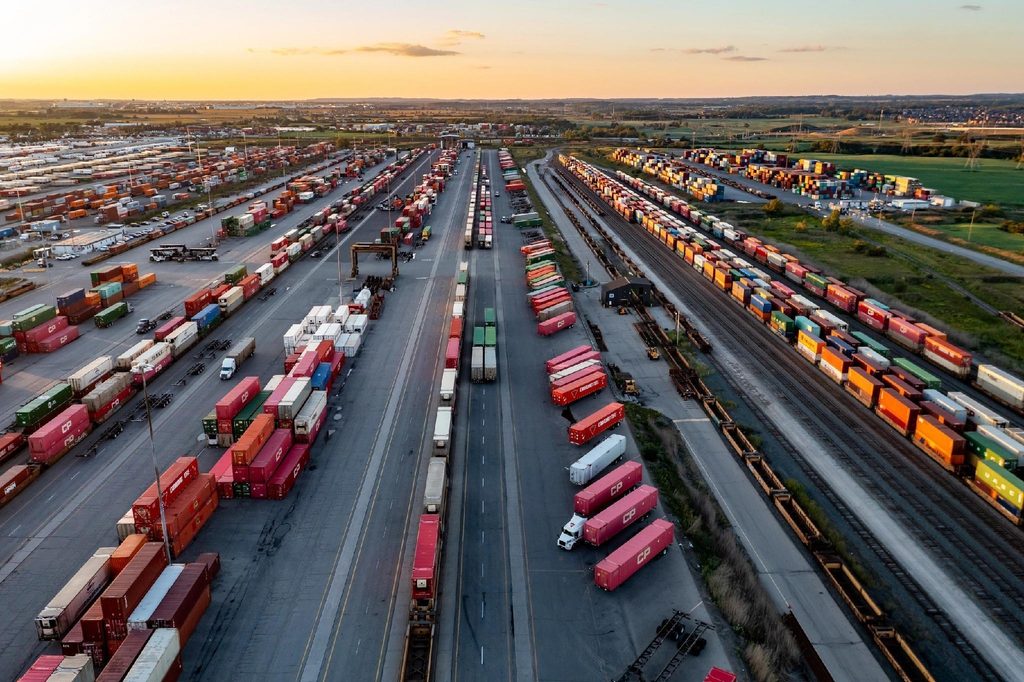
Artificial intelligence is changing how autonomous vehicles perceive their surroundings, make decisions, and move goods. Yet for logistics operators, the real challenge is not simply getting a vehicle to drive without a human behind the wheel. It is ensuring that every journey contributes to a safer, more reliable, and more productive operation.
A truck that navigates a route successfully but waits too long for loading, struggles with unexpected obstacles, or cannot communicate with a terminal management system has limited operational value. In ports, airports, industrial parks, and large distribution facilities, autonomous driving must work as part of a much larger system.
This is where AI and autonomous vehicles become especially important. When intelligent driving is connected with fleet scheduling, cargo handling, operational data, and energy management, automation can move beyond isolated driving tasks and begin improving the entire logistics process.
For businesses evaluating automation, the key question is no longer whether autonomous vehicles can operate independently. It is how to deploy them in ways that solve real operational problems.
How AI Is Changing Autonomous Vehicles
Traditional vehicle automation relies heavily on predefined rules and carefully mapped routes. These methods can be effective in controlled environments, but complex logistics operations rarely remain static for long.
A container may be placed in an unexpected position. A manually operated truck may block a planned route. A loading schedule may change, forcing several transport tasks to be rearranged within minutes.
AI helps autonomous vehicles respond to these changing conditions by combining environmental perception, decision-making, and operational data.
Three capabilities are particularly important.
1. Real-Time Environmental Perception
Autonomous vehicles use technologies such as cameras, lidar, radar, and other positioning systems to interpret their surroundings. AI algorithms help process this information, identify relevant objects, estimate movement, and support decisions about how to proceed.
In a busy terminal, this capability matters because vehicles must account for other trucks, workers, equipment, containers, and changing traffic conditions.
However, perception alone does not guarantee safety. Reliable deployment also requires appropriate vehicle control, operating rules, system monitoring, and clearly defined procedures for handling situations the vehicle cannot resolve independently.
2. Adaptive Route Planning and Decision-Making
A fixed route may be efficient under normal conditions but unsuitable when congestion or unexpected obstacles arise.
AI-enabled planning can help autonomous vehicles evaluate alternative routes, respond to changing priorities, and avoid unnecessary delays. In logistics environments, these decisions should reflect more than the shortest distance. Vehicle availability, task urgency, traffic restrictions, charging requirements, and loading schedules may all affect the best choice.
The objective is not simply to move one vehicle faster. It is to help the fleet complete its assigned work more effectively.
3. Coordination Beyond the Vehicle
Perhaps the most overlooked advantage of AI is its ability to connect vehicle-level decisions with broader operational requirements.
A vehicle may be ready to collect a container, but the container may not yet be available. Another truck may be closer to the next task. A charging or battery-swapping requirement may affect whether a vehicle can complete its next assignment.
When these factors are considered together, dispatch decisions become more useful and less dependent on manual coordination.
This is why autonomous driving should be evaluated as part of an integrated logistics system rather than as a standalone vehicle technology.
The Biggest Challenge Is Not Driving—It Is Keeping Operations Moving
Many organizations begin automation projects by focusing on vehicle specifications, navigation performance, and autonomous driving capabilities. These are essential, but they do not tell the whole story.
The more difficult questions often emerge after deployment.
| Operational challenge | Why it matters | What AI-enabled automation should address |
| Unpredictable traffic | Congestion and blocked routes disrupt schedules | Real-time perception, route adjustment, and traffic coordination |
| Idle vehicles | Vehicles may wait for tasks, cargo, or equipment | Fleet dispatch and task sequencing |
| Disconnected systems | Vehicles and terminal systems may operate with different information | Integration across vehicles, operations, and cargo workflows |
| Energy constraints | Charging and battery availability affect vehicle utilization | Energy-aware scheduling and charging or battery-swapping coordination |
| Unexpected incidents | Exceptions can interrupt the entire workflow | Monitoring, escalation rules, and recovery procedures |
| Scaling difficulties | A successful pilot may not translate into fleet-wide performance | Standardized interfaces, operational metrics, and phased deployment |
The lesson is straightforward: automation delivers its greatest potential when the technology is designed around the actual workflow.
A vehicle that performs well in a demonstration is a promising starting point. A fleet that continues to perform reliably during peak demand, operational disruptions, and mixed-traffic conditions is a much stronger business proposition.
Where AI and Autonomous Vehicles Deliver the Most Value
Not every environment is equally suitable for autonomous deployment. Organizations should prioritize operations where transport tasks are frequent, workflows are measurable, and the operating environment can be sufficiently understood and managed.
Smart Ports and Container Terminals
Ports are particularly relevant because container transportation involves repetitive movements, heavy vehicles, tight operating schedules, and coordination among multiple types of equipment.
AI-enabled autonomous trucks can support container transfers between designated operational areas. When integrated with terminal scheduling and equipment coordination, these vehicles can help reduce unnecessary waiting and make transport movements more predictable.
The main challenge is synchronization. If a truck arrives before the loading equipment is ready, the journey may be technically successful but operationally inefficient.
Effective deployment therefore requires coordination among autonomous vehicles, container-handling equipment, dispatch systems, and terminal workflows.
Airports and Cargo Hubs
Air cargo operations depend on timing. Cargo must move between designated areas while remaining aligned with handling procedures, security requirements, and flight schedules.
Autonomous transport can support repetitive cargo movements in suitable controlled or restricted operating areas. AI-based scheduling can further help coordinate vehicle availability with changing cargo priorities.
Before implementation, operators should verify airside access requirements, route permissions, safety procedures, and interfaces with existing airport systems.
Factories and Industrial Logistics Parks
In manufacturing environments, internal transportation directly affects production continuity.
If raw materials arrive late at a production line, or finished goods cannot be moved away from a workstation, the impact may extend beyond transportation into the wider production schedule.
Autonomous vehicles can support repeatable material movements between warehouses, production areas, and designated transfer points. When connected with production and warehouse systems, dispatch decisions can better reflect actual material demand.
The most useful deployment is not necessarily the one that automates the greatest number of routes. It is the one that removes a measurable bottleneck from the production process.
How to Evaluate an AI Autonomous Vehicle Solution
For logistics managers, selecting a supplier should involve more than comparing driving technologies. The following framework helps determine whether a solution is suitable for real operational demands.
1. Start with a clearly defined business problem.
Identify where delays, unnecessary vehicle movements, labor-intensive coordination, or inconsistent task completion occur. Establish a baseline before introducing automation.
2. Assess the operating environment.
Document road layouts, intersections, loading points, traffic patterns, positioning conditions, and interactions with people or manually operated vehicles. Identify the situations that require a safe stop, remote assistance, or human intervention.
3. Check system integration.
Confirm how the autonomous fleet will communicate with terminal operating systems, warehouse management systems, manufacturing execution systems, or other relevant platforms. Define how tasks are assigned, completed, canceled, and recovered when something goes wrong.
4. Test the entire workflow, not just the driving route.
A useful pilot should include loading and unloading coordination, peak-period demand, blocked routes, communication interruptions, and other realistic exceptions. Measure how the system performs under normal and disrupted conditions.
5. Evaluate operational and energy performance together.
Track completed tasks, vehicle utilization, waiting time, mission completion rates, incident frequency, maintenance needs, and energy consumption. For electric fleets, include charging or battery-swapping downtime in the analysis.
6. Plan for expansion from the beginning.
Consider how the solution will support additional vehicles, new routes, changing workloads, and future integrations. A scalable system should not require the entire operation to be redesigned whenever the fleet grows.
How Westwell Connects Autonomous Driving with Intelligent Logistics
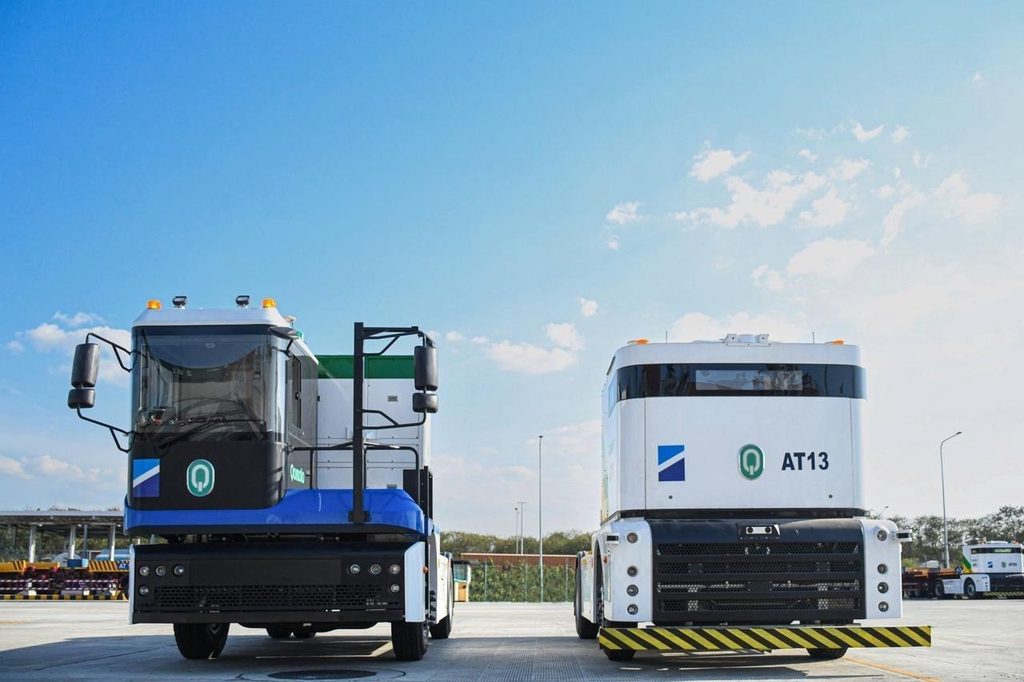
Westwell approaches this challenge by combining AI, autonomous driving, and new-energy technologies to improve logistics operations across ports, airports, logistics parks, and factories.
Through its official website, Westwell presents a portfolio that extends beyond autonomous vehicles to include intelligent logistics platforms and connected operational systems.
Its Qomolo brand focuses on autonomous transport solutions. According to Westwell, these vehicles combine real-time perception, AI route planning, and energy management to support continuous, lower-carbon transportation in demanding logistics environments.
Meanwhile, Cosmo addresses the broader coordination challenge by connecting operational information across sites, fleets, vessels, cargo, and energy networks. This system-level perspective is important because a vehicle’s performance depends partly on the decisions made around it.
Westwell’s wider portfolio also includes Loopo, a smart logistics platform designed to connect people, vehicles, cargo, and energy across operational workflows, as well as KEWE, which focuses on intelligent heavy-duty equipment.
Together, these capabilities reflect a broader approach to automation: connecting autonomous transport with the systems responsible for scheduling, cargo movement, equipment coordination, and energy use.
For operators, this distinction matters. Investing in autonomous vehicles should not create another isolated technology layer. The objective should be to make transportation a more predictable and better-coordinated part of the entire operation.
Businesses considering this approach can explore Westwell’s solutions at en.westwell-lab.com.
Measuring Success: The Metrics That Matter After Deployment
An autonomous vehicle project should be judged by operational outcomes rather than by the number of automated vehicles introduced.
Before deployment, establish baseline measurements and agree on how improvements will be calculated. Useful indicators include:
• Task completion rate: How consistently does the fleet complete assigned transport tasks?
• Turnaround time: How long does a typical transport cycle take, including waiting and handoff?
• Vehicle utilization: How much time is spent performing productive work rather than waiting or traveling empty?
• Safety performance: How frequently do incidents, near misses, emergency stops, or human interventions occur?
• Energy consumption: How much energy is required per completed task or transported unit?
• System recovery: How quickly can operations resume after an interruption?
These metrics should be interpreted together. Increasing vehicle speed, for example, may not improve throughput if loading equipment remains the bottleneck. Similarly, a high utilization rate is not beneficial if it compromises maintenance requirements or safe operating margins.
The most meaningful result is a measurable improvement in the complete logistics workflow, supported by reliable data and consistent operating procedures.
The Future of AI and Autonomous Vehicles Is Operational Intelligence
The next stage of autonomous mobility will involve more than improving how vehicles recognize objects or navigate complex routes. It will require stronger connections between physical machines, operational data, and decisions made across entire logistics networks.
As AI systems become more capable, autonomous fleets may increasingly support dynamic task allocation, predictive maintenance, energy-aware scheduling, and coordinated responses to operational changes. Real-world performance will still depend on system reliability, data quality, appropriate safety controls, and the ability to manage exceptions.
For logistics businesses, the practical opportunity is to start with a well-defined operational problem, validate the solution in realistic conditions, and expand only when the results justify it.
AI and autonomous vehicles create the most value when intelligence translates into better operational decisions. By connecting autonomous transport with fleet coordination, equipment, cargo workflows, and energy management, companies can move toward logistics systems that are not only more automated, but also more efficient, resilient, and sustainable.
Westwell’s integrated approach illustrates why the future of autonomous logistics is not simply about vehicles driving themselves. It is about making the entire movement of goods work better.
Frequently Asked Questions
1. How does AI improve autonomous vehicles?
AI helps autonomous vehicles interpret sensor data, identify objects, plan routes, and respond to changing conditions. In logistics, it can also support fleet scheduling and operational coordination. Reliable deployment still requires safety controls, monitoring, and procedures for handling unexpected situations.
2. Are AI-powered autonomous vehicles suitable for every logistics operation?
No. They are generally easier to evaluate in environments with repeatable transport tasks, defined operating areas, and measurable workflows. Businesses should assess site conditions, traffic complexity, system integration, safety requirements, and the cost of operational changes before deployment.
3. How can businesses measure the ROI of autonomous logistics vehicles?
Start by comparing pre-deployment and post-deployment performance. Relevant measures include completed tasks, turnaround time, vehicle utilization, labor-intensive coordination, energy consumption, maintenance, and incident rates. Calculate total operating costs and evaluate the results across the entire workflow rather than focusing only on vehicle performance.
Website:www.en.westwell-lab.com
Westwell:https://en.westwell-lab.com/about
Email: [email protected]
