

Proper pavement marking maintains public safety, controls traffic flow, and establishes clear boundaries across municipal and commercial properties. Municipalities and property managers frequently face logistical challenges when refreshing road lines in Ontario, especially given the region’s harsh winter freeze-thaw cycles. Scheduling these pavement maintenance projects requires strategic planning around weather patterns, traffic volumes, and regulatory standards. Whether managing provincial highways or emergency access routes, facility managers must balance durability, downtime, and cost efficiency. Failing to organize marking projects properly leads to rapid paint degradation, budget overruns, and severe safety hazards. This guide breaks down the essential priorities for scheduling road line application and specialized medical facility striping to ensure long-lasting results across the province.
Weather Conditions and Seasonal Windows
Ontario’s climate creates a narrow window for durable pavement marking. Cold temperatures and high humidity prevent paint from bonding properly with asphalt or concrete surfaces. The ideal scheduling window runs from late spring through early autumn, when surface temperatures consistently exceed ten degrees Celsius (fifty degrees Fahrenheit).
Temperature and Moisture Control
Applying paint on damp pavement causes premature peeling and fading. Property managers should monitor local forecasts to ensure at least twenty-four hours of dry weather before and after application. High ambient moisture delays drying times, forcing lanes to remain closed longer than anticipated. When planning municipal road lines in Ontario, contractors must track ground moisture using surface sensors rather than relying solely on air temperature readings.
Managing Dew Points and Frost
Spring and autumn bring cool overnight temperatures that form invisible dew films on road surfaces. Early morning applications often fail because trapped moisture prevents thermoplastic and waterborne acrylic paints from curing. Scheduling crews during mid-day peak sun hours guarantees higher surface temperatures, improving paint adhesion. Contracting teams should also account for seasonal asphalt releases, as freshly laid asphalt requires a cure time of two to three weeks before receiving permanent lines. Planning around these climate variables prevents costly re-application cycles before winter returns.
Traffic Flow and Off-Peak Scheduling

Disrupting vehicular traffic creates safety risks for painting crews and motorists alike. Busy arterial roads, commercial plazas, and healthcare hubs require flexible project timing to keep traffic moving. Facility directors must prioritize off-peak hours, weekend shifts, or nighttime painting to minimize operational delays.
Nighttime and Weekend Work
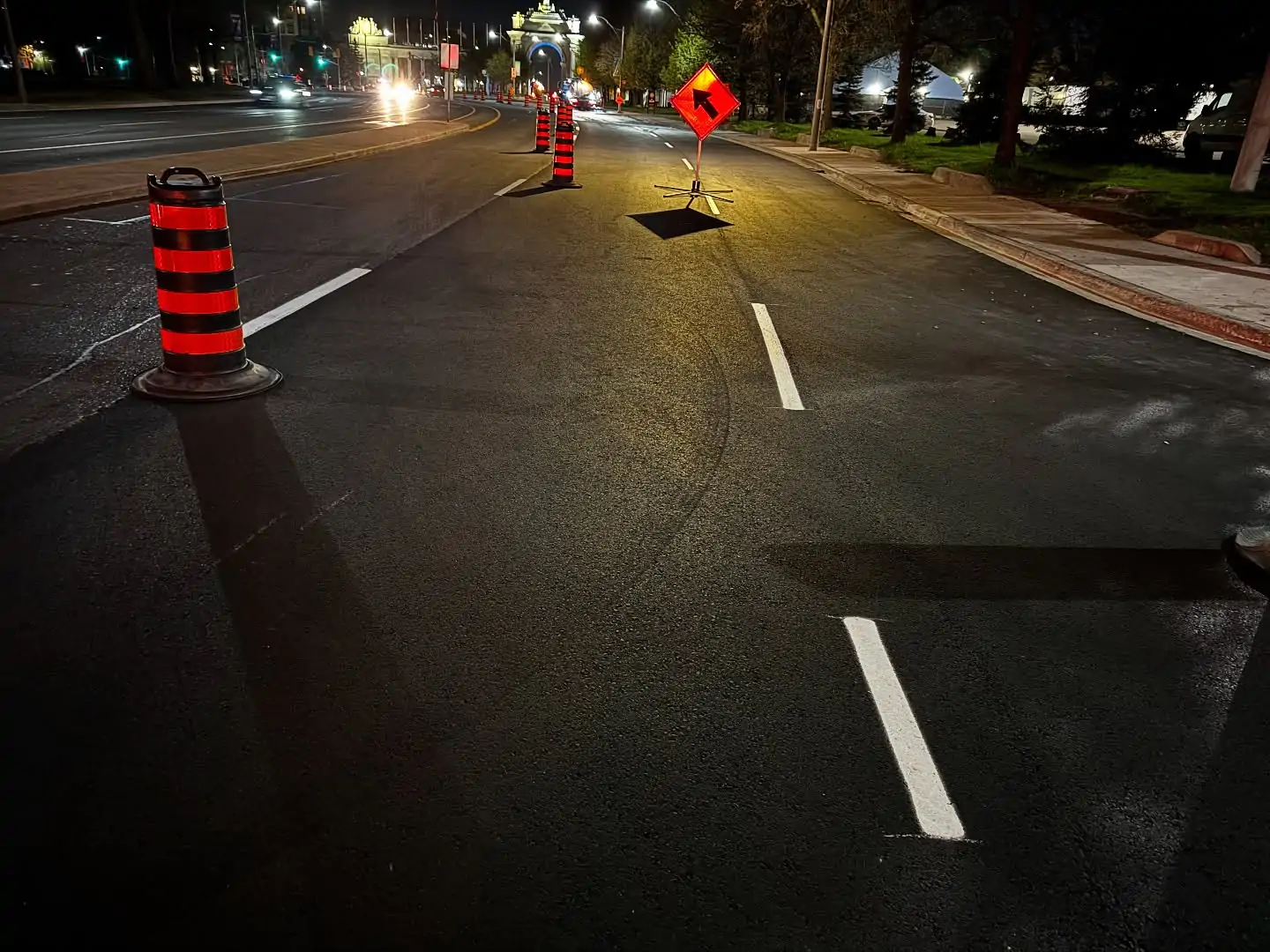
Nighttime execution works best for heavy commuter corridors and retail centers. Ambient light towers, reflective safety gear, and truck-mounted attenuators shield workers while paint dries without traffic interference. Fast-drying acetone or specialized methyl methacrylate (MMA) resins allow lanes to reopen within fifteen to thirty minutes of application.
Emergency Corridor Access
Specialized facilities like medical centers operate twenty-four hours a day, seven days a week. Arranging hospital line painting in Ontario demands precise coordination with emergency transport coordinators. Crew leaders must divide parking lots and ambulance bays into distinct phases. Staging the work allows emergency vehicles, patient transport vans, and staff shifts to route around active work zones without impeding urgent medical access. Clear detour signage, flaggers, and real-time communication with hospital security prevent accidental drive-throughs over wet paint. Phased scheduling keeps healthcare operations running smoothly while establishing vibrant, visible directional markings that guide visitors safely.
Regulatory Compliance and Material Selection
Selecting the correct paint formulations and adhering to provincial standards ensures legal compliance and maximum longevity. The Ontario Provincial Standard Specifications (OPSS) govern line width, color brightness, retroreflectivity, and material composition for public thoroughfares and private facilities accessible to the public.
Understanding Paint Formulations
Waterborne traffic paints offer quick drying times and eco-friendly VOC levels, making them standard for routine urban maintenance. However, high-traffic zones, highway ramps, and heavy-duty loading bays benefit from durable options like thermoplastic, epoxy, or alkyd-based coatings. Thermoplastic materials melt onto the pavement, creating a thick, raised line that withstands heavy snowplow blades during severe winters.
Accessibility Standards
Projects involving hospital line painting in Ontario must strictly obey the Accessibility for Ontarians with Disabilities Act (AODA). Design guidelines mandate specific dimensions, high-contrast colors, and international handicap symbols for accessible parking stalls. Pedestrian crosswalks, loading zones, and fire lanes require precise color coding—bright blue, yellow, red, and white—to ensure clear visibility for patients, drivers, and emergency personnel. Working with certified contractors who understand these statutory requirements eliminates fines, reduces liability, and guarantees full compliance during municipal inspections.
Surface Preparation and Repair Priorities
Applying fresh lines over cracked, oily, or deteriorating pavement wastes time and money. Proper surface preparation forms the foundation of any successful pavement marking project. Managers should inspect asphalt surfaces weeks before scheduling application teams to address structural defects.
Cleaning and Degreasing
Asphalt accumulates oil drippings, dirt, sand, and winter salt residues. Heavy power washing, air blasting, or mechanical sweeping removes these contaminants. If crews paint over loose dirt, the line bonds to the debris rather than the pavement, causing rapid flaking under traffic wear. Stubborn oil spots require specialized chemical degreasers or flame treatment to ensure paint penetration.
Asphalt Crack Sealing and Pothole Repair
Cracks and potholes running through marking zones must be sealed before paint application. Crack filling prevents water from seeping beneath the asphalt surface, where freezing temperatures cause heave and line displacement. When renewing major road lines in Ontario, contractors must coordinate with asphalt repair crews to grind away old, failing layers of thermoplastic or paint. Removing flaking residue creates a smooth, clean canvas that allows new retroreflective glass beads to embed correctly, providing superior nighttime visibility for drivers across provincial highways and municipal streets.
Budgeting, Phasing, and Vendor Selection
Comprehensive planning prevents project overruns and ensures commercial properties and municipalities receive full value for their investment. Property managers should organize line painting schedules early in the calendar year to secure competitive rates from qualified contractors before peak season demands surge.
Phased Implementation Strategies
Large commercial complexes, university campuses, and healthcare networks benefit from multi-phase scheduling. Rather than closing an entire site, contractors mark designated zones over consecutive days or weekends. Phasing preserves parking capacity and maintains steady traffic flow. For complex environments requiring hospital line painting in Ontario, vendors must provide detailed site plans outlining work schedules, barrier placements, and drying timelines for each section.
Evaluating Qualified Contractors
Selecting the right service provider involves reviewing equipment quality, safety records, and experience with specialized markings. Top-tier contractors utilize computerized layout equipment, high-pressure airless sprayers, and automatic bead dispensers to guarantee sharp edges and uniform thickness. Asking vendors for references, proof of commercial liability insurance, and Workplace Safety and Insurance Board (WSIB) compliance protects property owners from operational liabilities while ensuring accurate execution of complex pavement marking layouts.
Conclusion
Scheduling line painting projects requires balancing weather patterns, operational traffic, regulatory requirements, and surface preparation. Whether managing public thoroughfares or specialized medical facilities, upfront planning prevents costly rework and extends the lifespan of pavement markings. Choosing high-performance materials tailored to northern climate conditions ensures lines withstand heavy snowplowing and winter salt exposure. Working with experienced, fully insured contractors allows property managers and municipal officials to maintain organized, safe, and compliant driving and parking environments. By prioritizing off-peak execution, surface repairs, and AODA guidelines, facility leaders protect their infrastructure investments and enhance safety for motorists, pedestrians, and emergency responders throughout Ontario.
