

If you’ve spent any time shopping for kitchen appliances, cookware, or fixtures, you’ve likely come across the designation ‘304 stainless steel.’ It shows up on product listings, manufacturer specs, and quality assurance guarantees — but what does it actually mean, and why should you care?
The short answer: 304 is widely considered the gold standard for food-grade stainless steel, and understanding why helps you make smarter buying decisions for your kitchen.
What Is 304 Stainless Steel?
Stainless steel isn’t a single material — it’s a family of iron alloys with varying compositions designed for different applications. 304 stainless steel is an austenitic alloy containing approximately 18% chromium and 8% nickel (you’ll sometimes see it referred to as ’18/8 stainless’).
The chromium content is what creates the characteristic rust resistance: it forms an invisible, self-repairing oxide layer on the surface that protects the metal from corrosion even when scratched.
Why 304 Is Preferred for Food Contact
Food-grade stainless steel must meet strict requirements: it needs to be non-reactive with food acids, resistant to moisture and cleaning chemicals, smooth enough to prevent bacterial harboring, and durable enough for regular use and cleaning.
304 stainless steel checks all of these boxes admirably. It doesn’t react with acidic foods like tomatoes or citrus, it handles the heat and moisture of kitchen environments without degrading, and its smooth surface doesn’t harbor bacteria when cleaned properly.
304 vs. Other Stainless Steel Grades
Not all stainless steel is equal. Here’s how 304 compares to common alternatives:
- 201 stainless — lower nickel content, less corrosion resistant, common in budget appliances
- 316 stainless — adds molybdenum, even more corrosion resistant than 304, used in marine and medical applications (overkill for most kitchens but excellent)
- 430 stainless — ferritic grade, magnetic, cheaper but less corrosion resistant than 304
- 304 strikes the best balance of performance, workability, and value for kitchen applications
Where 304 Stainless Steel Appears in Kitchen Products
Quality kitchen products use 304 stainless extensively:
- Range hood bodies and filter frames
- Oven interiors and rack components
- Countertop appliance housings
- Sinks and faucet hardware
- Cookware (often combined with aluminum or copper cores for heat distribution)
- Knife blades in premium cutlery
The Ciarra Nosh Oven and Material Standards
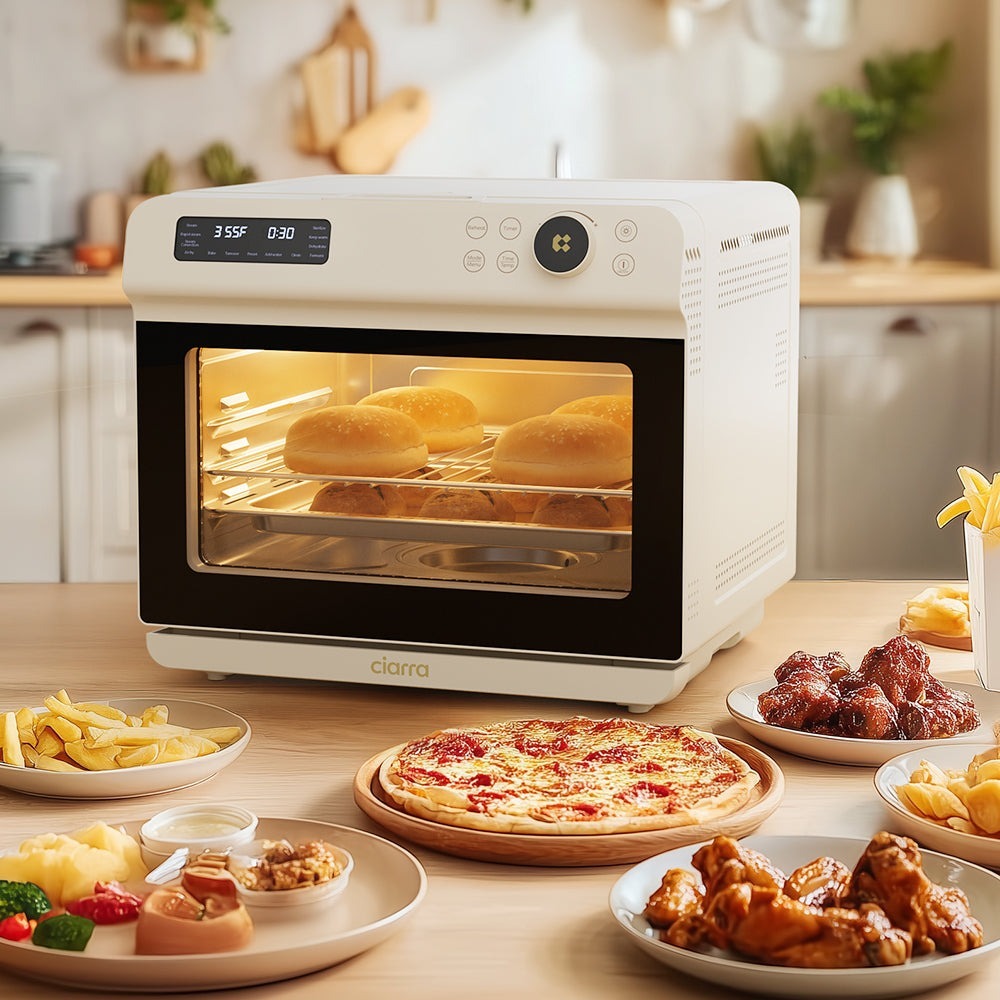
When evaluating countertop ovens and kitchen appliances, material quality matters more than many buyers realize. Appliances built with 304 stainless steel components not only look better and last longer, they’re safer and more hygienic for food preparation. The Ciarra Nosh Oven reflects this commitment to material quality — something worth verifying when comparing any kitchen appliance purchase.
Care and Maintenance of 304 Stainless
304 stainless steel is highly durable, but it’s not completely maintenance-free. Follow these care tips:
- Clean with the grain (in the direction of the brushed lines) to avoid visible scratches
- Avoid abrasive scrubbing pads that can dull the finish
- Wipe dry after washing to prevent water spot formation
- Use dedicated stainless cleaners or a simple mix of dish soap and warm water
- Apply a light coat of mineral oil occasionally to maintain the finish and repel fingerprints
Making Informed Material Decisions
When a manufacturer specifies 304 stainless steel, it’s a signal of genuine quality commitment. It costs more to produce, lasts significantly longer, and provides better performance in demanding kitchen environments.
Next time you’re comparing appliances or cookware, look for the 304 designation — it’s one of the clearest indicators that you’re looking at a product built to last.
