

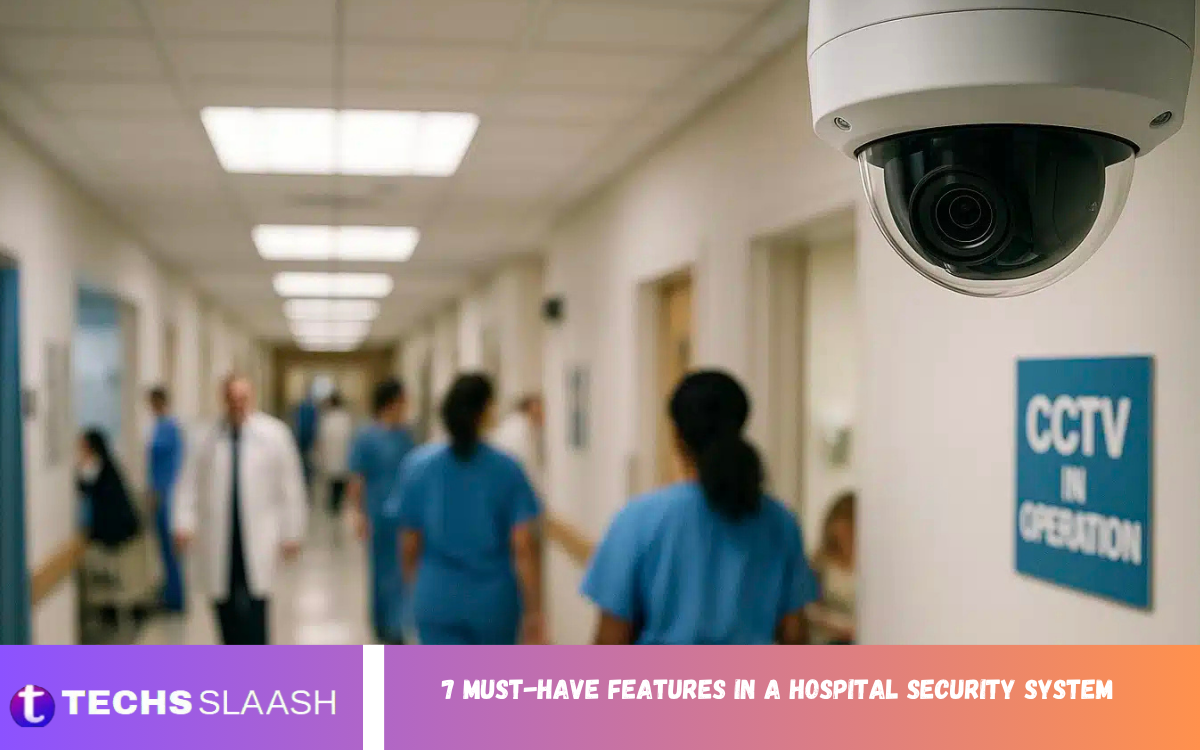
Hospitals are places where patients, doctors, nurses, visitors, and staff need to feel safe at all times. Unlike ordinary commercial buildings, hospitals operate around the clock and handle sensitive information, valuable equipment, controlled medications, and vulnerable patients. For this reason, choosing the right security technology is essential for maintaining a secure healthcare environment.
A modern hospital security system does much more than prevent unauthorized entry. It combines access control, surveillance, emergency communication, visitor management, and other technologies to identify potential risks and respond quickly. Understanding the 7 Must-Have Features in a Hospital Security System can help healthcare facilities build stronger protection while supporting patient care and daily operations.
Advanced Video Surveillance
High-quality video surveillance is one of the most important parts of a hospital security system. Modern security cameras can monitor entrances, hallways, parking areas, emergency departments, pharmacies, storage rooms, and other sensitive locations. High-definition footage can help security teams identify suspicious activity and investigate incidents.
Hospitals should consider cameras with features such as wide-angle coverage, night vision, motion detection, and intelligent video analytics. Proper camera placement can reduce blind spots while respecting patient privacy. Video surveillance also provides valuable evidence when investigating theft, vandalism, unauthorized access, or other security incidents.
Controlled Access Management
Access control helps hospitals determine who can enter specific areas and when they are permitted to enter. Instead of relying entirely on traditional keys, facilities can use electronic credentials, keycards, PINs, mobile credentials, or biometric technologies to restrict access to sensitive locations.
Different departments can have different access permissions based on employees’ responsibilities. For example, only authorized personnel may need access to medication storage, laboratories, operating rooms, or administrative offices. Detailed access records can also help security teams determine who entered a particular area during an incident.
Reliable Emergency Communication
Hospitals must be prepared for medical emergencies, security threats, fires, natural disasters, and other unexpected situations. A reliable emergency communication system allows security personnel, medical teams, administrators, and other employees to share important information quickly when every second matters.
Emergency communication can include panic buttons, mass notification systems, intercoms, mobile alerts, emergency phones, and public-address systems. These technologies should work together so that important warnings reach the right people without unnecessary delays, helping hospital staff coordinate an effective response.
Visitor Management
Managing visitors is another essential feature of an effective hospital security system. Hospitals receive a constant flow of patients’ relatives, contractors, vendors, delivery personnel, and other visitors. Without proper visitor procedures, unauthorized individuals may gain access to restricted areas.
A modern visitor management solution can register guests, verify identities, issue temporary credentials, and record entry and exit times. Digital visitor records can make it easier for security teams to know who is inside the facility during normal operations or emergencies while creating a more organized experience for legitimate visitors.
Integrated Alarm Systems
An integrated alarm system can provide early warnings when unusual or dangerous activity occurs. Hospitals can use alarms for unauthorized entry, forced doors, fire emergencies, equipment areas, restricted zones, and other security concerns. Connecting alarms with central monitoring can make responses faster and more coordinated.
Integration is particularly valuable because security personnel can receive alerts from multiple systems through a centralized platform. When an alarm is triggered, staff can quickly determine what happened and where the problem occurred. This reduces the need to monitor disconnected systems individually.
Real-Time Monitoring and Analytics
Real-time monitoring allows security teams to observe important areas and respond to potential threats as they develop. Instead of waiting for an incident to be reported, trained personnel can monitor security feeds and receive automated alerts about unusual activity.
Modern analytics can identify events such as movement in restricted areas, unusual crowd activity, or other predefined security conditions. These capabilities can reduce the workload on security personnel and help them prioritize serious events. Human oversight remains important because automated alerts should be reviewed in context before major decisions are made.
Cybersecurity and System Protection
Hospital security is no longer limited to physical threats. Modern security systems are connected to networks, servers, computers, mobile devices, and cloud platforms, creating potential cybersecurity risks. Protecting these systems is therefore an important part of an overall hospital security strategy.
Healthcare facilities should use strong passwords, access permissions, encryption, software updates, network segmentation, and regular security monitoring. Security devices should also be maintained and updated according to manufacturer recommendations. Protecting connected security infrastructure helps prevent unauthorized users from gaining control of cameras, access systems, or sensitive security information.
Why Hospitals Need Integrated Security?
A hospital may have excellent cameras but still face security weaknesses if access control, alarms, communication, and monitoring operate separately. An integrated security strategy allows different technologies to share information and gives security teams a more complete understanding of what is happening throughout the facility.
For example, an unauthorized access attempt could automatically generate an alert, display the relevant camera feed, and notify security personnel. This coordinated approach can reduce response times and make investigations more efficient. Integration also makes it easier for administrators to manage security operations from centralized platforms.
Protecting Patients and Staff
Patient safety should remain at the center of every hospital security strategy. Vulnerable patients, children, elderly individuals, and people receiving emergency treatment may require additional protection from unauthorized access, theft, or other threats.
Hospital employees also face unique security challenges, particularly in emergency departments and other high-pressure environments. Proper access controls, surveillance, communication tools, and emergency response procedures can help protect doctors, nurses, support staff, patients, and visitors while maintaining a welcoming healthcare environment.
Protecting Sensitive Hospital Areas
Certain hospital areas require stronger security than ordinary corridors or public spaces. Pharmacies, laboratories, operating rooms, server rooms, medical records departments, and equipment storage areas may contain sensitive information, controlled substances, expensive technology, or confidential materials.
Access restrictions should be based on actual operational requirements. Hospitals can combine electronic credentials, surveillance cameras, alarms, and activity logs to create multiple layers of protection. This layered approach helps reduce the likelihood that one security failure will compromise an entire department.
Choosing the Right Security Technology
Every hospital has different building layouts, patient populations, staffing levels, and operational requirements. A security system should therefore be selected after evaluating the facility’s specific risks rather than simply choosing the most expensive technology available.
Security professionals can assess entrances, restricted departments, parking facilities, emergency areas, patient rooms, and other locations to identify vulnerabilities. The final system should be scalable, reliable, easy to manage, and compatible with existing hospital infrastructure where possible.
Maintaining Hospital Security Systems
Installing security equipment is only the beginning. Cameras, access readers, alarms, communication systems, servers, and software require regular maintenance to remain dependable. A failed camera or outdated access-control device can create a security gap when protection is needed most.
Hospitals should establish regular inspection and testing schedules and keep accurate maintenance records. Staff should also receive appropriate training so they understand how to operate security technologies and respond to alerts. Continuous maintenance helps ensure that the security system performs effectively over time.
Read Also: Powerful Handheld Barcode Scanner for Fast Warehouse Inventory Control
Balancing Security and Patient Privacy
Strong security should never unnecessarily interfere with patient dignity and privacy. Hospitals collect highly sensitive medical and personal information, so surveillance and security technologies must be deployed carefully and responsibly.
Camera placement should avoid areas where privacy is expected, while access to security recordings and visitor information should be restricted to authorized personnel. Hospitals should also establish clear policies for storing, reviewing, and sharing security data. A thoughtful approach can provide effective protection without compromising patient trust.
Benefits of a Modern Hospital Security System
A well-designed hospital security system can provide several operational benefits beyond basic crime prevention. It can help protect expensive equipment, improve emergency response, control access to restricted areas, support investigations, and create better awareness of activity throughout the facility.
Modern technology can also help security teams work more efficiently. Centralized monitoring, automated alerts, electronic access records, and integrated communication can reduce manual processes. When these capabilities are combined with trained personnel and clear procedures, hospitals can create a stronger and more responsive security environment.
Future of Hospital Security
Hospital security technology continues to evolve as artificial intelligence, cloud platforms, mobile credentials, analytics, and connected devices become more widely adopted. These technologies can provide additional tools for identifying risks and managing large healthcare facilities.
However, technology should support trained security professionals rather than replace sound policies and human judgment. The most effective approach combines modern equipment, experienced personnel, regular training, risk assessments, and clearly defined emergency procedures.
Frequently Asked Questions
What is a hospital security system?
A hospital security system is a combination of technologies, procedures, and personnel designed to protect patients, employees, visitors, property, and sensitive information from security threats.
Why are security cameras important in hospitals?
Security cameras help monitor key areas, discourage unauthorized activity, support incident investigations, and give security personnel greater visibility across large facilities.
How does hospital access control work?
Access control uses credentials such as keycards, PINs, mobile devices, or biometrics to determine which individuals can enter specific areas and when they are allowed to enter.
What is visitor management in a hospital?
Visitor management involves registering and monitoring visitors, verifying identities, issuing temporary credentials, and maintaining records of who enters and leaves the facility.
Why are emergency communication systems important?
Emergency communication systems allow hospitals to quickly distribute warnings and instructions during medical emergencies, security incidents, fires, evacuations, or other critical situations.
Can hospital security systems prevent unauthorized access?
No system can guarantee that unauthorized access will never occur, but layered security measures can significantly reduce risks and help personnel detect and respond to access attempts quickly.
How can hospitals protect security systems from cyber threats?
Hospitals can use strong authentication, restricted permissions, encryption, software updates, network security controls, monitoring, and regular assessments to protect connected security infrastructure.
Should hospital security systems be integrated?
Integration can make security operations more efficient by connecting cameras, access control, alarms, communication tools, and monitoring platforms so personnel can respond with better information.
How often should hospital security equipment be maintained?
Security equipment should be inspected and tested regularly according to the facility’s operational requirements and manufacturer recommendations. Critical systems may require more frequent testing.
What is the most important feature of hospital security?
There is no single feature that provides complete protection. Effective hospital security depends on multiple layers, including surveillance, access control, emergency communication, alarms, monitoring, cybersecurity, and trained personnel.
Conclusion
The 7 Must-Have Features in a Hospital Security System provide a practical foundation for protecting modern healthcare facilities. Advanced surveillance, controlled access, emergency communication, visitor management, integrated alarms, real-time monitoring, and cybersecurity can work together to address both physical and digital security risks.
A successful hospital security strategy should be designed around the facility’s specific needs rather than technology alone.
