

The word Renaissance means “rebirth,” and it perfectly describes the period in European history that transformed society between the 14th and 17th centuries. The what is renaissance was not simply a revival of art or literature, but a complete reshaping of human thought, values, and culture. It marked the bridge between the Middle Ages and the modern world, introducing a fresh spirit of curiosity, creativity, and exploration that continues to influence us today.
Origins of the Renaissance
The Renaissance began in Italy during the 14th century, particularly in cities such as Florence, Venice, and Rome. Several factors contributed to its rise:
- Economic prosperity: Italian city-states grew wealthy through trade and banking, giving merchants and noble families the means to support art and learning.
- Classical heritage: Italy was home to the remains of ancient Rome, and scholars found inspiration in rediscovering classical manuscripts.
- Political independence: Many Italian cities functioned as independent republics, fostering competition and innovation.
These unique conditions allowed Italy to become the cultural heart of the Renaissance before the movement spread across Europe.
Humanism: The Core of Renaissance Thinking
At the center of the Renaissance was humanism, a philosophy that emphasized human potential and achievements. Unlike the medieval focus on divine authority and religious dogma, humanism celebrated the study of subjects like history, literature, philosophy, and the arts. Humanists believed in the power of reason, education, and creativity to improve society.
This shift in thinking encouraged people to question traditional authority and explore new ideas. Education expanded, and universities began teaching a broader range of subjects beyond theology.
Art and Architecture
Perhaps the most visible legacy of the Renaissance is its art. Renaissance artists broke away from flat, symbolic medieval styles and began exploring perspective, proportion, and realism. They sought to capture the beauty of the natural world and the depth of human emotion.
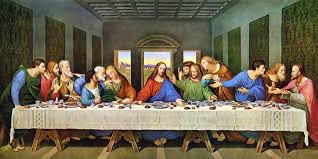
- Painters: Masters such as Leonardo da Vinci, Michelangelo, and Raphael created works that remain iconic today. Leonardo’s Mona Lisa and The Last Supper showcased his mastery of anatomy, light, and perspective. Michelangelo’s Sistine Chapel ceiling and the statue of David revealed the power and beauty of the human form.
- Architecture: Architects like Filippo Brunelleschi introduced techniques such as linear perspective and designed magnificent buildings like the dome of Florence’s Cathedral.
- Sculpture: Donatello and Michelangelo redefined sculpture by creating lifelike, free-standing figures inspired by classical antiquity.
Art was no longer just religious but celebrated mythology, history, and even portraits of wealthy patrons.
Literature and Philosophy
The Renaissance also gave birth to groundbreaking literature. Writers began to explore human nature, politics, and individual experience in ways that were innovative for their time.
- Dante Alighieri wrote The Divine Comedy, blending medieval religious themes with Renaissance humanism.
- Petrarch, often called the “Father of Humanism,” rediscovered classical texts and inspired later scholars.
- Niccolò Machiavelli authored The Prince, a practical guide to politics that shocked readers with its realistic, sometimes ruthless view of power.
- William Shakespeare, though later and based in England, reflected Renaissance ideals in his plays that explored human emotion, ambition, and morality.
Science and Discovery
The Renaissance was not only about art and literature; it was also a period of incredible scientific discovery. Curiosity about the natural world led to advancements in medicine, astronomy, physics, and engineering.
- Copernicus proposed the heliocentric theory, challenging the long-held belief that the Earth was the center of the universe.
- Galileo Galilei built on this with his telescopic observations, laying the foundation for modern science.
- Leonardo da Vinci, though remembered as an artist, was also an inventor, engineer, and scientist who sketched designs for machines far ahead of his time.
The spirit of inquiry encouraged experimentation and observation, moving society away from blind faith in tradition.
Exploration and Expansion
The Renaissance was also an age of exploration. Inspired by new knowledge and driven by economic ambition, European explorers expanded the boundaries of the known world.
- Christopher Columbus reached the Americas in 1492.
- Vasco da Gama sailed around Africa to reach India, opening up new trade routes.
- Ferdinand Magellan’s expedition circumnavigated the globe.
These voyages connected Europe to distant lands, bringing wealth, resources, and cultural exchange—though often at the expense of indigenous peoples.
The Role of Patrons
The flourishing of Renaissance culture would not have been possible without wealthy patrons who funded artists and thinkers. Families like the Medici of Florence sponsored painters, architects, and scholars, ensuring that creativity could thrive. The Catholic Church also played a major role in commissioning grand works of art and architecture.
Spread of the Renaissance Across Europe
While it began in Italy, the Renaissance quickly spread to France, Germany, England, and beyond. Each region adapted Renaissance ideas to its own culture:
- Northern Renaissance: Artists like Albrecht Dürer and Jan van Eyck emphasized detail, realism, and everyday life.
- England: Shakespeare and other writers brought Renaissance themes into drama and poetry.
- France: Thinkers like François Rabelais and Montaigne explored humanism in literature.
The invention of the printing press by Johannes Gutenberg in the mid-15th century was crucial. It allowed books and ideas to spread faster than ever before, fueling education and debate across Europe.
Impact and Legacy
The Renaissance forever changed the course of history. Its impact can be seen in:
- The rise of individualism and the celebration of human achievement.
- The foundation for the Scientific Revolution and Enlightenment.
- The flourishing of art, architecture, and literature that continues to inspire.
- The expansion of global trade and cultural exchange.
In many ways, the Renaissance marked the beginning of the modern world.
Conclusion
The Renaissance was more than a cultural movement—it was a revolution in how people saw themselves and their place in the universe. It celebrated curiosity, creativity, and the power of human thought. By reviving the wisdom of the past and combining it with new ideas, the Renaissance set the stage for centuries of progress.
Even today, when we admire a painting, question authority, or explore scientific mysteries, we are carrying forward the spirit of the Renaissance: the belief that humanity is capable of greatness.
