

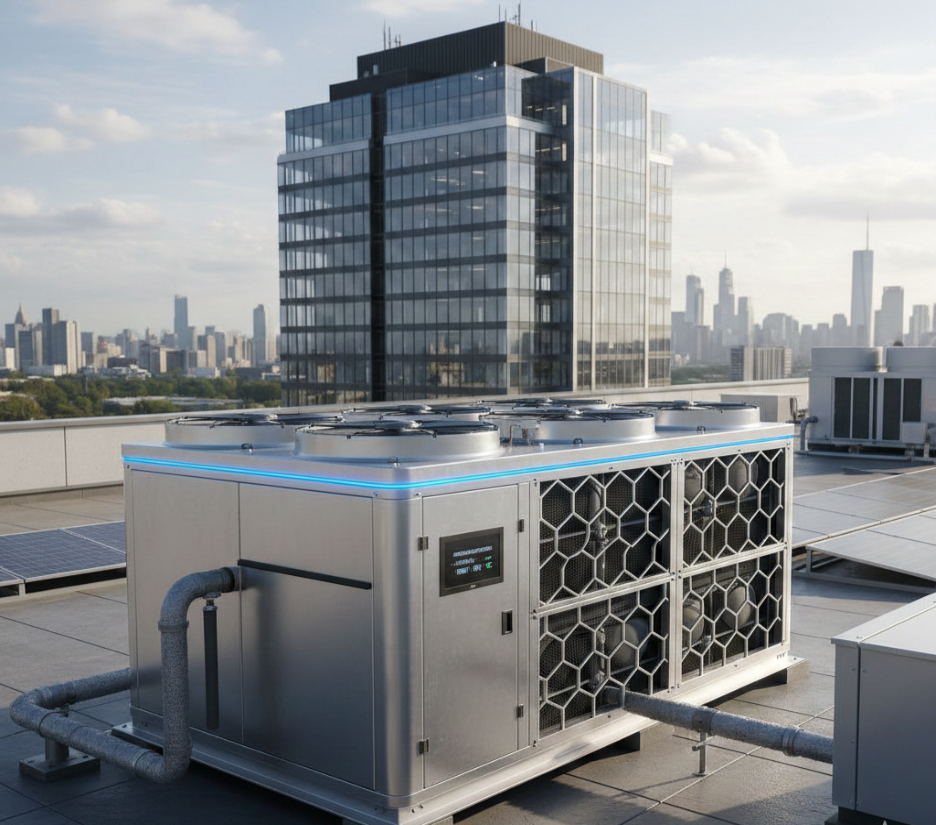
As commercial building owners seek sustainable and cost-effective cooling solutions, evaporative cooling pads and indirect cooling systems have gained significant attention. These advanced technologies offer superior climate control while addressing concerns about energy consumption, environmental impact, and indoor air quality. Understanding how these systems work helps businesses make informed decisions about commercial cooling infrastructure.
Understanding Evaporative Cooling Pads
Evaporative cooling pads form the critical component of evaporative cooling technology. Modern pads are manufactured from cellulose paper, formed into corrugated sheets with specific flute angles that maximize water retention and air contact.
High-quality pads feature precisely engineered channels that force air through water-saturated media. This maximizes contact time, enhancing evaporation efficiency. Premium pads achieve temperature drops of 15-40 degrees Fahrenheit depending on conditions.
Pad thickness directly impacts performance. Thicker pads provide longer contact time but require more powerful fans. Commercial applications typically use pads ranging from 4 to 12 inches thick.
The Science of Indirect Cooling Systems
While traditional evaporative cooling introduces moisture into supply air, indirect cooling systems achieve temperature reduction without adding humidity. This makes evaporative cooling viable where humidity control is critical.
Indirect cooling employs a two-stage process. Outdoor air passes through water-saturated pads, becoming cooler and more humid. This cooled air then flows through a heat exchanger where it cools a separate air stream without direct contact. The secondary stream gains temperature benefits without moisture addition, enabling use in offices, retail spaces, and educational institutions.
Benefits of Evaporative Cooling Pads
Superior Cooling Efficiency
Modern evaporative cooling pads achieve 85-95% saturation efficiency, extracting maximum temperature reduction from the evaporative process. Chemical treatments enhance durability, prevent bacterial growth, and extend operational life. Premium pads last 3-5 years with proper maintenance.
Improved Indoor Air Quality
Evaporative cooling pads naturally filter incoming air. Dust, pollen, and airborne particles are captured and washed away by circulating water. This continuous filtration improves air quality without additional equipment. Constant fresh air introduction reduces carbon dioxide, removes odors, and creates healthier indoor environments.
Sustainable and Environmentally Friendly
Evaporative cooling pads enable systems using no harmful refrigerants, addressing environmental concerns about traditional air conditioning. For commercial buildings pursuing sustainability goals, this technology offers clear environmental advantages.
Advantages of Indirect Cooling for Commercial Buildings
Humidity Control Without Sacrificing Efficiency
The breakthrough advantage of indirect cooling systems is their ability to deliver evaporative cooling’s energy efficiency while avoiding moisture addition to occupied spaces. Commercial buildings in moderate to high humidity climates can now benefit from evaporative technology previously only practical in arid regions.
Indirect cooling systems consume 30-50% of the energy required by conventional air conditioning while maintaining comfortable humidity levels. This represents significant middle ground between efficient but humidity-producing direct evaporative cooling and energy-intensive refrigerated air conditioning.
Hybrid System Capabilities
Many commercial installations use indirect cooling as part of hybrid systems combining multiple cooling technologies. During mild weather with low humidity, indirect evaporative cooling handles the entire cooling load efficiently. When conditions exceed evaporative cooling’s optimal range, conventional air conditioning supplements as needed.
This hybrid approach allows commercial buildings to maximize energy savings while ensuring reliable comfort regardless of weather conditions. Building automation systems can intelligently switch between cooling modes based on real-time conditions.
Reduced Operating Costs
Commercial buildings equipped with indirect cooling systems typically see 40-60% reductions in cooling energy costs compared to conventional air conditioning. These savings compound over years of operation, making the initial investment financially attractive with payback periods often under five years.
Maintenance costs for systems using quality evaporative cooling pads and indirect cooling are also lower than traditional HVAC equipment. Fewer mechanical components and simpler maintenance procedures reduce both routine upkeep and emergency repair expenses.
Selecting Quality Evaporative Cooling Pads
Not all evaporative cooling pads deliver equal performance. Commercial applications should prioritize pads manufactured to rigorous quality standards. Key selection criteria include saturation efficiency ratings, structural integrity, resistance to mineral deposits, and expected operational lifespan.
Cellulose-based evaporative cooling pads generally outperform alternatives in commercial applications due to superior water retention and optimal airflow characteristics. The corrugation angle and pattern significantly impact performance, with cross-fluted designs offering enhanced efficiency.
Chemical treatments matter considerably. Quality evaporative cooling pads incorporate treatments that prevent algae growth, resist mineral scaling, and maintain structural integrity under constant water exposure. These treatments extend pad life and maintain consistent cooling performance.
Optimizing Indirect Cooling System Performance
Proper system design ensures indirect cooling installations deliver maximum benefit. Heat exchanger sizing must balance effectiveness with airflow requirements, while fan selection should provide adequate pressure to move air through both the evaporative cooling pads and heat exchanger.
Water quality affects both evaporative cooling pads and heat exchanger longevity. Commercial installations should incorporate water treatment systems that control mineral content, prevent biological growth, and maintain optimal pH levels. These investments protect equipment and maintain peak efficiency.
Regular maintenance schedules keep systems performing optimally. Evaporative cooling pads require periodic cleaning and annual replacement. Heat exchangers need inspection and cleaning to maintain thermal transfer efficiency. Water distribution systems should be monitored to ensure even pad saturation.
Applications in Modern Commercial Buildings
Office buildings benefit from indirect cooling systems maintaining comfortable temperatures without excessive humidity. The fresh air supply improves indoor air quality and supports productivity.
Retail spaces use indirect cooling to create comfortable shopping environments while controlling costs. Educational facilities reduce operating costs while providing healthy learning environments. Hospitality venues maintain guest comfort while managing energy expenses.
Conclusion Evaporative cooling pads and indirect cooling from Arctic represent advanced solutions that address the evolving needs of modern commercial buildings. By combining the energy efficiency of evaporative technology with humidity control capabilities, these systems offer compelling alternatives to traditional air conditioning. Commercial building owners seeking to reduce operating costs, improve indoor air quality, and support sustainability initiatives should seriously consider these technologies for comfortable, cost-effective climate control.
