

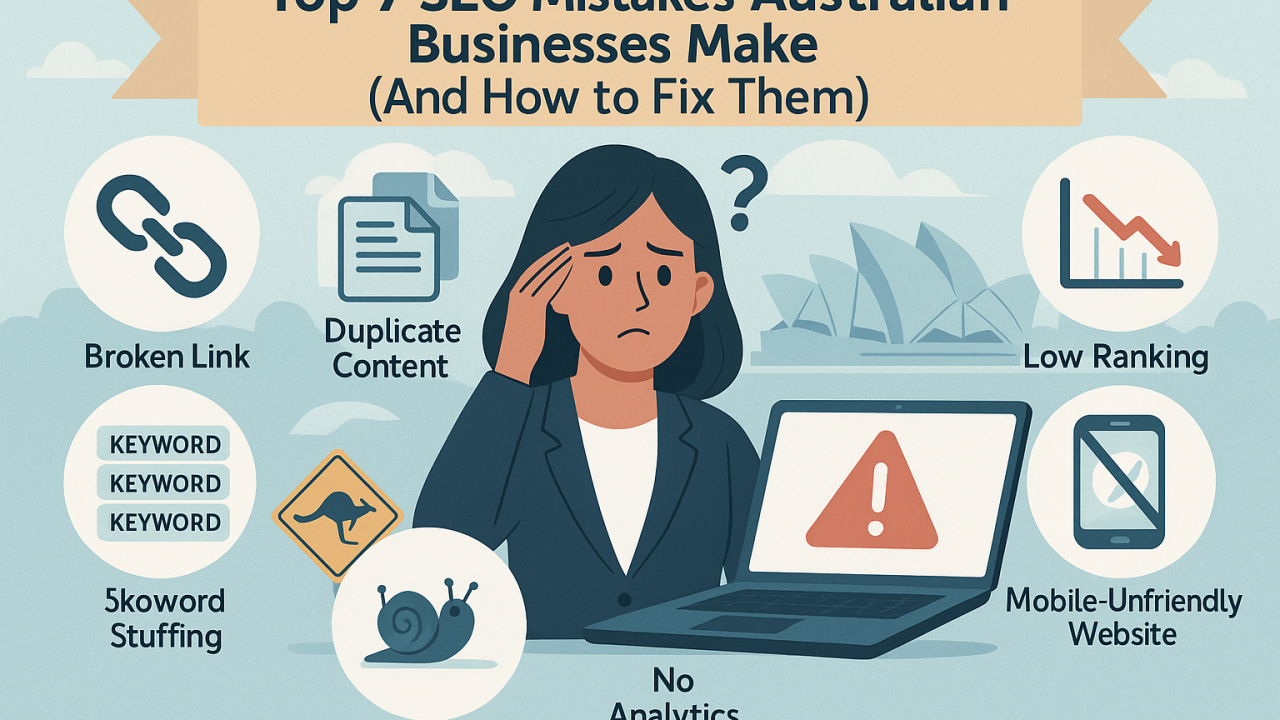
In Australia’s competitive digital landscape, having a website is standard practice—but having an effective one is far less common. Many B2B companies invest in building a site, only to find that it fails to generate meaningful enquiries or support business growth.
The problem is rarely a lack of effort. More often, it comes down to misunderstandings about what actually makes a website successful.Mistake 1: Treating the Website as a One-Time Project
One of the most common issues is the belief that a website is something you “finish.” Businesses launch a site and then leave it untouched for years, assuming it will continue to perform.
In reality, websites require ongoing attention. Markets evolve, customer expectations change, and competitors continuously improve their digital presence. A static website quickly becomes outdated—not just visually, but strategically.
Businesses that succeed online treat their websites as evolving platforms. They regularly update content, refine messaging, and adapt based on performance data.Mistake 2: Focusing Too Much on Aesthetics
A sleek design can create a strong first impression, but it’s only one part of the equation. Many companies prioritise visuals over usability, leading to websites that look impressive but are difficult to navigate.
For B2B audiences, clarity is far more important than creativity. Visitors want to quickly understand:
- What the business offers
- Who it serves
- How it solves specific problems
If these answers are not immediately obvious, even the most visually appealing website will struggle to convert visitors into leads.Mistake 3: Ignoring the Buyer Journey
B2B decision-making is rarely impulsive. It often involves research, comparison, and internal discussion. Despite this, many websites fail to support the different stages of the buyer journey.
An effective site should provide:
- Introductory content for early-stage awareness
- Detailed service explanations for consideration
- Trust-building elements such as testimonials or case insights
Without this layered approach, businesses risk losing potential clients who are not yet ready to make immediate contact.Mistake 4: Overcomplicating the User Experience
In an attempt to stand out, some websites introduce unnecessary complexity—interactive elements, excessive animations, or cluttered layouts. While these features may seem innovative, they often create friction.
Simplicity tends to outperform complexity. A clean interface, intuitive navigation, and clear calls-to-action make it easier for users to engage with the content and take the next step.
For time-poor professionals, which is often the case in B2B sectors, ease of use is a critical factor.Mistake 5: Underestimating the Importance of Speed
Website speed directly affects both user experience and search visibility. Slow-loading pages can frustrate visitors and lead to higher bounce rates.
In Australia, where users access websites across a wide range of devices and internet speeds, performance optimisation becomes even more important. Fast websites not only improve engagement but also signal professionalism and reliability.Mistake 6: Lack of Clear Ownership and Control
Another overlooked issue is dependency. Some businesses rely entirely on external developers for even the smallest updates, which slows down marketing efforts and increases costs.
Having access to a simple, intuitive system to manage content internally can make a significant difference. It allows teams to:
- Publish updates quickly
- Respond to market changes
- Keep information accurate and relevant
This level of control is particularly valuable for growing businesses that need agility.Mistake 7: Not Aligning the Website with Business Goals
Perhaps the most critical mistake is the lack of alignment between the website and broader business objectives. A website should support measurable outcomes—whether that’s generating leads, increasing enquiries, or building authority in a niche.
Without clear goals, it becomes difficult to evaluate performance or make meaningful improvements.
Businesses that approach web design strategically often start by asking:
- What action do we want visitors to take?
- What information do they need before taking that action?
- How can we remove barriers in that process?
Answering these questions shapes a website that works with the business, not just alongside it.Learning from Industry Experience
Avoiding these mistakes often requires experience and a deep understanding of both design and business strategy. This is why many companies choose to work with specialists who have built and refined websites across different industries.
Exploring the approach of an established web design company Australia can offer useful perspective on how effective websites are structured, maintained, and optimised over time.Moving Towards Smarter Web Design
The gap between an average website and a high-performing one is rarely about budget—it’s about approach. By focusing on usability, clarity, performance, and ongoing improvement, Australian B2B businesses can turn their websites into valuable assets rather than passive tools.
As digital expectations continue to rise, those who invest in getting these fundamentals right will be better positioned to compete, grow, and adapt in an increasingly online-first business environment.
