

Most early-stage startups treat their website as a placeholder. Something to put together quickly so there is a URL to share when someone asks. The real work is the product, the thinking goes, and the website can be improved once there is traction to justify spending time on it.
This logic is understandable. It is also wrong. The website is often the first encounter a potential customer, investor, or partner has with your company. In many cases it is the only encounter before they decide whether to go further. What they find there either advances the relationship or ends it. And the standards people apply when evaluating a startup website are higher than most founders assume.
The First Impression Problem
There is a version of your startup that exists in your head, refined and full of nuance. There is the version that exists on your website, often rushed and unable to communicate the core value in the first ten seconds a visitor is on the page. Most early-stage startup websites fail at the basic task of telling a stranger what the company does, who it serves, and why they should care.
The failure mode is almost always the same: the founder, who has been living with the idea for months, writes copy that makes sense to someone who already understands the context. The visitor, who has no context and is giving the page about fifteen seconds before deciding whether to stay, reads words that feel familiar but does not understand what they add up to. They leave. The opportunity is gone.
What a Good Early Website Does
A good early-stage startup website accomplishes three things clearly and quickly. It tells visitors what you do in language they already use. It tells them who the product is for in terms specific enough that they can self-identify. And it tells them exactly what to do next in a way that is specific enough to prompt action rather than vague enough to be ignored.
Everything beyond those three things is either reinforcement or decoration. Social proof, case studies, feature lists, and about pages all have their place. But if those three core things are not working, none of the other elements will save the page. The foundation has to hold before the supporting elements matter.
Speed to Live and Speed to Update
One of the most underappreciated qualities of a good early website is how quickly it can be changed. A website that took three months to build and requires a developer to update is a liability. Every time you learn something from customer conversations that should change your messaging, you face a choice between living with outdated copy or spending money to fix it. That friction accumulates.
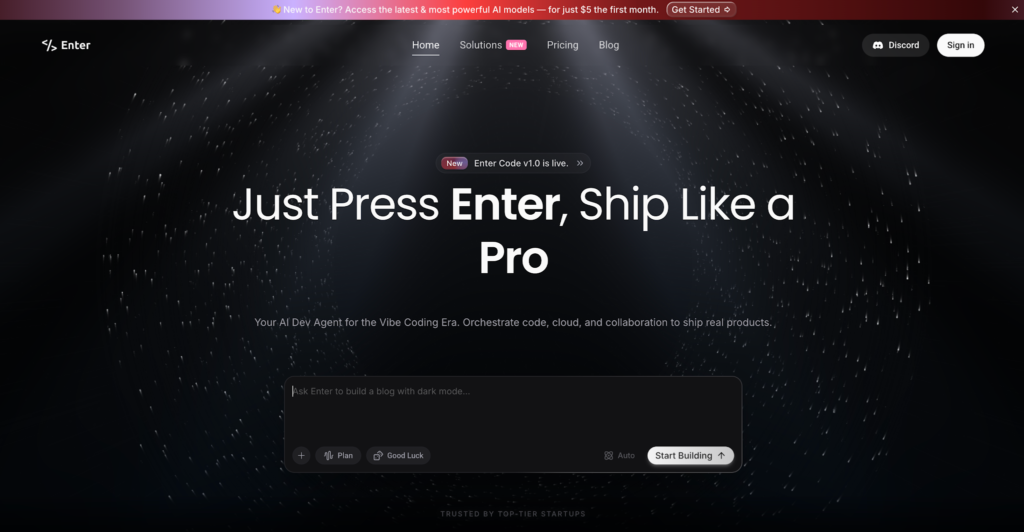
A website built on Enter Pro or a similar platform that you can update yourself in an afternoon has completely different economics. When you learn that a particular phrase is not landing with your target customer, you can update the headline before the end of the week. When you want to test whether a different call to action converts better, you can make the change without waiting for anyone. That responsiveness is genuinely valuable in the early stages when your understanding of your customer is evolving quickly.
The Copy Is More Important Than the Design
Founders consistently invest more time in how their website looks than in what it says. This is understandable because design is more satisfying to work on and more immediately visible. But it is also backward. A well-designed website with weak copy underperforms a simply designed website with sharp copy in almost every realistic scenario.
Good startup copy is specific. It does not describe what the product does in technical terms. It describes the outcome the customer gets and the problem it solves in language that reflects how the customer actually thinks about their situation. The difference between copy that converts and copy that does not is almost always the difference between specificity and generality.
Thinking Through Structure With Good Tools
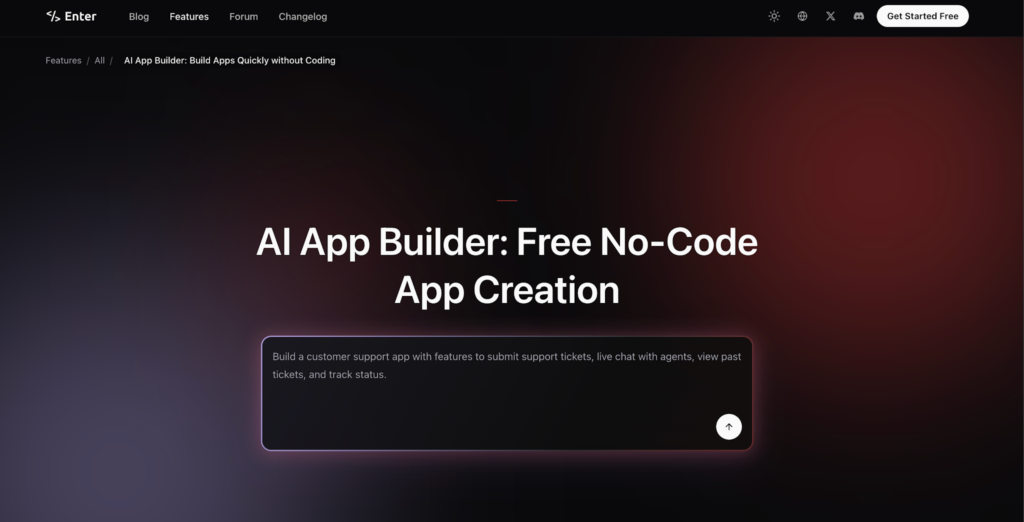
An AI app builder is useful for thinking through the structure of your website from a user experience perspective before you start building. What information does a visitor need at each point in the page? What order builds trust and drives action most effectively? What elements are genuinely necessary and which are adding noise? Getting clarity on those questions before you start putting a website together saves time and tends to produce a better result than building and then trying to restructure.
Ship It and Start Learning
The most important thing about your first website is that it exists and is live. The second most important thing is that you are willing to change it based on what you observe. Treat it as a working document rather than a finished artifact, and update it regularly as your understanding of your customers deepens.
Your hundredth version will be dramatically better than the first. But that only happens if the first one ships. Get it live, watch how people interact with it, and start the learning process. The website that is never quite ready is never quite useful.
There is a specific kind of founder who invests heavily in the product and very little in explaining the product, and this founder consistently underperforms relative to their actual quality. The assumption is that a good enough product explains itself. In practice, almost no product is good enough to explain itself to someone encountering it cold for the first time. The explanation layer, delivered through the website, the onboarding, and the first email sequence, does as much to determine the success of the product as the product itself does.
A website also communicates things that are not explicitly written anywhere on it. The speed at which it loads signals how much care went into the technical execution. The clarity of the navigation signals how well the company understands what its visitors are there to do. The quality of the writing signals how seriously the company takes communication. None of these signals are decisive on their own, but together they contribute to a first impression that either builds or undermines the trust a potential customer needs before they take the next step.
