

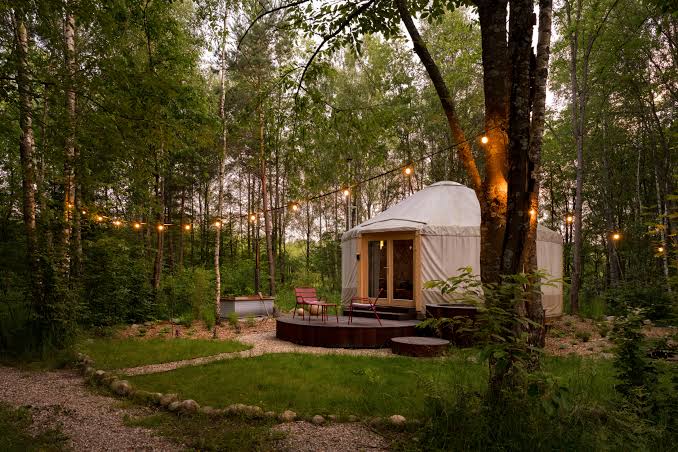
Off-grid shelter is a concept that means different things to different people. For some, it means a permanent homestead property designed to function without municipal services. For others, it means an emergency retreat location or a bug out destination for use during a crisis. Still others approach off-grid shelter as a philosophy of resilience: building or modifying existing structures to be as self-reliant and as durable as possible regardless of whether external systems are functioning.
Regardless of which category you fall into, the fundamentals of viable off-grid shelter are consistent. This article covers those fundamentals, from site selection and structural integrity to energy, water, and the practical systems that turn a structure into a livable long-term refuge.
Site Selection
The most important decision in off-grid shelter is where it is located. A well-built structure on a poor site is still a liability. Several factors should drive site selection above all others.
Elevation and drainage matter enormously. Low-lying areas near water are subject to flooding, and even moderate rainfall events can render a property temporarily inaccessible or uninhabitable. Look for sites with good natural drainage and some elevation above the surrounding terrain, particularly any nearby watercourses.
Access routes should be multiple and defensible. A property with only one road in and out is a vulnerability. Ideally, your site has at least two independent routes that can be used under different conditions: a primary road and a secondary route accessible by foot or off-road vehicle. Proximity to neighbors, public land, and transportation infrastructure all factor into both convenience and security.
Water availability is a defining constraint. A property with a year-round natural water source, whether a well, spring, stream, or reliable rainfall for collection, is categorically more valuable than one without. Drilling a well is possible on most properties but can be expensive and uncertain. Research local groundwater depth and quality before committing to a site.
Structural Integrity and Materials
An off-grid shelter does not need to be complex, but it must be structurally sound. The building should be able to withstand the weather conditions typical of its region, including snow loads in northern climates, hurricane-force winds in coastal areas, and seismic activity where applicable.
Traditional construction methods — timber framing, masonry, log construction — are highly suitable for off-grid applications because they use locally sourced or regionally available materials, require less industrial input than modern stick framing, and tend to have very long service lives when maintained. Earthen construction methods such as cob, adobe, and rammed earth have been used for millennia and are experiencing renewed interest among off-grid builders for their thermal mass, low material cost, and durability.
Whatever construction method you choose, prioritize a high-quality roof. The roof is the most critical element of any structure’s longevity. Metal roofing — steel or aluminum standing seam — is the preferred choice for off-grid builds because of its 40-to-70-year lifespan, resistance to fire and pest intrusion, and ability to serve as a rainwater collection surface.
Off-Grid Energy Systems
Generating and managing energy off-grid has become dramatically more accessible over the past decade as solar panel and battery storage costs have fallen. A modestly sized photovoltaic system — 2 to 5 kilowatts of panels paired with a battery bank and a charge controller and inverter — can meet the basic energy needs of a small household year-round in most climates.
Wood gasification, small hydro systems for properties with running water, and small wind turbines are viable supplemental sources in appropriate locations. In practice, most successful off-grid energy systems combine solar as the primary source with a generator as backup and wood or propane for cooking and heating.
Energy discipline is as important as energy generation. Off-grid households that manage consumption through efficient appliances, LED lighting, passive solar design, and behavioral habits can meet their needs with systems far smaller and less expensive than those required to replicate grid-connected energy habits.
Heating and Cooling
In most climates, heating is a more critical concern than cooling. Wood stoves and masonry heaters are the preferred heating approach for off-grid shelters because they use a renewable, locally sourced fuel, function without electricity, and provide a cooking surface as a secondary benefit. A properly sized and installed wood stove can heat a well-insulated structure of 1,000 to 1,500 square feet effectively through most winter conditions.
Insulation is the most cost-effective investment in any climate. Every dollar spent on insulation returns multiple dollars in reduced heating and cooling costs over time. Modern spray foam, rigid foam board, cellulose, and mineral wool are all viable insulation materials for off-grid builds.
Passive cooling strategies — cross-ventilation design, deep overhangs to shade walls and windows, thermal mass to moderate temperature swings, and strategic planting of deciduous trees on south and west exposures — can dramatically reduce or eliminate the need for mechanical cooling in most climates.
Water Systems
A complete off-grid water system addresses source, storage, distribution, and waste. Gravity-fed systems are preferred because they require no electricity to deliver water to points of use. A spring or collection tank positioned at elevation above the structure, connected to the home by pipe, is both reliable and simple.
Rainwater harvesting at scale is viable in many climates. Metal roofs shed clean water that, collected in properly maintained cisterns, can meet most household non-potable needs and, with appropriate filtration and purification, drinking needs as well. First-flush diverters improve collection quality by routing the initial dirty runoff away from the storage tank.
Operating an off-grid property is genuinely physical work. Hauling firewood, managing a garden, maintaining systems, and responding to problems requires sustained physical capacity. It is one reason that being survival fit is considered a practical preparedness priority, not just an aspirational goal, by many experienced homesteaders and preppers.
Food Production Integration
The most resilient off-grid shelters integrate food production into the property design from the beginning. A productive kitchen garden, fruit trees and berry bushes, a small flock of chickens or ducks, and access to hunting and fishing create a food system that actively generates nutrition rather than simply depleting stored reserves.
Permaculture design principles offer a particularly useful framework for off-grid food systems: observe and work with natural patterns, stack functions so that each element serves multiple purposes, and build soil as the foundation of productivity. A well-established food forest can produce significant calories with minimal labor once mature.
Greenhouse space, even a small passive solar greenhouse, extends the growing season in cooler climates and allows year-round production of greens and cold-tolerant vegetables. Combined with root cellaring, fermentation, and preservation skills, a productive property can supply a significant portion of a household’s caloric needs indefinitely.
