

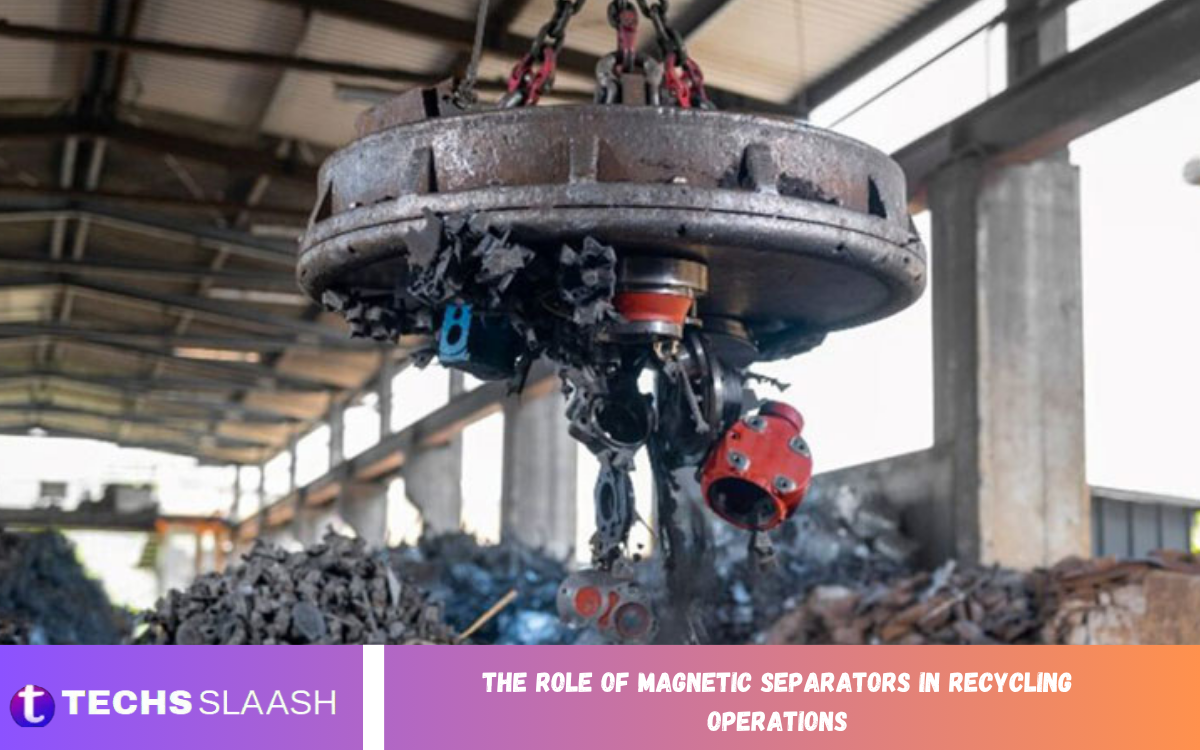
Magnetic separators play a vital role in modern recycling operations by improving the efficiency, accuracy, and sustainability of waste processing. As industries and municipalities generate increasing amounts of recyclable materials, the need for advanced sorting technologies has become more important than ever.
Magnetic separators are used across a wide range of applications, including metal recycling, plastic recycling, electronic waste (e-waste), construction debris, and municipal solid waste processing. Their ability to automate metal separation increases productivity while reducing labor costs and improving workplace safety.
What Are Magnetic Separators?
Magnetic separators are industrial machines designed to separate magnetic materials from non-magnetic materials. They utilize magnetic fields to attract and remove ferrous metals from various waste streams.
These machines are commonly installed on conveyor systems, processing lines, and material handling equipment to continuously remove unwanted metals before materials move to the next stage of recycling.
The primary purpose of magnetic separation includes:
- Recovering valuable ferrous metals
- Preventing contamination
- Protecting crushers and shredders
- Improving recycling efficiency
- Enhancing product quality
Because of their reliability and automation capabilities, magnetic separators have become standard equipment across recycling industries worldwide.
How Magnetic Separators Work
As mixed materials move along a conveyor belt, the magnetic separator generates a strong magnetic field. Ferrous metals are attracted to the magnet while non-magnetic materials continue along the conveyor.
Depending on the separator design, collected metals are discharged into dedicated bins while recyclable materials continue through additional sorting processes.
Types of Magnetic Separators
Different recycling applications require different magnetic separation technologies.
Overband Magnetic Separators
These are suspended above conveyor belts and continuously remove large ferrous objects from moving materials.
Common applications include:
- Construction waste
- Scrap yards
- Municipal waste
- Mining operations
Drum Magnetic Separators
Drum separators use rotating magnetic drums to separate ferrous metals from bulk materials.
They are widely used for:
- Metal recycling
- Plastic recycling
- Glass recycling
- Aggregate processing
Magnetic Pulley Separators
Installed as conveyor pulleys, these systems automatically attract and separate ferrous metals at the discharge point.
Benefits include:
- Continuous operation
- Low maintenance
- High efficiency
Eddy Current Separators
Although technically different from traditional magnetic separators, eddy current separators remove non-ferrous metals such as:
- Aluminum
- Copper
- Brass
They complement magnetic separators by recovering additional valuable metals.
Rare Earth Magnetic Separators
Using powerful neodymium magnets, these separators capture extremely small ferrous particles that standard magnets may miss.
They are ideal for:
- Electronic waste
- Food processing
- Fine material recovery
The Role of Magnetic Separators in Recycling Operations
The importance of magnetic separation extends throughout the recycling process.
Improving Material Recovery
One of the biggest advantages is maximizing metal recovery from mixed waste streams.
Recovered metals can be sold to manufacturers for reuse, generating additional revenue for recycling facilities.
Higher recovery rates also reduce the extraction of raw materials from natural resources.
Reducing Contamination
Contaminated recyclable materials lose value.
Magnetic separators remove unwanted metal fragments from:
- Plastic
- Paper
- Glass
- Wood
- Rubber
Cleaner materials produce higher-quality recycled products.
Protecting Equipment
Large metal objects can seriously damage:
- Crushers
- Shredders
- Grinders
- Conveyors
- Screens
Removing metal before processing minimizes costly repairs and downtime.
Increasing Operational Efficiency
Manual sorting is time-consuming and expensive.
Magnetic separators automate the process, allowing facilities to process significantly larger volumes with fewer workers.
Automation improves consistency while reducing human error.
Supporting Environmental Sustainability
Recycling metals requires far less energy than mining and refining raw ores.
Efficient metal recovery helps reduce:
- Carbon emissions
- Mining activities
- Landfill waste
- Natural resource depletion
This directly contributes to environmental conservation.
Applications Across Recycling Industries
Magnetic separators serve many industries.
Municipal Solid Waste Recycling
Household waste often contains steel cans, nails, appliances, and metal packaging.
Magnetic separators recover these metals before additional sorting.
Scrap Metal Recycling
Scrap yards rely heavily on magnetic separators to distinguish ferrous metals from mixed scrap.
Recovered steel becomes raw material for new manufacturing.
Plastic Recycling
Metal contamination damages plastic recycling equipment.
Magnetic separation ensures cleaner plastic pellets suitable for manufacturing.
Electronic Waste Recycling
Old electronics contain valuable metals alongside hazardous materials.
Magnetic separators recover steel components while improving downstream processing.
Construction and Demolition Waste
Demolition debris includes:
- Steel reinforcement bars
- Nails
- Metal pipes
- Structural steel
Magnetic separation enables efficient recycling of concrete, wood, and other materials.
Read Also: Why Unified Communications Matter
Mining Industry
Mining companies use magnetic separators to recover magnetic minerals during ore processing.
The technology improves mineral concentration while reducing waste.
Benefits of Magnetic Separators
Numerous operational advantages make magnetic separators indispensable.
Higher Productivity
Automation allows continuous material flow without frequent interruptions.
Facilities process more waste in less time.
Cost Savings
Reduced labor requirements and lower equipment maintenance costs improve profitability.
Recovered metals also create additional income streams.
Enhanced Safety
Removing metal hazards reduces workplace accidents while protecting machinery operators.
Safer facilities experience fewer operational disruptions.
Better Product Quality
Cleaner recycled materials command higher market prices.
Manufacturers prefer contamination-free recycled feedstock.
Long Equipment Life
Preventing metal damage extends the lifespan of expensive recycling machinery.
Lower repair costs improve operational efficiency.
Factors to Consider When Choosing Magnetic Separators
Selecting the right separator depends on several factors.
Important considerations include:
- Material type
- Particle size
- Processing volume
- Conveyor speed
- Magnetic strength
- Installation space
- Maintenance requirements
- Budget
Working with experienced equipment suppliers helps determine the best solution.
Maintenance Best Practices
Proper maintenance ensures long-term performance.
Recommended practices include:
- Regular inspections
- Cleaning magnetic surfaces
- Monitoring conveyor alignment
- Checking bearings
- Lubricating moving parts
- Replacing worn components
- Testing magnetic strength periodically
Preventive maintenance minimizes unexpected downtime.
Common Challenges
Although highly effective, magnetic separators face certain operational challenges.
Material Build-Up
Accumulated debris can reduce magnetic efficiency.
Routine cleaning prevents this issue.
Extremely Fine Particles
Very small metal particles may require rare earth magnets for effective recovery.
Wet Material Processing
Moisture can reduce separation efficiency if systems are not properly designed.
Equipment Selection
Incorrect separator sizing can reduce recovery rates.
Professional consultation helps optimize performance.
Future Trends in Magnetic Separation Technology
Recycling technology continues to evolve rapidly.
Future developments include:
Artificial Intelligence Integration
AI-powered monitoring systems automatically optimize separator performance.
Smart Sensors
Real-time sensors detect equipment performance and maintenance needs.
Stronger Magnetic Materials
Advances in rare earth magnet technology continue to improve separation efficiency.
Automated Recycling Plants
Magnetic separators increasingly work alongside robotics and optical sorting systems.
Energy-Efficient Designs
Manufacturers are developing systems that consume less power while maintaining high recovery rates.
These innovations will further enhance recycling productivity.
Why Magnetic Separators Are Essential for the Circular Economy?
The circular economy focuses on keeping materials in use for as long as possible. Magnetic separators support this goal by recovering metals that would otherwise end up in landfill.
Recovered steel, iron, and other metals can be melted, refined, and transformed into new products repeatedly without significant loss of quality. This reduces dependence on mining while conserving valuable natural resources for future generations.
Frequently Asked Questions
What are the main types of magnetic separators?
The most common types for non-ferrous metal recovery include overband magnetic separators, drum magnetic separators, magnetic pulley separators, rare-earth magnetic separators, and eddy-current separators.
How do magnetic separators improve recycling efficiency?
They automate the metal separation process, reduce manual labor, increase processing speed, minimize contamination, and protect machinery from damage caused by unwanted metal objects.
Can magnetic separators recover non-ferrous metals?
Traditional magnetic separators are designed for ferrous metals only. However, eddy current separators are used alongside them to recover non-ferrous metals such as aluminum, copper, and brass.
How should magnetic separators be maintained?
Regular maintenance includes cleaning magnetic surfaces, inspecting moving parts, checking conveyor alignment, testing magnetic strength, lubricating components, and replacing worn parts to ensure optimal performance.
What industries benefit from magnetic separation technology?
Industries such as recycling, mining, food processing, plastics, pharmaceuticals, construction, automotive manufacturing, and waste management all benefit from magnetic separation systems.
How do magnetic separators support environmental sustainability?
By recovering reusable metals, reducing landfill waste, conserving natural resources, lowering energy consumption, and supporting the circular economy, magnetic separators contribute significantly to sustainable recycling operations.
Conclusion
Understanding the Role of Magnetic Separators in Recycling Operations demonstrates why these machines have become indispensable in modern waste management. Their ability to recover valuable ferrous metals, reduce contamination, protect equipment, and improve operational efficiency makes them one of the most important technologies in today’s recycling industry.
From municipal recycling centers and construction waste facilities to electronic waste processing and mining operations, magnetic separators help businesses maximize resource recovery while lowering operational costs.
