

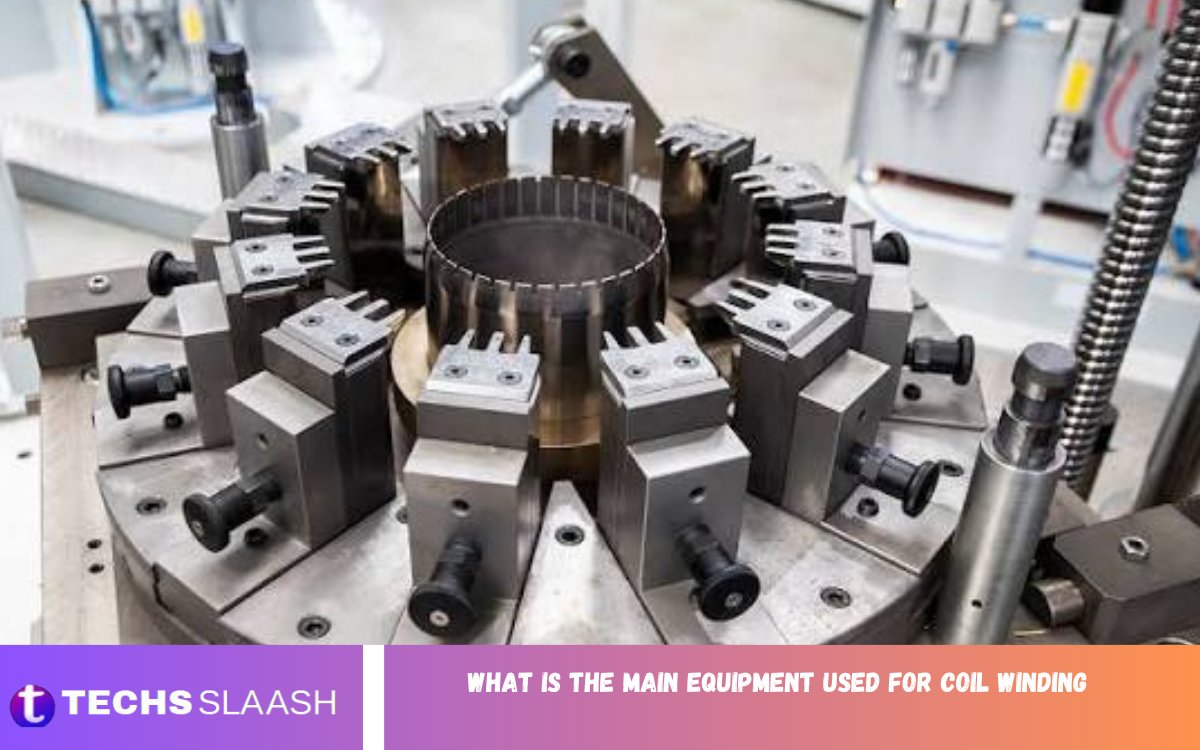
Coil winding is a vital manufacturing process used to produce electrical coils for transformers, electric motors, generators, inductors, relays, and many other electronic devices. The quality and efficiency of a coil largely depend on the equipment used during the winding process.
Modern coil winding machines range from simple manual models to advanced CNC and fully automatic systems capable of handling complex winding tasks with exceptional accuracy. They often include features such as programmable controls, tension adjustment systems, automatic wire guides, and digital monitoring to improve production speed while reducing material waste.
What Is the Main Equipment Used for Coil Winding?
The primary equipment used for coil winding is a coil winding machine.
A coil winding machine rotates the coil form while feeding wire evenly onto the winding surface. It controls every aspect of the process, including:
- Wire tension
- Rotation speed
- Number of turns
- Layer positioning
- Wire alignment
- Automatic stopping
Modern machines produce highly accurate coils that meet strict industrial standards while significantly increasing production speed.
Main Components of a Coil Winding Machine
Every coil winding machine consists of several essential components that work together.
1. Wire Spool Holder
This component securely holds the wire spool and feeds wire smoothly during winding.
Its purpose includes:
- Preventing tangles
- Maintaining smooth wire flow
- Supporting different spool sizes
2. Winding Spindle
The spindle rotates the bobbin or coil former.
Functions include:
- High-speed rotation
- Precision movement
- Stable winding
The spindle determines winding accuracy and production speed.
3. Wire Guide
The wire guide directs wire into the exact winding position.
Modern guides provide:
- Automatic positioning
- Layer control
- Uniform spacing
- Reduced overlap
4. Tension Control System
Maintaining proper wire tension is critical.
Too much tension can:
- Stretch wire
- Damage insulation
- Break wire
Too little tension causes:
- Loose coils
- Poor electrical performance
- Uneven winding
Automatic tension control eliminates these problems.
5. Control Panel
Most modern machines feature touchscreen control panels.
Operators can configure:
- Number of turns
- Winding speed
- Layer count
- Rotation direction
- Wire diameter
- Production programs
6. Motor System
Servo motors or stepper motors drive machine movement.
Benefits include:
- Smooth operation
- High accuracy
- Fast production
- Reliable positioning
Types of Coil Winding Machines
Different industries require different types of winding equipment.
Manual Coil Winding Machines
Manual machines are operated by hand using a crank.
Advantages include:
- Low cost
- Easy operation
- Suitable for repairs
- Ideal for hobbyists
Limitations include slower production and lower accuracy.
Semi-Automatic Coil Winding Machines
These machines automate certain functions while requiring operator assistance.
They offer:
- Better consistency
- Faster production
- Lower labor requirements
They are widely used in medium-scale manufacturing.
Fully Automatic Coil Winding Machines
Fully automatic systems perform the entire winding process with minimal human intervention.
Features include:
- Automatic loading
- Precision winding
- Automatic cutting
- Automatic wire termination
- Digital monitoring
These machines deliver maximum productivity.
CNC Coil Winding Machines
Computer Numerical Control (CNC) machines provide exceptional accuracy.
Advantages include:
- Programmable winding patterns
- Complex coil designs
- High repeatability
- Precision manufacturing
CNC systems are widely used in aerospace, automotive, and medical industries.
Industries That Use Coil Winding Machines
Coil winding equipment supports numerous industries.
Electrical Manufacturing
Transformers
Inductors
Relays
Power supplies
Electrical switches
Automotive Industry
Electric vehicles rely heavily on wound components.
Applications include:
- Electric motors
- Charging systems
- Ignition coils
- Sensors
Renewable Energy
Renewable energy equipment uses precision wound coils in:
- Wind turbines
- Solar inverters
- Power converters
- Energy storage systems
Telecommunications
Communication equipment requires:
- RF coils
- Signal transformers
- Network components
- Wireless devices
Medical Equipment
Medical devices contain miniature coils used in:
- MRI systems
- Surgical equipment
- Monitoring devices
- Diagnostic instruments
Aerospace Industry
Aircraft require high-quality coils for:
- Navigation systems
- Flight controls
- Power distribution
- Communication equipment
Read Also: The Process of Shipping a Car From Booking to Delivery
Benefits of Modern Coil Winding Machines
Modern winding equipment offers numerous advantages.
High Precision
Computer-controlled systems produce perfectly aligned windings.
This improves:
- Electrical efficiency
- Product reliability
- Long-term durability
Faster Production
Automation significantly reduces manufacturing time.
Manufacturers can produce thousands of coils every day with consistent quality.
Reduced Material Waste
Accurate wire placement minimizes:
- Scrap wire
- Production errors
- Material costs
Better Product Quality
Consistent winding improves:
- Electrical conductivity
- Magnetic performance
- Mechanical strength
Lower Labor Costs
Automatic machines require fewer operators while increasing production capacity.
Improved Safety
Modern machines reduce operator contact with moving components.
Built-in safety systems minimize workplace accidents.
Factors to Consider When Choosing a Coil Winding Machine
Selecting the right machine depends on several factors.
Production Volume
Large factories require fully automatic systems.
Small workshops may benefit from manual or semi-automatic equipment.
Wire Diameter
Different machines support different wire thicknesses.
Always verify machine specifications before purchasing.
Coil Size
Machines vary in the maximum coil diameter they can produce.
Choose equipment suitable for your product range.
Precision Requirements
Medical and aerospace applications require extremely accurate CNC systems.
General manufacturing may not require such advanced equipment.
Budget
Consider:
- Purchase price
- Operating costs
- Maintenance expenses
- Long-term productivity
The lowest-cost machine is not always the best investment.
Common Applications of Coil Winding
Coil winding machines manufacture components used in:
- Electric motors
- Transformers
- Solenoids
- Relays
- Electromagnets
- Inductors
- Chokes
- Sensors
- Actuators
- Power supplies
- Industrial automation
- Robotics
Without coil winding equipment, many modern technologies would not function.
Maintenance Tips for Coil Winding Machines
Regular maintenance ensures reliable performance.
Recommended practices include:
- Clean wire guides regularly.
- Lubricate moving parts.
- Inspect bearings.
- Check tension systems.
- Replace worn components.
- Calibrate sensors.
- Update software when available.
- Verify spindle alignment.
- Monitor motor performance.
- Train machine operators properly.
Preventive maintenance reduces downtime and extends machine life.
Future Trends in Coil Winding Technology
The industry continues evolving with advanced manufacturing technologies.
Emerging innovations include:
Artificial Intelligence
AI optimizes winding parameters automatically.
Smart Sensors
Real-time monitoring detects errors before defects occur.
Industry 4.0 Integration
Machines communicate with factory management systems for better production control.
Robotics
Robotic loading and unloading increase efficiency.
Energy-Efficient Motors
New drive systems reduce power consumption while maintaining performance.
Cloud Monitoring
Manufacturers can monitor machine performance remotely from anywhere.
These innovations improve productivity, quality, and operational efficiency.
Why Precision Matters in Coil Winding?
The electrical performance of a coil depends on its winding accuracy.
Poor winding may result in:
- Heat generation
- Power loss
- Short circuits
- Reduced efficiency
- Equipment failure
Professional coil winding machines eliminate these risks through automated precision and consistent quality control.
Frequently Asked Questions
Which industries use coil winding machines?
Coil winding machines are widely used in the electrical, automotive, aerospace, renewable energy, telecommunications, medical device, and industrial automation industries.
What materials can be wound using a coil winding machine?
Most machines can wind copper, aluminum, and other insulated conductive wires in various diameters, depending on the machine’s specifications.
How does a CNC coil winding machine differ from a standard machine?
A CNC coil winding machine uses computer-controlled programming to achieve highly accurate winding patterns, making it ideal for complex coil designs and high-volume production.
What factors should be considered when choosing a coil winding machine?
Important factors include production volume, wire diameter, coil size, automation level, precision requirements, machine speed, maintenance needs, and budget.
How can regular maintenance improve a coil winding machine’s performance?
Routine maintenance, including cleaning, lubrication, calibration, and inspection of moving parts, helps reduce downtime, extend machine life, and maintain winding accuracy.
What are the benefits of using an automatic coil winding machine?
Automatic coil winding machines increase production speed, improve precision, reduce labor costs, minimize material waste, ensure consistent quality, and enhance overall manufacturing efficiency.
Conclusion
Understanding what the main equipment is used for, Coil Winding, is essential for anyone involved in electrical manufacturing, industrial automation, or electronics production. The coil winding machine serves as the foundation of this process by delivering precise, repeatable, and efficient wire winding for a wide range of applications.
From manual units for small workshops to sophisticated CNC and fully automated systems used in high-volume factories, these machines ensure consistent wire tension, accurate layering, and reliable product quality.
