

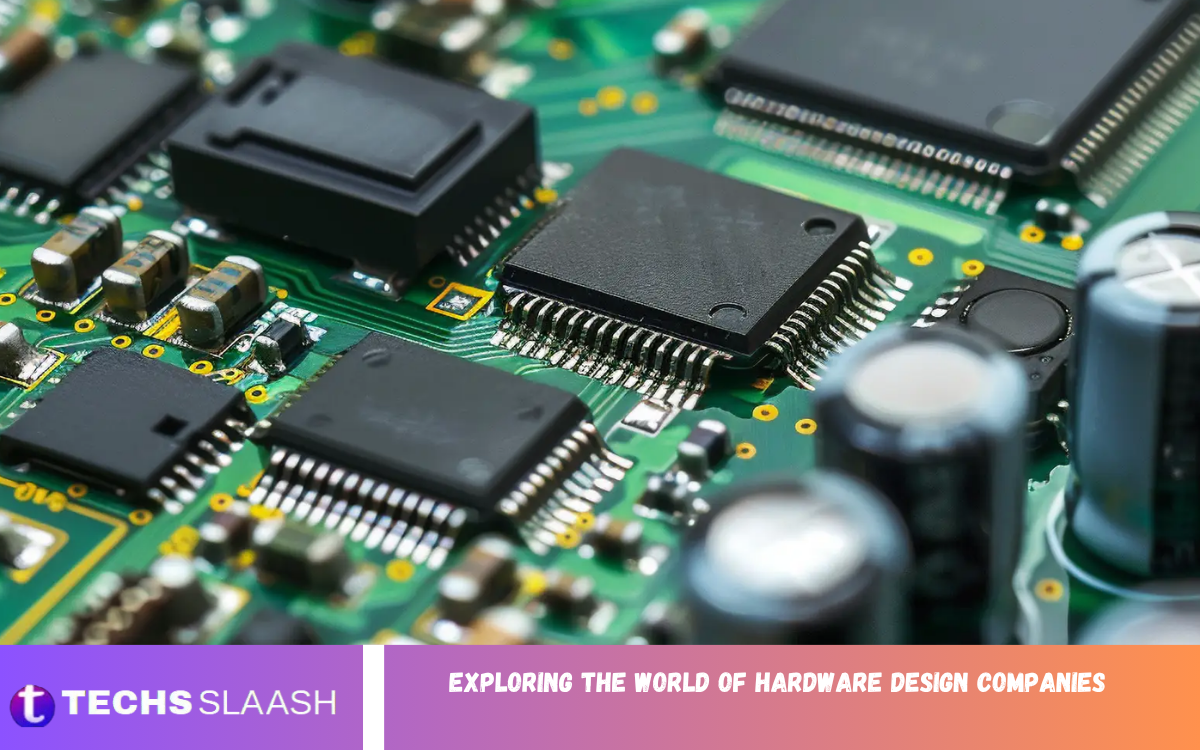
Hardware design companies play a vital role in transforming innovative ideas into reliable, high-performance physical products. From consumer electronics and medical devices to industrial equipment, automotive systems, and IoT solutions, these companies combine engineering expertise, creativity, and advanced technologies to design hardware that meets modern market demands.
Hardware design involves much more than creating electronic circuits. It includes product conceptualization, PCB design, embedded systems development, mechanical engineering, prototyping, testing, manufacturing support, and quality assurance.
What Are Hardware Design Companies?
Hardware design companies specialize in developing physical electronic products from concept to production. They combine multidisciplinary engineering expertise to create reliable hardware solutions that satisfy technical, functional, and commercial requirements.
Their responsibilities often include:
- Electronic circuit design
- PCB layout and optimization
- Embedded systems development
- Mechanical enclosure design
- Product prototyping
- Firmware integration
- Hardware testing
- Compliance certification
- Manufacturing support
- Product lifecycle management
These organizations serve startups, small businesses, enterprises, research institutions, and government organizations across numerous industries.
Importance of Hardware Design Companies
Professional hardware engineering significantly impacts product quality, manufacturing efficiency, and long-term reliability.
Key advantages include:
- Faster product development
- Reduced engineering risks
- Lower manufacturing costs
- Improved product reliability
- Better power efficiency
- Enhanced safety compliance
- Faster time-to-market
- Scalable product architecture
- Simplified maintenance
- Improved customer satisfaction
Their expertise minimizes costly redesigns while maximizing product performance.
Industries Served by Hardware Design Companies
Hardware engineering firms support a diverse range of industries.
Consumer Electronics
Designing:
- Smartphones
- Tablets
- Smart watches
- Smart home devices
- Gaming accessories
- Audio equipment
These products require compact layouts, energy efficiency, and premium performance.
Medical Devices
Medical hardware requires exceptional precision and regulatory compliance.
Common products include:
- Patient monitoring systems
- Diagnostic equipment
- Portable medical devices
- Imaging systems
- Laboratory instruments
- Wearable health trackers
Reliability and patient safety remain top priorities.
Automotive Industry
Modern vehicles depend heavily on electronic hardware.
Applications include:
- Advanced driver assistance systems
- Electric vehicle controllers
- Battery management systems
- Infotainment systems
- Engine control units
- Navigation systems
Automotive hardware must withstand harsh environmental conditions.
Industrial Automation
Manufacturing facilities rely on intelligent hardware for automation.
Examples include:
- PLC controllers
- Industrial sensors
- Human-machine interfaces
- Robotics controllers
- Motion control systems
- Factory monitoring equipment
These systems improve productivity and operational efficiency.
Internet of Things (IoT)
IoT hardware continues expanding across industries.
Popular applications include:
- Smart agriculture
- Smart cities
- Asset tracking
- Environmental monitoring
- Connected healthcare
- Industrial IoT
Hardware designers optimize low-power connectivity and wireless communication.
Core Services Offered by Hardware Design Companies
Professional hardware firms provide complete engineering solutions.
Electronic Circuit Design
Engineers create efficient circuit architectures using components that balance performance, reliability, and cost.
Design considerations include:
- Signal integrity
- Noise reduction
- Thermal performance
- Power management
- Component availability
PCB Design
Printed Circuit Board design is one of the most critical engineering tasks.
Modern PCB development includes:
- Multi-layer PCB design
- High-speed routing
- EMI reduction
- Thermal optimization
- Power distribution
- Design validation
Well-designed PCBs improve overall system stability.
Embedded Systems Development
Hardware companies integrate embedded processors with firmware to enable intelligent device functionality.
Popular processors include:
- ARM Cortex
- STM32
- ESP32
- AVR
- PIC Microcontrollers
- RISC-V
Embedded software controls sensors, communication, and automation.
Read Also: Why Wall Paneling Won’t Stick
Mechanical Design
Mechanical engineers develop durable product enclosures that provide:
- Structural protection
- Heat dissipation
- Waterproofing
- User-friendly interfaces
- Attractive industrial design
Mechanical and electronic teams collaborate throughout development.
Rapid Prototyping
Prototype development validates hardware before production.
Common technologies include:
- 3D printing
- CNC machining
- PCB assembly
- Functional testing
- Design iteration
Rapid prototyping reduces development risks significantly.
Manufacturing Support
Many hardware companies assist with production by providing:
- Component sourcing
- Vendor selection
- Assembly optimization
- Manufacturing documentation
- Quality assurance
- Production testing
This ensures consistent manufacturing quality.
Hardware Design Process
Professional hardware development follows a structured workflow.
1. Requirement Analysis
The project begins by defining:
- Product objectives
- Performance requirements
- Budget
- Timeline
- Compliance standards
- Target users
Clear planning prevents future complications.
2. System Architecture
Engineers develop the overall hardware architecture, selecting processors, communication modules, sensors, memory, and power systems.
3. Schematic Design
Detailed electronic schematics define every component and electrical connection.
Engineers also perform simulations to verify circuit performance.
4. PCB Layout
PCB designers arrange components while optimizing:
- Signal routing
- Ground planes
- Thermal performance
- Electromagnetic compatibility
Proper layout significantly improves reliability.
5. Prototype Manufacturing
Prototype boards are fabricated and assembled for validation.
Testing verifies design functionality before mass production.
6. Testing and Debugging
Engineers perform comprehensive testing including:
- Functional testing
- Electrical testing
- Thermal analysis
- Environmental testing
- Performance validation
- Reliability assessment
Any issues are corrected before production.
7. Production
After validation, manufacturing begins with ongoing quality monitoring and production support.
Emerging Technologies Transforming Hardware Design
Technology continues reshaping hardware engineering.
Artificial Intelligence
AI assists engineers by optimizing:
- Circuit design
- Component selection
- PCB routing
- Failure prediction
- Manufacturing efficiency
AI significantly accelerates development.
Digital Twin Technology
Digital twins simulate hardware performance before manufacturing.
Benefits include:
- Lower development costs
- Better optimization
- Faster testing
- Reduced design failures
Edge Computing
Edge devices process information locally instead of relying entirely on cloud computing.
Advantages include:
- Lower latency
- Faster response
- Enhanced privacy
- Reduced bandwidth usage
Advanced Semiconductor Technology
Smaller semiconductor processes enable:
- Lower power consumption
- Higher computing performance
- Compact device sizes
- Improved reliability
Sustainable Hardware Design
Modern companies increasingly prioritize sustainability by:
- Using recyclable materials
- Reducing electronic waste
- Improving energy efficiency
- Designing repairable products
- Extending product lifespan
Environmental responsibility continues gaining importance.
Qualities of a Reliable Hardware Design Company
Selecting the right engineering partner requires careful evaluation.
Look for companies with:
- Experienced engineering teams
- Industry certifications
- Strong project portfolio
- Transparent communication
- Proven testing capabilities
- Manufacturing expertise
- Compliance knowledge
- Long-term support services
An experienced partner reduces project risks considerably.
Common Challenges in Hardware Design
Hardware development involves several technical challenges.
These include:
- Component shortages
- Thermal management
- Electromagnetic interference
- Power optimization
- Mechanical constraints
- Regulatory compliance
- Manufacturing consistency
- Cost control
Experienced engineers develop solutions to overcome these obstacles efficiently.
Benefits of Working with Professional Hardware Design Companies
Professional engineering firms deliver measurable business advantages.
These include:
- Faster innovation
- Lower development costs
- Reduced product failures
- Better manufacturing efficiency
- Improved customer satisfaction
- Stronger product reliability
- Increased market competitiveness
- Scalable future upgrades
Their expertise supports long-term product success.
Future of Hardware Design Companies
Hardware engineering continues evolving rapidly.
Future trends include:
- AI-assisted engineering
- Autonomous product optimization
- Quantum computing hardware
- Flexible electronics
- Printed electronics
- Wearable technologies
- Smart factories
- Green manufacturing
- Intelligent robotics
- Advanced IoT ecosystems
Companies embracing innovation will remain industry leaders.
How to Choose the Right Hardware Design Company
Before selecting a hardware partner, evaluate:
- Technical expertise
- Industry experience
- Previous projects
- Client testimonials
- Engineering resources
- Manufacturing partnerships
- Security practices
- Intellectual property protection
- Development methodology
- Post-launch support
Comparing multiple providers helps identify the best long-term partner.
Best Practices for Successful Hardware Development
Businesses can improve project outcomes by following proven practices:
- Define clear product requirements.
- Involve hardware and software teams early.
- Build prototypes before mass production.
- Conduct extensive testing.
- Choose reliable components.
- Plan for manufacturing scalability.
- Maintain detailed documentation.
- Prioritize cybersecurity for connected devices.
- Design for future upgrades.
- Partner with experienced hardware professionals.
Following these practices minimizes delays and enhances product quality.
Frequently Asked Questions
What technologies are shaping hardware design?
Artificial intelligence, IoT, edge computing, digital twins, advanced semiconductors, robotics, and sustainable engineering are major trends.
How long does hardware product development take?
Depending on complexity, development can range from a few months to more than a year.
Why should businesses hire professional hardware design companies?
Professional firms provide specialized expertise, reduce development costs, improve product quality, ensure compliance, and accelerate time-to-market.
What skills do hardware engineers need?
They require knowledge of electronics, PCB design, embedded systems, firmware, mechanical design, testing, and manufacturing processes.
How do hardware design companies ensure product quality?
They perform simulations, prototype validation, electrical testing, thermal analysis, reliability testing, and compliance verification throughout development.
What should I consider when choosing a hardware design company?
Evaluate technical expertise, industry experience, project portfolio, communication, manufacturing support, certifications, intellectual property protection, and post-launch services.
Conclusion
Exploring the World of Hardware Design Companies reveals the critical role these organizations play in modern technology development. From concept creation and circuit design to PCB engineering, embedded systems, testing, and manufacturing support, hardware design companies transform innovative ideas into dependable products that power industries worldwide.
