

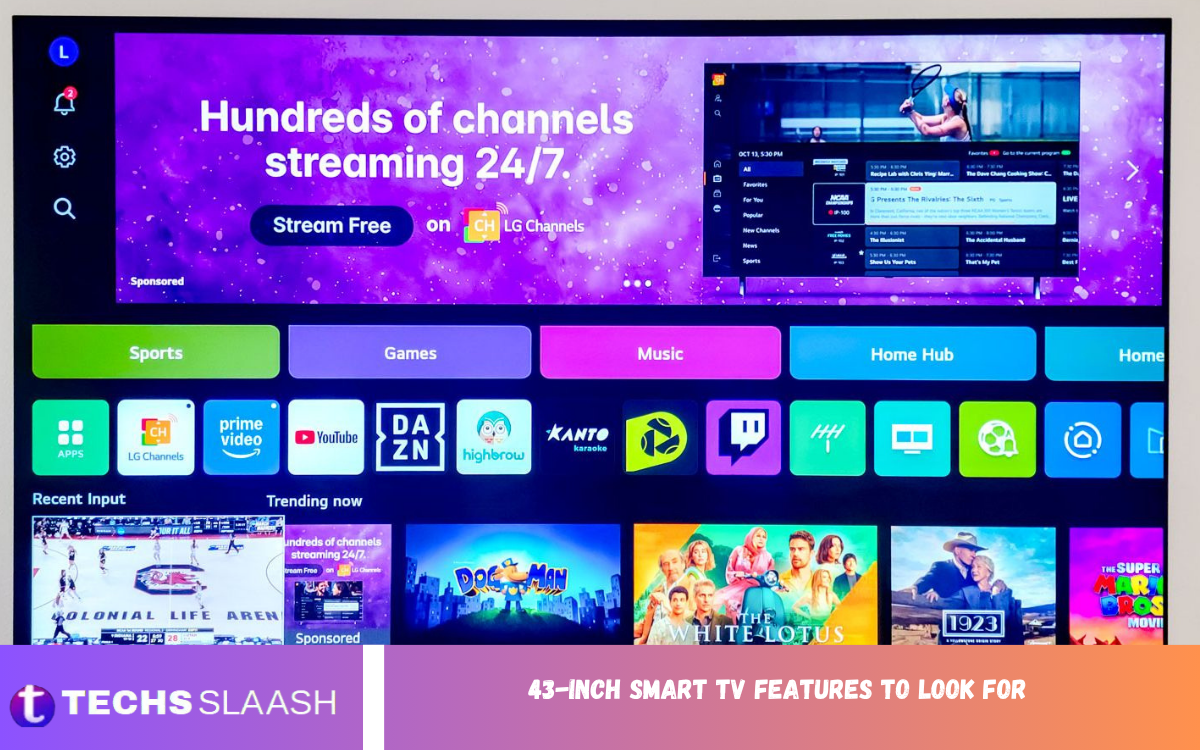
Choosing the right 43-inch Smart TV can be challenging with so many models offering different technologies, features, and price points. This size is popular because it provides an excellent balance between screen space and compact design, making it suitable for bedrooms, living rooms, gaming setups, apartments, and smaller entertainment areas.
Modern 43-inch Smart TVs offer much more than basic television viewing. From 4K Ultra HD resolution and HDR support to advanced smart platforms, voice control, built-in streaming apps, and powerful processors, there are many factors to consider.
4K Ultra HD Resolution
One of the first features to consider is screen resolution. A 43-inch Smart TV with 4K Ultra HD resolution provides 3,840 × 2,160 pixels, delivering significantly more detail than Full HD. This higher pixel density can make movies, television programs, sports, and games appear sharper and more realistic.
At 43 inches, 4K is particularly useful when viewers sit relatively close to the screen. Fine details remain clearer, while compatible streaming services and gaming consoles can take advantage of the additional resolution.
HDR Support
High Dynamic Range, commonly known as HDR, is another important feature. HDR can improve contrast, brightness, and color performance, allowing compatible content to display brighter highlights and deeper shadows.
Different TVs support different HDR formats, so it is worth checking compatibility before buying. Depending on the model, you may find support for formats such as HDR10, Dolby Vision, or HDR10+.
Display Panel Technology
Panel technology can have a major impact on your viewing experience. LED TVs are widely available and can offer good brightness and value. Some models use QLED technology to provide enhanced color volume and brightness, while OLED televisions are known for excellent contrast and deep blacks.
For many buyers, a conventional LED or QLED 43-inch television may provide the right balance between price and performance. If cinematic picture quality is your priority, however, premium panel technologies may be worth considering.
Refresh Rate and Motion Performance
Refresh rate determines how frequently the television updates the image. A higher refresh rate can make fast-moving scenes appear smoother, which is especially useful for sports and gaming.
For ordinary television viewing and films, a standard refresh rate may be perfectly adequate. Gamers, however, may prefer a TV with a higher native refresh rate and features designed for responsive gameplay.
Smart TV Operating System
A Smart TV’s operating system controls its interface, applications, settings, streaming services, and smart features. A user-friendly platform can make a significant difference to everyday convenience.
Before purchasing, check whether the television supports the streaming platforms you regularly use. Popular services may include Netflix, YouTube, Prime Video, Disney+, and other regional applications.
Streaming Apps and Content Access
Built-in streaming support is one of the biggest advantages of a Smart TV. Instead of connecting separate streaming devices for every service, you can access compatible applications directly through the television.
Look for a TV with a broad selection of apps and a responsive interface. The quality of the app experience matters as much as the number of available applications.
Processor and Overall Performance
The processor is an often-overlooked part of 43-inch smart TV Features to Look For. A capable processor helps the TV launch applications quickly, navigate menus smoothly, process images, upscale lower-resolution content, and handle demanding Smart TV functions.
A television with impressive specifications can still feel frustrating if its software is slow or unresponsive. When comparing models, look for reviews that discuss menu performance, application loading, image processing, and general responsiveness.
HDMI and Connectivity Options
Connectivity is another essential consideration. Check the number and type of HDMI ports before purchasing. Multiple HDMI inputs allow you to connect devices such as gaming consoles, soundbars, Blu-ray players, streaming devices, and computers.
HDMI features can vary, so gamers should pay particular attention to specifications such as HDMI 2.1 support, variable refresh rate, and automatic low-latency mode where available.
Wi-Fi and Bluetooth
Reliable wireless connectivity is essential for a Smart TV. Built-in Wi-Fi lets you stream content without an Ethernet cable, while Bluetooth can support compatible headphones, speakers, keyboards, controllers, and other accessories.
If your home network is busy or your router is located far from the TV, consider models with modern Wi-Fi standards. For demanding 4K streaming, a stable network connection is particularly important.
Sound Quality
Picture quality often receives the most attention, but audio quality should not be ignored. Slim televisions have limited space for built-in speakers, which means some models may not provide the powerful sound you expect.
Look for features such as Dolby Atmos support, enhanced dialogue modes, virtual surround sound, and adjustable audio settings. These features can improve the listening experience, although they cannot always replace dedicated speakers.
Read Also: Buying a Proxy Server: A Guide to Security, Privacy & Performance
Gaming Features
If you plan to connect a PlayStation, Xbox, gaming PC, or another console, gaming specifications should be a priority. A good gaming TV should offer low input lag, smooth motion, fast response times, and appropriate refresh-rate support.
Features such as Variable Refresh Rate can help reduce screen tearing and provide smoother gameplay. Auto Low Latency Mode can automatically switch the TV into a gaming-friendly mode when a compatible device is detected.
Voice Control and Smart Home Integration
Voice control can make a Smart TV more convenient. Depending on the model and operating system, you may be able to search for programmes, adjust settings, launch applications, or control compatible smart-home devices using voice commands.
Integration with smart-home ecosystems can also be valuable if you already use connected lights, speakers, security devices, or other smart products.
Design and Wall-Mount Compatibility
A 43-inch television should fit comfortably within your room, so consider its physical dimensions, stand design, bezel size, and mounting compatibility.
A slim bezel can provide a more modern appearance and allow the screen to feel larger without increasing the television’s overall footprint. If you plan to mount the TV on a wall, check its VESA mounting specifications and ensure your chosen wall mount is compatible.
Energy Efficiency
Energy consumption is another practical feature to consider. A television that uses less electricity can help reduce long-term running costs, particularly if it is used for several hours every day.
Check the TV’s energy information and consider your typical viewing habits. Features such as automatic brightness adjustment and power-saving modes may also help reduce energy consumption.
Remote Control and User Experience
A Smart TV should be easy to operate. A well-designed remote can make navigation, volume control, app access, and settings adjustments much more convenient.
Some premium remotes include dedicated streaming buttons, voice control, motion functions, or simplified layouts. Consider whether the interface is easy to understand and whether commonly used settings are readily accessible.
Price, Warranty, and Long-Term Value
Price should always be considered alongside features and expected lifespan. The cheapest 43-inch Smart TV may not necessarily provide the best value if it has weak processing, limited connectivity, poor software support, or inadequate picture quality.
Compare models according to the features that genuinely matter to you. Also check the manufacturer’s warranty and customer support options.
Frequently Asked Questions
Is a 43-inch Smart TV good for gaming?
Yes. Look for low input lag, a fast refresh rate, Variable Refresh Rate (VRR), and gaming features such as Auto Low Latency Mode.
How many HDMI ports should a 43-inch Smart TV have?
At least three HDMI ports can provide useful flexibility for connecting gaming consoles, streaming devices, soundbars, and other equipment.
Does Smart TV software matter when buying a 43-inch TV?
Yes. A responsive operating system with popular streaming apps and regular software updates can make the TV easier and more convenient to use.
Should I consider sound quality when buying a 43-inch Smart TV?
Absolutely. Built-in speakers can vary considerably. If you want a more immersive experience, choose a model with good audio support or compatibility with a soundbar.
Can a 43-inch Smart TV connect to Wi-Fi and Bluetooth?
Most modern Smart TVs offer Wi-Fi, while many also provide Bluetooth for compatible headphones, speakers, controllers, and other accessories.
How do I choose the best 43-inch Smart TV?
Compare picture quality, 4K and HDR support, operating system, refresh rate, gaming features, connectivity, sound, energy efficiency, warranty, and price based on your specific needs.
Conclusion
Knowing the 43-Inch Smart TV Features to Look For makes it easier to compare models and choose a television that matches your lifestyle. Important considerations include 4K resolution, HDR support, panel technology, refresh rate, processing performance, smart operating system, streaming compatibility, connectivity, sound quality, gaming capabilities, and wireless features.
