

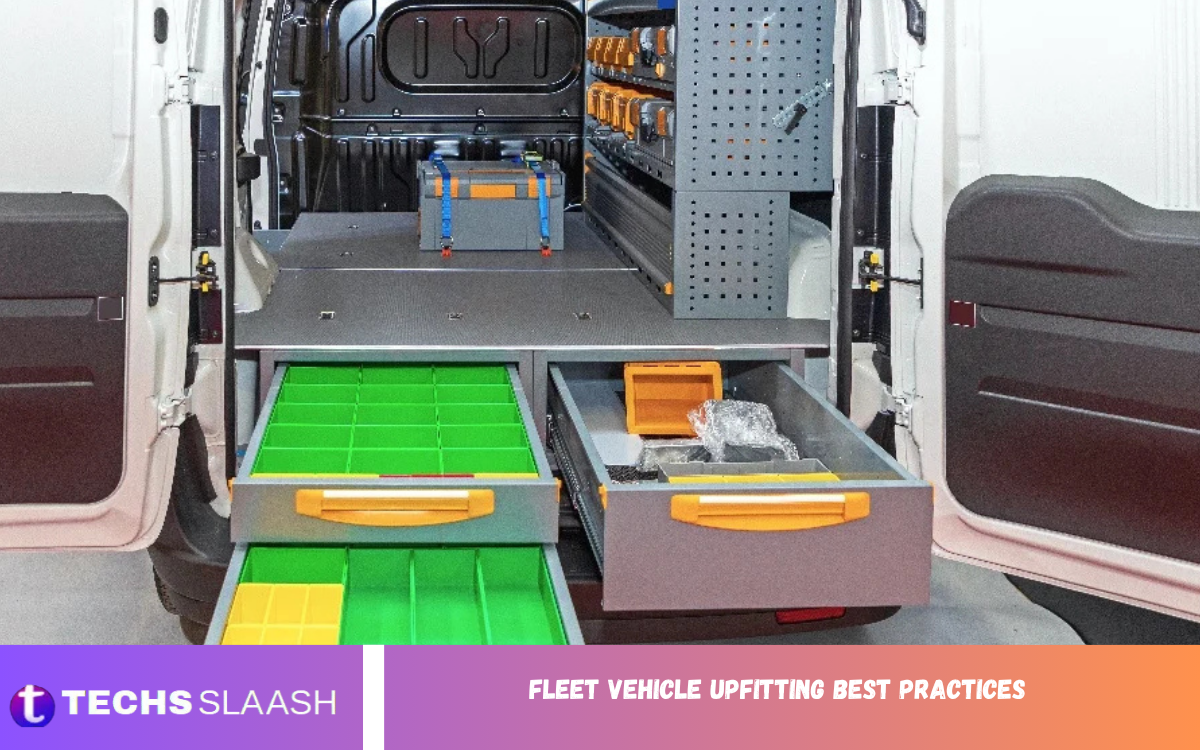
Fleet vehicle upfitting plays a vital role in transforming standard vehicles into specialized assets that meet the unique demands of different businesses and industries. From service vans and utility trucks to emergency vehicles and delivery fleets, the right upfitting approach can improve productivity, safety, organization, and overall vehicle performance.
Following fleet vehicle upfitting best practices helps businesses avoid unnecessary costs, reduce downtime, and extend the useful life of their vehicles. Fleet managers should consider factors such as payload capacity, equipment placement, driver ergonomics, fuel efficiency, safety requirements, maintenance access, and future operational needs before beginning an upfit project.
Start With Fleet Requirements
The first step in an effective upfitting project is understanding exactly how each vehicle will be used. Fleet managers should identify the tools, materials, equipment, technology, and storage solutions employees require during normal operations.
Different roles may require completely different configurations. A technician may need organized drawers and tool storage, while a delivery driver may need shelving, cargo protection, and easy access to frequently handled packages. Matching the vehicle configuration to the job prevents unnecessary equipment and wasted space.
Choose the Right Vehicle
Vehicle selection should happen before the upfitting process begins. The vehicle must have enough payload capacity, cargo space, power, and structural capability to safely support the planned equipment and materials.
Choosing a vehicle based only on purchase price can create problems later. A vehicle that cannot comfortably handle its equipment may experience excessive wear, reduced performance, and higher maintenance expenses throughout its operating life.
Prioritize Safety
Safety should remain one of the most important considerations throughout every upfitting project. Equipment should be securely installed so it does not move, fall, or become a hazard when the vehicle accelerates, brakes, or turns.
Heavy items should be positioned carefully to maintain proper weight distribution. Poorly placed equipment can affect handling and braking performance, particularly when the vehicle is fully loaded.
Manage Payload Capacity
Payload management is one of the most important Fleet Vehicle Upfitting Best Practices because every additional component contributes to the vehicle’s overall weight. Shelving, racks, drawers, partitions, generators, compressors, and other equipment can quickly add significant weight.
Fleet managers should calculate the expected operating weight before finalizing an upfit design. The calculation should include equipment, employees, tools, materials, fuel, and any cargo regularly carried by the vehicle.
Improve Storage and Organization
Effective storage can significantly improve productivity. Employees spend less time searching for tools and supplies when everything has a designated location that is easy to access.
Shelving, drawers, bins, partitions, racks, and other organizational systems should be selected according to the equipment employees actually use. Frequently accessed items should generally be positioned where they can be reached quickly and safely.
Consider Driver Ergonomics
Driver and technician comfort should not be overlooked during vehicle upfitting. Employees may spend several hours inside or around their fleet vehicles every day, making ergonomic design important for productivity and workplace satisfaction.
Controls, equipment, storage compartments, and frequently used tools should be positioned in practical locations. Employees should be able to perform routine tasks without excessive bending, reaching, lifting, or twisting.
Select Quality Equipment
The cheapest upfitting components are not always the most economical choice. Low-quality shelving, racks, storage systems, electrical components, or mounting hardware may wear out quickly and require frequent replacement.
Quality equipment should be selected based on durability, expected workload, environmental conditions, and compatibility with the vehicle. Fleet managers should also consider manufacturer support and replacement-part availability.
Work With Professional Installers
Professional installation is another major component of effective fleet upfitting. Experienced installers understand vehicle specifications, weight limitations, mounting requirements, electrical systems, and practical workspace design.
A professional upfitter can also identify potential conflicts before installation begins. This can prevent modifications from interfering with doors, wiring, safety systems, maintenance points, or other factory components.
Read Also: Contact DesignMode24 Com: Guide to Reaching Their Team the Right Way
Standardize Fleet Configurations
Standardization can make fleet management easier, particularly for companies operating many vehicles. Similar vehicles with consistent layouts can simplify driver training, equipment management, maintenance, and replacement planning.
When employees know where tools and supplies are located, they can transition between vehicles more easily. Standard configurations also make it easier for managers to compare vehicle performance and identify operational improvements.
Think About Total Cost
Upfitting decisions should be based on total cost rather than the initial installation price alone. Fleet managers should consider equipment costs, installation, maintenance, fuel consumption, downtime, repairs, and eventual replacement.
A lightweight and efficient configuration may cost more initially but provide savings through improved fuel economy and reduced wear. Similarly, durable storage equipment may have a higher purchase price while lasting longer than cheaper alternatives.
Plan for Maintenance
Maintenance access should be considered before equipment is installed. Upfit components should not make routine inspections, repairs, fluid checks, or service procedures unnecessarily difficult.
Fleet managers should work with installers to ensure important maintenance points remain accessible. Equipment that must be removed frequently for basic service can increase labor costs and vehicle downtime.
Review Fleet Performance
The upfitting process should not end when the vehicle leaves the installation facility. Fleet managers should monitor how effectively each configuration performs under real operating conditions.
Feedback from drivers and technicians can reveal problems involving storage, accessibility, weight, ergonomics, or equipment placement. This information can be used to improve future vehicle configurations.
Frequently Asked Questions
What is fleet vehicle upfitting?
Fleet vehicle upfitting involves modifying standard vehicles with specialized equipment, storage, technology, and accessories required for particular business operations.
Why is vehicle upfitting important?
Upfitting helps businesses create vehicles that better match their employees’ daily responsibilities. Proper modifications can improve productivity, organization, safety, and operational efficiency.
What should be considered before an upfit?
Fleet managers should consider vehicle size, payload capacity, equipment requirements, employee needs, safety, storage, maintenance access, operating conditions, and total costs.
How does payload affect fleet upfitting?
Every installed component adds weight to the vehicle. Managers must account for equipment, tools, passengers, cargo, and fuel to ensure the finished vehicle remains within appropriate weight limits.
Should fleet vehicles have standardized configurations?
Standardization can improve training, equipment organization, maintenance, and vehicle interchangeability. However, configurations should still accommodate important differences between job roles.
Is professional installation necessary?
Professional installation can help ensure equipment is mounted securely and appropriately. Experienced installers can also reduce the risk of conflicts with vehicle systems and maintenance requirements.
How can upfitting improve productivity?
Organized storage and accessible equipment reduce time spent searching for tools and materials. A well-designed vehicle can help employees complete daily tasks more efficiently.
How often should an upfit be inspected?
Upfit equipment should be checked regularly as part of normal fleet maintenance. Inspection frequency can depend on vehicle usage, operating conditions, and the type of equipment installed.
How can companies reduce upfitting costs?
Businesses can reduce costs by planning carefully, standardizing suitable configurations, selecting durable equipment, considering total ownership costs, and avoiding unnecessary modifications.
Can an existing fleet vehicle be upgraded?
In many cases, existing vehicles can be modified or upgraded. However, managers should first confirm payload capacity, compatibility, vehicle condition, and the suitability of the proposed equipment.
Conclusion
Following Fleet Vehicle Upfitting Best Practices allows businesses to turn standard vehicles into practical, safe, and productive mobile workspaces. Successful upfitting begins with understanding operational requirements and selecting vehicles capable of supporting the intended equipment.
From payload management and storage organization to professional installation and preventive maintenance, every decision can influence fleet performance.
