

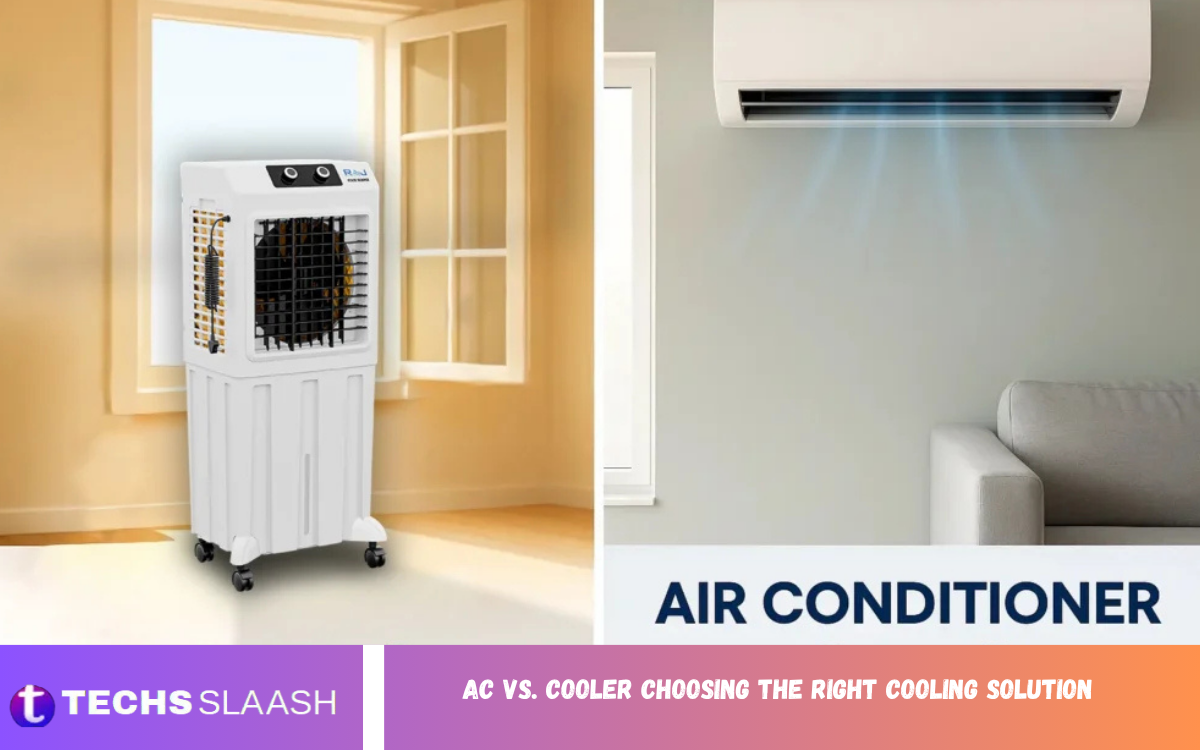
When summer temperatures rise, choosing the right cooling system can make a major difference in comfort, energy consumption, and household expenses. The most common options are air conditioners and air coolers, but they work in very different ways.
An air conditioner uses refrigeration technology to remove heat and humidity from indoor air, while an air cooler uses water evaporation to produce cooler air. Understanding these differences is the first step toward making an informed decision.
How an Air Conditioner Works
An air conditioner circulates indoor air through an evaporator coil, where heat is absorbed and removed from the room. The system then releases that heat outside, producing consistently cool indoor temperatures.
Modern AC systems can also control humidity and maintain a specific temperature through a thermostat. This makes them particularly useful in hot and humid environments where simple airflow or evaporation may not provide sufficient comfort.
How an Air Cooler Works
An air cooler uses a fan to pull warm air through water-moistened cooling pads. As the water evaporates, it absorbs heat from the air and lowers the air temperature before the fan distributes it around the room.
Coolers generally consume less electricity than air conditioners and are often less expensive to purchase. However, their performance depends heavily on ventilation, humidity levels, water availability, and outdoor weather conditions.
AC vs. Cooler: Cooling Performance
Air conditioners generally provide stronger and more consistent cooling because they actively remove heat from indoor spaces. Users can set a desired temperature and expect the system to maintain relatively stable conditions throughout the day.
Air coolers provide natural evaporative cooling rather than refrigeration-based cooling. They can work extremely well in dry climates, but their cooling effectiveness can decrease significantly when humidity becomes high.
Energy Consumption and Efficiency
One of the biggest advantages of a cooler is its relatively low electricity consumption. A cooler primarily operates a fan and water pump, making it attractive for people who want a budget-friendly cooling solution.
An air conditioner typically consumes more electricity because its compressor and refrigeration components require additional power. However, modern inverter AC systems can improve efficiency by adjusting compressor operation according to cooling demand.
Initial Purchase Cost
Air coolers usually have a lower upfront price than air conditioners. They are available in different sizes, allowing consumers to select a compact unit for a bedroom or a larger model for a more spacious area.
An AC normally requires a larger initial investment because the equipment is more complex and installation may require professional assistance. Despite the higher purchase cost, an AC can provide greater cooling performance and temperature control.
Installation Requirements
A cooler usually requires minimal installation. In many cases, it can simply be placed near an appropriate opening or window, filled with water, connected to electricity, and switched on.
An air conditioner normally requires proper installation, including positioning of indoor and outdoor components, electrical connections, drainage, and refrigerant-related work. Professional installation helps ensure safe and efficient operation.
Maintenance and Cleaning
Air coolers require regular cleaning because their water tanks, pumps, and cooling pads can accumulate dirt and mineral deposits. Cleaning these components helps maintain airflow and reduces unpleasant odors.
Air conditioners also require maintenance, including filter cleaning, coil inspection, drainage checks, and periodic servicing. Neglecting maintenance can reduce cooling performance and increase energy consumption over time.
Humidity and Indoor Comfort
Humidity is an important factor when comparing an AC and a cooler. Air conditioners reduce both temperature and indoor humidity, which can make rooms feel significantly more comfortable during muggy weather.
Coolers add moisture to the air as part of the evaporation process. This can be beneficial in dry climates, but excessive indoor humidity may make the room feel uncomfortable and can contribute to moisture-related problems.
Choosing Based on Climate
Climate should be one of the most important considerations when selecting between an AC and cooler. Evaporative coolers are generally more effective in hot, dry conditions because water evaporates more easily and produces stronger cooling.
Air conditioners are usually more versatile because they can provide effective cooling across both dry and humid conditions. People living in regions with high humidity may therefore find AC systems more suitable for consistent comfort.
Room Size and Cooling Requirements
The size of the room also influences the best cooling choice. Small rooms with adequate ventilation may be effectively cooled with a suitable air cooler, especially when the weather is dry.
Larger rooms or spaces that need precise temperature control may benefit more from an appropriately sized AC. Choosing the correct capacity is important because an undersized system may struggle, while an oversized system can waste energy.
Noise Levels
Noise can be another consideration, particularly for bedrooms, offices, and study areas. Both ACs and coolers produce sound because they rely on fans, but the overall noise level depends on the model, fan speed, compressor operation, and installation.
Some modern AC units are designed for quiet operation and can provide comfortable cooling without excessive noise. Cooler noise is generally associated with the fan and water pump, and selecting a quality model can help reduce disturbance.
Read Also: Computer Repair Near Me in El Paso, TX: Computer Plus Repair Center
Environmental Considerations
Energy efficiency is increasingly important for households concerned about electricity consumption and environmental impact. An air cooler can use considerably less electricity during suitable weather conditions because it does not require a compressor.
Air conditioners generally require more electrical energy, although efficient inverter models can reduce consumption compared with older systems. Responsible use, proper maintenance, and an energy-efficient model can help reduce the environmental impact of AC operation.
Water Requirements for Coolers
Unlike air conditioners, coolers depend on a regular water supply. The tank needs to be filled periodically, and water consumption can increase during prolonged periods of operation.
This requirement may be convenient for some households but inconvenient for others. People without reliable access to water or those who prefer a maintenance-light system may find an AC easier to manage.
Portability and Flexibility
Many air coolers are relatively portable, allowing users to move them between rooms when necessary. This flexibility can be useful in homes where cooling is only needed in certain areas at different times.
Most air conditioners are fixed installations and cannot be easily moved after installation. Their fixed design provides powerful, dedicated cooling but offers less flexibility when compared with portable cooling equipment.
Cost of Long-Term Operation
The purchase price is only one part of the total cost of a cooling system. Electricity, maintenance, repairs, water consumption, and installation should all be considered when comparing long-term expenses.
Coolers can be economical when used in dry climates and well-ventilated spaces. AC systems may cost more to operate, but their superior temperature and humidity control can justify the expense for users who require dependable cooling.
Health and Air Quality Considerations
Both cooling systems require regular cleaning to maintain a healthier indoor environment. Dirty filters, cooling pads, water tanks, and internal components can collect dust and other contaminants.
AC systems with effective filtration can help reduce airborne particles, while coolers naturally introduce outside air into the room. Regardless of the system selected, regular cleaning and adequate ventilation are important for maintaining good indoor air quality.
AC vs. Cooler: Which Is Better?
There is no single answer because the best option depends on climate, budget, room size, humidity, electricity availability, and personal comfort requirements. A cooler can be an excellent economical choice in dry weather.
An AC is generally the stronger choice when users need precise temperature control, humidity reduction, and reliable cooling during extreme heat. Evaluating actual household needs is more useful than choosing based solely on purchase price.
When to Choose an Air Cooler
An air cooler can be a smart option for people living in hot and relatively dry environments. It is especially suitable when low electricity consumption and affordable initial costs are major priorities.
Coolers can also work well in rooms where windows or doors can remain open for ventilation. Their simplicity, portability, and lower operating costs make them attractive for users who do not require precise temperature control.
When to Choose an Air Conditioner
An air conditioner is usually better for people who want consistent indoor temperatures regardless of outdoor humidity. It is particularly useful for bedrooms, offices, living rooms, and other enclosed spaces where stable comfort is important.
AC systems are also valuable when humidity control matters. Although they typically involve higher installation and operating costs, their ability to cool and dehumidify indoor air provides a level of comfort that evaporative coolers cannot always match.
Tips for Making the Right Choice
Before purchasing a cooling system, consider the climate, room dimensions, ventilation, electricity costs, maintenance requirements, and expected daily usage. These factors can help determine which option delivers the best value.
It is also important to compare energy ratings and choose an appropriately sized unit. Keeping windows, doors, filters, cooling pads, and other components properly maintained can improve performance and extend the life of the equipment.
Frequently Asked Questions
Is an AC better than a cooler?
An AC is generally better for powerful and consistent cooling, especially in humid climates. A cooler can be a better choice when the climate is dry and low electricity consumption is a priority.
Which uses less electricity, AC or cooler?
A cooler generally uses less electricity because it operates mainly with a fan and water pump. An AC requires additional energy to operate its compressor and refrigeration system.
Can a cooler work in humid weather?
A cooler can operate in humid weather, but its cooling effectiveness may decrease because evaporation becomes less efficient. AC systems are generally more effective in humid conditions.
Is an air cooler cheaper than an AC?
Air coolers are usually cheaper to purchase and operate. AC systems generally have higher upfront and running costs, although efficient models can reduce long-term electricity expenses.
Which is better for a bedroom?
An AC may be preferable for a bedroom when quiet, consistent temperature control and humidity reduction are important. A cooler can work well when the room is ventilated and the climate is dry.
Does an air cooler require ventilation?
Yes, ventilation is important for an air cooler. It allows humid air to escape and helps maintain effective evaporation and comfortable indoor conditions.
Does an AC remove humidity?
Yes, an AC normally removes moisture from indoor air during the cooling process. This is one reason AC cooling can feel more comfortable in humid environments.
Which requires more maintenance?
Both systems require maintenance. Coolers need attention to water tanks, pumps, cooling pads, and fans, while AC systems require filter cleaning and periodic professional servicing.
Can a cooler replace an AC?
A cooler can replace an AC in some dry climates and suitable rooms, but it may not provide the same level of temperature and humidity control. The choice depends on environmental conditions and comfort expectations.
What should I consider before buying?
Consider climate, humidity, room size, ventilation, electricity costs, purchase price, maintenance, water availability, and the level of cooling you need. Comparing these factors will help you select the most practical solution.
Conclusion
Choosing between an AC and a cooler depends on more than simply comparing their prices. An air cooler can provide economical and effective cooling in hot, dry conditions, while an air conditioner offers stronger temperature control and reliable performance in both dry and humid environments.
The best decision is the one that matches your climate, room requirements, budget, energy priorities, and comfort expectations.
