

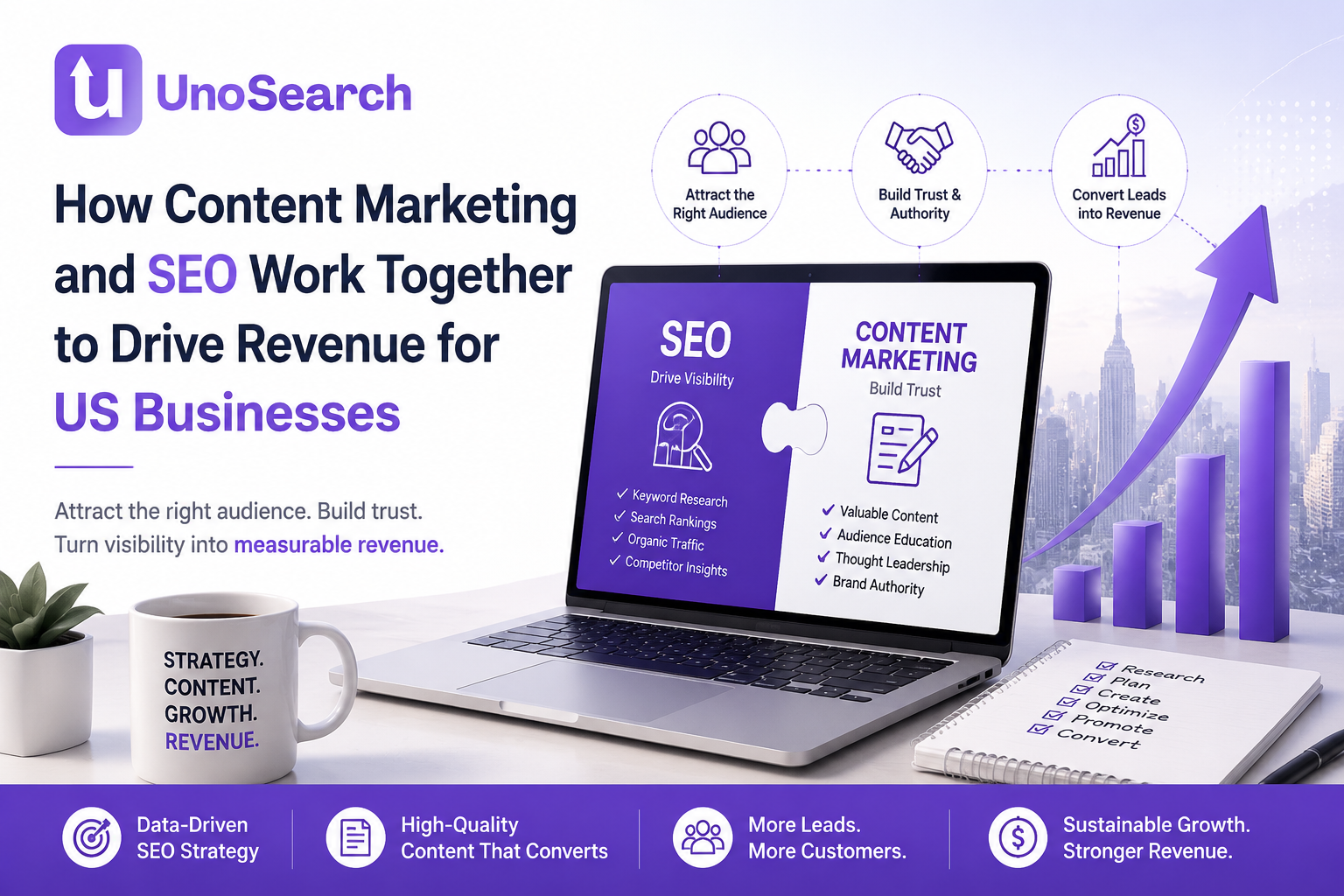
For years, businesses measured digital marketing success by traffic, rankings, and page views. While these metrics can indicate visibility, they rarely tell the full story. Revenue growth comes from attracting the right audience, building trust, and guiding potential customers towards a purchase decision. That is why leading organisations increasingly invest in a revenue-driven SEO strategy that focuses on business outcomes rather than vanity metrics. Companies that align search visibility with buyer intent are often better positioned to generate qualified leads and long-term growth. According to HubSpot, a company’s website, blog, and SEO efforts remain among the highest ROI marketing channels for B2B businesses.
The challenge is that many businesses still treat SEO and content marketing as separate disciplines. SEO teams focus on rankings while content teams focus on publishing articles. In reality, the two work best when combined into a single growth engine. SEO provides insights into what prospects are searching for, while content marketing delivers the information buyers need to make confident decisions.
Why SEO Matters Beyond Rankings
Search engines remain the primary place where buyers begin researching products, services, and solutions. Whether a potential customer is comparing software platforms, evaluating service providers, or seeking expert advice, their journey often starts with a search query.
However, search visibility alone does not guarantee commercial success. A website may rank well but still fail to convert visitors if the content does not answer important questions or address buyer concerns. Effective SEO is not simply about appearing on page one. It is about understanding intent and aligning content with the needs of the audience.
Businesses that prioritise high-intent keywords frequently attract visitors who are already researching solutions and are closer to making purchasing decisions. This creates a stronger connection between organic traffic and revenue generation.
Content Marketing Turns Visibility into Trust
If SEO opens the door, content marketing starts the conversation.
Modern buyers rarely make decisions after viewing a single page. They consume multiple pieces of content, compare alternatives, explore case studies, and evaluate expertise before reaching out to a business. Content helps organisations build authority throughout this process.
Research highlighted by Ahrefs shows that search engines remain the number one source of brand discovery and research. This means businesses that consistently publish valuable, informative content have greater opportunities to influence purchasing decisions.
High-quality content serves several important purposes. It answers questions, demonstrates expertise, improves engagement, and supports organic visibility. More importantly, it builds trust with potential customers before a sales conversation ever begins.
How SEO and Content Marketing Work Together
The strongest growth strategies are built on the relationship between search insights and content creation.
SEO reveals:
- What prospects are searching for
- Which questions they need answered
- Which topics influence buying decisions
- How competitors are attracting attention
Content marketing then transforms those insights into resources that educate and influence potential customers.
Consider a SaaS company targeting operations managers. Search data may reveal strong demand around workflow automation, process optimisation, and operational efficiency. Instead of publishing generic content, the company can create targeted articles, guides, and case studies that directly address these challenges.
This approach allows businesses to attract relevant visitors at different stages of the buyer journey while positioning themselves as trusted advisors rather than vendors.
The Revenue Difference
One of the biggest misconceptions in digital marketing is that more content automatically generates more leads.
The reality is that content only creates value when it aligns with business goals and customer intent. Publishing dozens of low-quality articles may increase page count, but it rarely drives meaningful growth. Strategic content that addresses genuine customer challenges often produces significantly better outcomes.
This is why many growth-focused organisations invest in professional content marketing services designed to support search visibility, authority building, and lead generation simultaneously. Rather than creating content for content’s sake, they focus on assets that contribute directly to awareness, consideration, and conversion.
Over time, this creates a compounding effect. A well-optimised article can continue attracting visitors, generating leads, and supporting sales efforts long after publication. Unlike paid advertising, where visibility ends when spending stops, quality content continues delivering value over the long term.
Building a Sustainable Growth Engine
The most successful US businesses no longer see SEO and content marketing as separate investments. They view them as complementary components of a single growth system.
SEO provides the market intelligence needed to understand demand. Content marketing transforms that intelligence into useful resources that attract, educate, and convert prospects. Together, they help businesses generate visibility, authority, and commercial results.
As competition for digital attention continues to increase, organisations that connect these disciplines effectively will gain a significant advantage. They will not simply attract more traffic. They will attract better prospects, create stronger relationships, and ultimately drive greater revenue.
Final Thoughts
The relationship between SEO and content marketing is no longer optional for businesses seeking sustainable growth. Search visibility without valuable content struggles to convert. Content without SEO often remains undiscovered.
When combined strategically, SEO and content marketing create a powerful framework for attracting qualified audiences and turning online visibility into measurable business outcomes. The businesses that understand this connection are the ones most likely to transform attention into trust and trust into revenue.
