

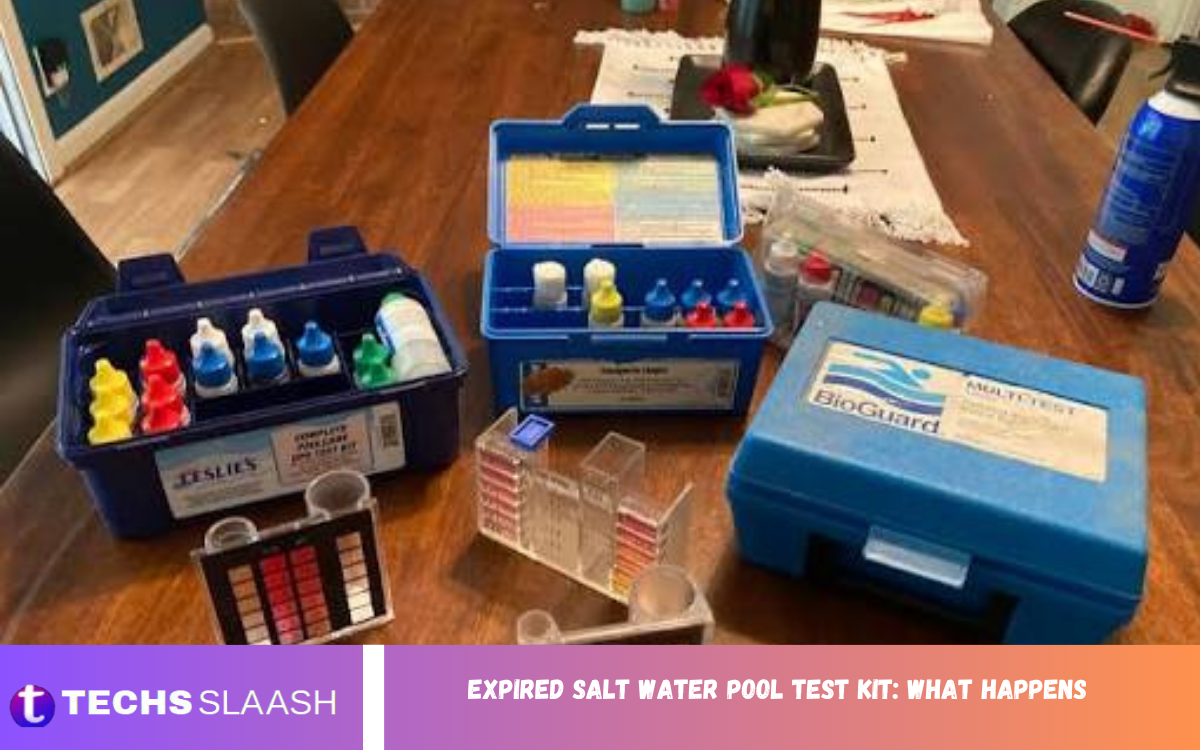
Keeping a salt water pool balanced depends on reliable water testing. A saltwater pool test kit helps measure key levels such as salt, free chlorine, pH, total alkalinity, and stabilizer. These readings allow pool owners to make informed adjustments before water quality problems become serious. Some saltwater test kits, for example, combine tests for salt, free chlorine, pH, alkalinity, and cyanuric acid.
When a test kit reaches its expiration date, the chemicals or reactive materials inside it can gradually lose their effectiveness. This does not necessarily mean that every test will suddenly become inaccurate on the expiration date, but it does mean the manufacturer can no longer guarantee the expected performance.
What Happens When a Salt Water Pool Test Kit Expires?
The most important issue with an expired salt water pool test kit is reduced reliability. Test strips, liquid reagents, powders, and titration chemicals depend on chemical reactions to produce measurable results. Over time, these materials can degrade due to oxygen, moisture, heat, light, or contamination, potentially altering how they interact with your pool sample.
An expired kit may still produce a result that appears completely normal, making the problem difficult to notice. The concern is not simply that the test will stop working; it may provide a reading that appears believable but is different from the actual water chemistry. That is why expired test supplies should not be relied on for important adjustments.
Can an Expired Test Kit Give False Results
Yes, an expired saltwater pool test kit can give inaccurate or inconsistent results. The degree of inaccuracy depends on the type of test, the age of the kit, how it was stored, and the condition of the individual reagents. Test strips can be especially vulnerable to moisture and environmental exposure, while liquid reagents may deteriorate differently depending on their formulation.
A false result can lead to unnecessary chemical adjustments. For example, if an expired test suggests that chlorine is too low when it is actually adequate, a pool owner might add more chlorine than necessary. Similarly, an unreliable salt reading could encourage unnecessary salt additions, which can create a different water chemistry problem.
Why Salt Testing Matters in a Salt Water Pool?
Salt is an essential part of a salt water pool system because the salt chlorine generator uses dissolved salt to produce chlorine. A salt test therefore helps pool owners understand whether the water contains an appropriate concentration for their particular system. Commercial salt test kits commonly provide a defined testing range for sodium chloride.
An inaccurate salt reading can be particularly confusing when the generator displays a different salinity level. The generator’s built-in sensor and an external test kit do not necessarily measure the water in exactly the same way. If the numbers suddenly disagree, replacing an expired test kit with a fresh one is a sensible first step before adding significant amounts of salt.
Signs Your Pool Test Kit May Be Expired
The first thing to check is the expiration date printed on the packaging, bottle, container, or individual reagent. If the manufacturer provides an expiration date, it should be treated as the primary reference. A kit that has passed its stated date should not be assumed to remain accurate simply because the chemicals look normal.
Physical changes can also indicate deterioration. Cloudy or discolored liquids, unusual odors, sediment, damaged containers, or test strips that have changed appearance can all be warning signs. With strips, unusual color development, weak reactions, or difficulty matching the resulting colors to the chart can also suggest that the materials are no longer dependable.
How Storage Affects Test Kit Life
Storage conditions can have a major effect on testing materials. High temperatures, humidity, direct sunlight, and contamination can accelerate deterioration even before the printed expiration date. Therefore, keeping testing supplies in a hot pool shed or an exposed area is a poor storage practice.
A better approach is to keep the kit tightly closed and protected from excessive heat, moisture, and sunlight. Test strips should remain sealed per the manufacturer’s instructions, while liquid reagents should be sealed immediately after use. Good storage cannot make an expired product new again, but it can help preserve testing materials during their intended service life.
Expired Test Strips vs. Expired Liquid Reagents
Expired test strips and expired liquid reagents can behave differently. Test strips contain reactive pads that are exposed to environmental conditions each time the container is opened. Moisture and humidity can affect these materials, potentially changing the reaction before the strip is even placed in the pool water.
Liquid and powder reagents also have limited shelf lives, but their deterioration depends on their chemical composition and storage conditions. Some reagents are more sensitive to oxygen or moisture than others. For this reason, it is better to evaluate each reagent according to its manufacturer’s instructions rather than assuming every component expires at exactly the same rate.
What Happens to Chlorine and pH Readings?
Chlorine and pH are two of the most important measurements in routine pool maintenance. If the reagents used to measure them deteriorate, the resulting readings may become unreliable. A pool owner could then adjust the water based on incorrect information rather than actual chemistry.
This can create a cycle of unnecessary corrections. You might add chemicals, test again with the same expired materials, see another questionable result, and make another adjustment. Replacing the questionable kit before making significant changes can prevent such guesswork.
Read Also: Safe 3D Printing at Home
Can You Still Use a Recently Expired Kit
A kit that has only recently passed its expiration date may still produce readings, but there is no universal period during which an expired kit can be considered accurate. Different reagents deteriorate at different rates, and storage conditions can make a substantial difference.
For routine observation, an experienced pool owner might compare an old kit against fresh testing materials rather than immediately assuming the old result is correct. However, if the pool chemistry is significantly unbalanced, the water looks unusual, or you are troubleshooting a salt chlorine generator, relying on expired materials is not recommended.
How to Check an Expired Kit Against a New Kit
One practical way to investigate questionable readings is to test the same pool water with a fresh kit and compare the results. Use both kits according to their respective instructions and avoid changing the water chemistry between tests. This can reveal whether the expired kit is producing noticeably different results.
If the old and new kits disagree, use the fresh kit as the more appropriate reference, provided it is stored correctly and within its stated shelf life. For difficult cases, professional water testing can provide an additional comparison. The goal is to avoid making major chemical adjustments based solely on questionable testing materials.
When You Should Replace Your Salt Water Pool Test Kit?
Replacing the kit is especially sensible when the expiration date has passed, the reagents show physical changes, or test results suddenly seem inconsistent. Replacement is also appropriate when the kit has been stored in extreme heat or humidity or when important components have been left open.
You should also consider replacement if the test results conflict repeatedly with your salt system’s behavior or with another reliable testing method. A fresh kit provides a stronger basis for diagnosing water chemistry problems and determining whether adjustments are necessary.
How Often Should You Test a Salt Water Pool
Regular testing is an important part of maintaining a salt water pool. Many pool testing recommendations call for multiple tests during the active swimming season, with additional testing after heavy use, weather events, or chemical adjustments.
The exact frequency depends on factors such as pool size, swimmer load, weather, equipment, and water stability. The important point is consistency. Frequent testing with reliable materials makes it easier to recognize gradual changes before they become major problems.
Common Mistakes With Expired Pool Test Kits
One common mistake is assuming that an expired kit is completely useless or, conversely, that it remains accurate indefinitely. The reality is more complicated because reagent stability varies. Some pool owners report acceptable results beyond the printed date, while others encounter obvious problems sooner. These experiences should not replace the manufacturer’s stated shelf life.
Another mistake is changing several chemicals at once after receiving a questionable reading. When testing is unreliable, large chemical adjustments can make troubleshooting harder. A better strategy is to obtain a reliable measurement first and then make controlled adjustments based on the actual results.
Best Practices for Accurate Salt Water Pool Testing
Always follow the testing instructions supplied with your particular kit. Use the recommended sample volume, reaction time, number of drops, and color comparison method. Even a fresh kit can produce poor results if the procedure is not followed correctly.
Keep testing supplies clean, dry, and properly closed between uses. Record your results so you can identify trends rather than relying on a single reading. Most importantly, replace expired or visibly compromised reagents rather than estimating how much accuracy they may have lost.
Choosing a Replacement Test Kit
When replacing an expired salt water pool test kit, choose one that measures the parameters important to your pool system. A comprehensive kit may measure salt, free chlorine, pH, total alkalinity, and cyanuric acid, while specialized salt tests can focus specifically on sodium chloride levels.
Consider the testing method as well. Test strips are convenient and quick, while drop-based tests can provide more detailed measurements when used correctly. Digital testers offer another approach and may measure multiple parameters, but they still depend on proper operation and, in some systems, suitable reagent materials.
Frequently Asked Questions
Does a salt water pool test kit expire?
Yes. Test kits contain reactive materials that have limited shelf lives. The expiration date indicates the period during which the manufacturer expects the testing materials to perform as intended.
What happens if I use an expired pool test kit?
An expired kit may produce inaccurate, inconsistent, or misleading results. It may still show a readable color or number, but that does not guarantee the result is reliable.
Can expired salt test strips still work?
They may still produce a visible result, but their accuracy cannot be assumed after expiration. Moisture, heat, humidity, and storage conditions can affect how well test strips perform.
How do I know if my pool test strips have gone bad?
Look for an expired date, unusual appearance, poor color development, inconsistent readings, or strips that have been exposed to moisture. When in doubt, replacing them is safer than relying on questionable results.
Can an expired kit cause me to add too much salt?
Yes, if it gives an incorrect low-salt reading. Adding salt based on an unreliable test can result in a concentration higher than intended.
Should I trust my salt chlorine generator’s salt reading?
The generator’s reading can be useful, but a reliable external salt test can provide an additional measurement. If the two readings disagree significantly, investigate the difference before adding a large amount of salt.
How should I store a pool test kit?
Store it according to the manufacturer’s instructions and protect it from excessive heat, moisture, sunlight, and contamination. Keep containers closed when not in use.
Are liquid pool reagents better than test strips?
Neither method is automatically best for every pool owner. Liquid reagents and test strips have distinct advantages, and accuracy depends on product quality, storage, technique, and adherence to the manufacturer’s instructions.
Should I replace only the expired reagent?
If the manufacturer sells individual replacement reagents, replacing the expired component may be practical. Always verify compatibility and expiration information before using replacement chemicals with an existing kit.
How can I get reliable results after using an expired kit?
Use a fresh, properly stored test kit and follow its instructions carefully. If the results remain unusual or inconsistent, consider having the pool water professionally tested before making major chemical adjustments.
Conclusion
An Expired Salt Water Pool Test Kit: What Happens question ultimately comes down to accuracy and confidence. Expired strips and reagents may continue to produce readable results, but their performance is no longer something you should automatically trust. Chemical degradation, humidity, heat, sunlight, and contamination can all affect testing materials over time.
For dependable saltwater pool maintenance, replace expired or questionable test supplies and use fresh materials according to the manufacturer’s instructions.

1 Comment
Pingback: Digital Inspection Forms: Transforming Field Operations - Techsslaash.com