

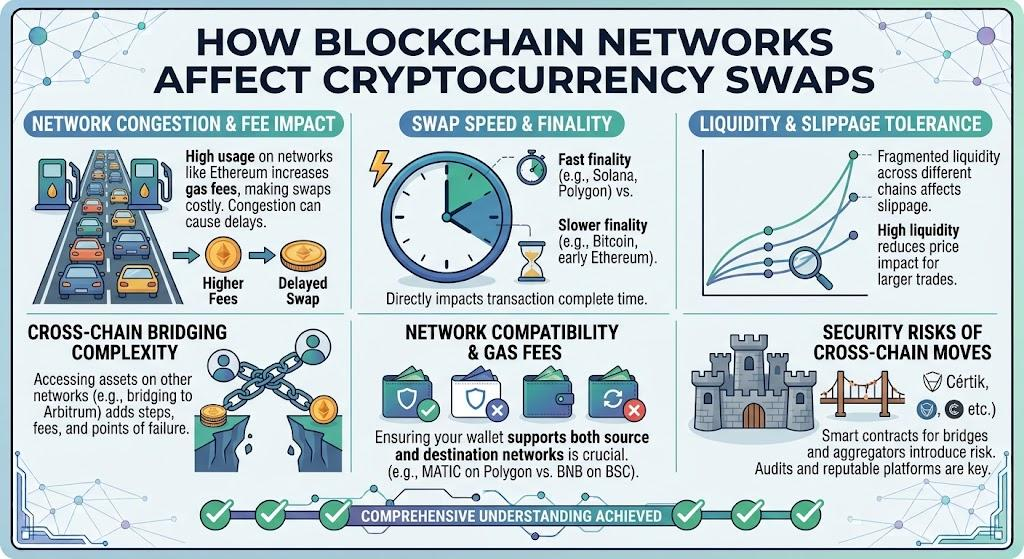
Cryptocurrency swapping has become a common way for digital asset users to exchange one cryptocurrency for another. However, the blockchain network behind an asset can have a major effect on how a swap is completed. Understanding networks, fees, transaction speeds, and wallet compatibility can help users avoid common mistakes.
What Is a Blockchain Network?
A blockchain network is the technology that records and confirms cryptocurrency transactions. Different cryptocurrencies can operate on different networks, and each network has its own rules and transaction system.
For example, TRON is a blockchain network that supports TRX and various digital assets. Other cryptocurrencies may operate on networks such as Ethereum, BNB Chain, or other blockchain ecosystems.
Because these networks work differently, users need to select the correct network when sending or receiving digital assets.
Why Networks Matter During a Swap
When completing a cryptocurrency swap, the selected network determines how the transaction is processed.
A token with a similar name may be available on more than one blockchain. However, those versions are not necessarily interchangeable. Sending an asset through an unsupported network can create serious transaction problems.
Before starting a swap, users should confirm both the cryptocurrency and its network.
Network Fees Can Be Different
Transaction costs can vary considerably between blockchain networks. Network activity, transaction requirements, and the design of the blockchain can all affect fees.
This is why users should check the total cost before completing a swap. A lower exchange fee does not always mean a cheaper transaction if the blockchain network has additional costs.
Understanding the fee structure can help users estimate how much cryptocurrency they will actually receive.
Transaction Speed
Another difference between blockchain networks is transaction processing time.
Some networks can confirm transactions relatively quickly, while others may take longer during periods of high activity. A swap platform may also require additional time to process the exchange after the blockchain transaction has been confirmed.
Users should therefore avoid assuming that every cryptocurrency swap will be completed instantly.
Wallet Compatibility Is Important
The receiving wallet must support the cryptocurrency and network selected during the transaction.
Before sending funds, open your wallet and confirm that it supports the destination asset. If a wallet supports multiple networks, make sure the correct network is selected.
It is also important to verify the receiving address carefully. Blockchain transactions are usually difficult to reverse after confirmation.
Using a Cryptocurrency Swap Service
A cryptocurrency swap service can simplify the process by providing a system for exchanging digital assets.
Platforms such as SwapTron focus on cryptocurrency swaps and digital asset exchanges, including assets associated with the TRON ecosystem. Before using any service, users should review its supported cryptocurrencies, networks, fees, and transaction requirements.
It is always better to understand the transaction details before sending funds.
Common Network Mistakes
One of the most common mistakes is selecting the wrong network. Users may see the same token name and assume that every version works the same way.
Another mistake is sending funds to an address without checking whether the receiving wallet supports that network.
Users should also avoid rushing through the confirmation screen. Checking the asset, network, wallet address, amount, and fees can prevent avoidable errors.
Final Thoughts
Blockchain networks play an important role in cryptocurrency swaps. They affect transaction processing, fees, wallet compatibility, and the overall transfer process.
Whether you are swapping TRON related assets or exchanging cryptocurrencies across different networks, always verify the asset and network before sending funds. Review the exchange rate, fees, receiving address, and transaction details carefully.
A few simple checks before confirming a swap can help users manage their digital assets more safely and avoid common blockchain transaction mistakes.
