

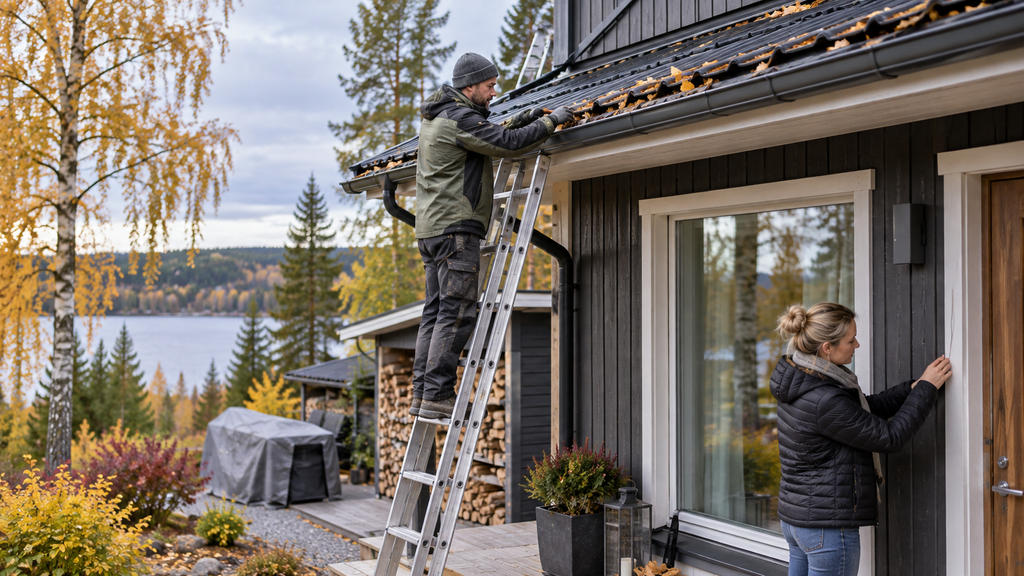
Every autumn, Finnish homeowners face the same recurring task, getting the house ready before the real cold arrives. The difference between a home that sails through winter comfortably and one that racks up huge heating bills while still feeling drafty usually comes down to a handful of preparation steps done properly in September and October, well before the first hard frost. This article walks through exactly what to prioritize, starting with the checks that matter most, moving through windows, doors, roofing and indoor air quality, and finishing with budget friendly fixes that make a real difference without requiring a full renovation budget.
What to do before the frost arrives
The single most useful thing any Finnish homeowner can do in early autumn is walk around the entire property with a critical eye while the weather is still mild enough for outdoor work to be pleasant. This means checking gutters for leaves and debris that could freeze into ice dams later, inspecting exterior walls and foundations for cracks that widen once the freeze thaw cycle sets in, and making sure any outdoor water taps are properly drained and shut off before the first serious cold snap, since a burst pipe from a forgotten outdoor tap is one of the most common and most avoidable winter home disasters.
It is also worth scheduling an inspection of the heating system at this stage rather than waiting until it is needed. A furnace, boiler or heat pump that has an issue is far easier and cheaper to fix in October than in the middle of a January cold snap when service technicians are booked solid and a broken heating system becomes an emergency rather than a scheduled repair.
Windows, doors and draft sealing
Drafts around windows and doors are responsible for a surprisingly large share of heat loss in older Finnish homes, and the good news is that fixing them is one of the more affordable winterizing tasks available. Start with a simple test on a windy day, holding a lit candle or a tissue near window and door frames to see where air movement gives away a gap that needs sealing. Weatherstripping around door frames is inexpensive and takes very little time to install, while gaps around window frames often benefit from fresh caulk on the outside and new sealing strips on the inside, especially in homes with older wooden window frames that have shifted slightly over the years.
For homes with genuinely old, single or double glazed windows, adding removable interior storm window film for the winter season can make a noticeable difference in comfort and heating cost without the expense of full window replacement. Companies covering Finnish home improvement, including Marulla, have consistently pointed out that draft sealing tends to deliver one of the best returns on investment of any winterizing task, since the materials cost very little compared with the resulting reduction in heating demand over a long Finnish winter.
Checking the roof and eaves
Roof problems that go unnoticed in autumn tend to turn into much bigger and more expensive issues once snow and ice accumulate. A proper autumn roof check involves looking for loose, cracked or missing shingles or roofing panels, checking that flashing around chimneys and vents is still properly sealed, and clearing gutters and downspouts so that meltwater has somewhere to go rather than backing up under roofing materials.
Eaves deserve particular attention in Finland because ice dam formation is a genuinely common problem, occurring when heat escaping from the attic melts snow on the upper roof, which then refreezes at the colder eaves and gradually builds up into a dam that can force water back under roofing materials and into the house. Improving attic insulation and ventilation is the real long term fix for this problem, but a straightforward autumn gutter cleaning and inspection at minimum reduces the risk of the smaller, more immediate leaks that ice dams cause.
Managing indoor humidity through winter
Finnish winters bring a paradox that surprises many homeowners, outdoor air is extremely dry once temperatures drop well below freezing, and heating that cold, dry outdoor air as it enters the home through ventilation can leave indoor air uncomfortably dry, sometimes dry enough to cause static electricity, dry skin and irritated sinuses for occupants. At the same time, poorly ventilated bathrooms and kitchens can develop localized humidity and mold problems if moisture generated by cooking and showering has nowhere to properly escape.
The balance comes from making sure mechanical ventilation systems are functioning correctly rather than either disabled or left running inefficiently, since modern heat recovery ventilation systems, common in newer Finnish homes, are specifically designed to manage this balance by exchanging stale indoor air for fresh outdoor air while recovering most of the heat in the process. Homes without this kind of system may benefit from a portable humidifier during the driest winter stretches, though it needs to be balanced against the risk of adding too much moisture near cold exterior walls where condensation could become a problem.
Budget friendly quick fixes
Not every winterizing task requires a significant budget, and several of the most effective fixes cost very little. Reversing ceiling fan direction to push warm air back down from the ceiling costs nothing beyond flipping a switch and can make a room feel noticeably warmer without touching the thermostat. Rolling draft stoppers placed at the base of exterior doors block one of the most persistent sources of cold air infiltration for the price of a simple foam or fabric tube.
Financial support is also worth checking before assuming winterizing has to come entirely out of pocket. Motiva, the national energy efficiency organization, publishes current information on which home efficiency improvements qualify for support in a given year, and Rakennustieto maintains detailed reference pricing that helps homeowners judge whether a quote for repair work is reasonable before committing. For anyone unsure whether a particular fix is worth pursuing or whether a contractor is quoting fairly, Kuluttajaliitto, the Finnish Consumers Association, offers general consumer guidance that can help avoid overpaying for straightforward winter preparation work.
Frequently asked questions
When should winterizing a Finnish home actually begin?
Early to mid autumn is the ideal window, generally September into early October in most of the country, since this leaves enough time to complete both the checks and any repairs before the first serious cold arrives.
What are the cheapest winterizing fixes that still make a real difference?
Draft sealing around windows and doors, reversing ceiling fan direction and installing simple door draft stoppers are among the lowest cost fixes that still deliver a noticeable improvement in comfort and heating efficiency.
Which winterizing tasks really need a professional rather than a DIY approach?
Heating system inspections, any roof work involving structural concerns, and ventilation system servicing are generally worth leaving to a qualified professional, while draft sealing, gutter cleaning and basic caulking are reasonable DIY tasks for most homeowners.
