

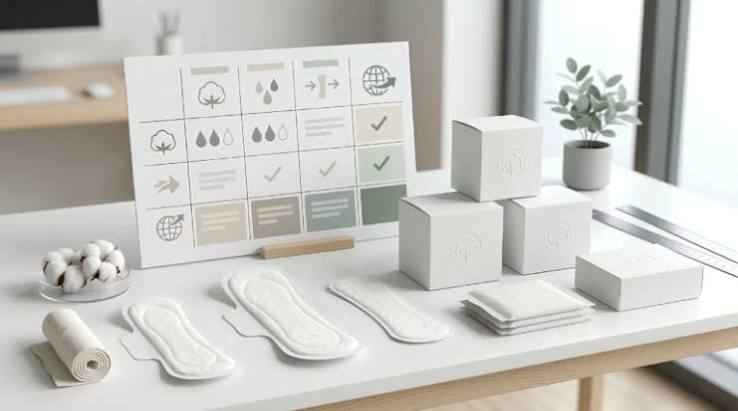
When shopping for period products, you may come across terms such as “chemical-free,” “natural,” “plant-based,” “organic cotton,” and “toxin-free.” These terms can sound reassuring, but what do they actually mean?
The truth is that “chemical-free” can be a confusing phrase. Technically, everything around us is made of chemicals, including water and cotton. So when people search for chemical-free sanitary pads, they are generally looking for pads that avoid certain substances they would rather not have in contact with their skin.
This makes it important to look beyond marketing terminology and understand the actual materials and product claims.
What Does Chemical-Free Mean for Sanitary Pads?
In the context of menstrual products, “chemical-free” is usually used informally to describe products made without certain added substances, such as fragrances, dyes, chlorine bleaching agents, or other ingredients that a consumer may want to avoid.
It does not literally mean that the product contains no chemicals whatsoever.
Instead, consumers should look for specific information about what the product contains and what it does not contain.
For example, Flawsome describes its plant-based sanitary pads as free from chlorine and fragrance and states that they contain no bleach, dyes, or fragrances. The product page also describes them as toxin-free.
That kind of specific information is more useful than simply relying on a broad “chemical-free” label.
Why Are People Looking for More Natural Period Products?
Menstrual pads are worn directly against sensitive skin, often for several hours at a time. Because of this, many people have become more interested in the materials used in their period products.
Some consumers prefer products with a cotton-soft surface, while others look for plant-based materials, fragrance-free construction, or products designed specifically for sensitive skin.
This has contributed to growing interest in natural sanitary pads.
The term “natural,” however, can mean different things depending on the product. It is therefore worth checking exactly which part of the pad is made from natural or plant-based materials.
What Materials Are Used in a Sanitary Pad?
A sanitary pad is more than the surface that touches your skin.
A typical pad consists of multiple layers, each serving a different purpose. The top layer comes into contact with the body, the absorbent core handles menstrual fluid, and the backsheet helps prevent moisture from passing through.
Flawsome describes its pads as having a three-layer construction: a plant-based top sheet, a LeakLock distribution core, and a breathable backsheet. The brand says the top layer provides a cotton-soft feel, while the distribution core spreads fluid and the backsheet helps lock in moisture.
Understanding this construction can help you evaluate period products more realistically.
Is Organic Cotton the Same as Chemical-Free?
Not necessarily.
Organic cotton refers to how the cotton is grown and produced according to organic standards. It does not automatically mean that every component of the finished sanitary pad is organic or that the entire product is “chemical-free.”
This distinction is important when comparing products.
Flawsome states that its pads use a 100% organic-cotton top sheet and describes the product as plant based, chlorine free, fragrance free, and toxin free.
Rather than assuming that one label covers the entire product, look at the individual claims and materials.
Why Fragrance-Free Pads May Matter
Fragrance is one of the ingredients that some consumers specifically prefer to avoid in personal-care products.
A scented sanitary pad may contain fragrance ingredients intended to provide or mask a particular smell. However, there is generally no need for a menstrual pad to have a perfume-like scent.
People who are sensitive to fragrances may therefore prefer unscented products.
Flawsome states that its pads contain no added fragrance, perfume, or scent masking.
If fragrance is something you want to avoid, checking the product description or packaging for an explicit fragrance-free claim can be a simple first step.
What About Chlorine?
Chlorine is another term consumers may encounter when researching sanitary pads.
Manufacturers may use bleaching processes for certain materials, which is why some consumers specifically look for chlorine-free products.
Flawsome’s product page states that its pads are free from chlorine and that the brand uses zero chlorine bleaching. It also identifies chlorine-free construction as one of the product’s features.
If avoiding chlorine is important to you, look for a clear statement from the manufacturer rather than assuming that a product described as natural automatically excludes it.
Why Does Breathability Matter?
Materials are only one part of skin comfort.
A pad is worn close to the body, and heat, moisture, and friction can affect how comfortable it feels during the day.
Flawsome’s design includes a breathable backsheet, which the product page says locks moisture in while helping keep heat out. The brand positions the construction as part of its approach to rash-free and skin-friendly comfort.
This is why evaluating the complete construction of a pad can be more useful than focusing exclusively on whether one ingredient is natural.
What Makes a Pad Suitable for Sensitive Skin?
Sensitive skin can respond differently to different materials and products. There is no single material that will work identically for everyone.
However, consumers who experience discomfort may want to look for products that prioritise:
- A soft top layer
- Breathable construction
- No added fragrance
- No unnecessary dyes
- Information about bleaching processes
- Clear material disclosures
- Appropriate absorbency and fit
Flawsome describes its pads as rash free and skin friendly, and states that they are dermatologically tested and hypoallergenic-rated.
If you have persistent irritation or other skin symptoms, however, changing menstrual products may not address the underlying cause. Persistent symptoms should be discussed with a healthcare professional.
Does Natural Mean Better?
The answer depends on what you need from a menstrual product.
Someone may prefer a natural or plant-based product because of the materials used. Another person may care more about absorbency, coverage, comfort, or price.
There is no need to choose a product based on one characteristic alone.
For example, a pad can have a plant-based top sheet but still need an effective absorbent core and suitable backsheet to provide everyday protection.
This is why the best approach is to consider the entire product.
Check the Product’s Specific Claims
When comparing chemical-free sanitary pads, avoid relying solely on general phrases.
Instead, look for specific statements such as:
- Free from added fragrance
- Chlorine free
- Free from dyes
- Free from parabens
- Free from dioxin
- Plant-based materials
- Organic cotton top sheet
- Dermatologically tested
- Hypoallergenic testing or certification
Flawsome’s product page specifically states that its pads are made without chlorine, fragrance, parabens, dioxin, and phthalates, while also describing the product as plant based and toxin free.
Specific claims give consumers something concrete to compare.
Natural Sanitary Pads and Everyday Protection
Choosing natural sanitary pads does not mean you have to compromise on everyday protection.
A period product still needs to handle menstrual flow effectively.
Flawsome’s pads use LeakLock channels in the distribution core, which the brand says are designed to spread fluid evenly. The product is also available in L, XL, and XXL sizes, with the XXL designed for heavier-flow days and wider posterior coverage.
This highlights an important point: material choices and performance features can exist together.
A consumer does not necessarily have to choose between a softer, plant-based product and practical period protection.
How to Choose a Pad Based on Your Needs
Before switching to a new menstrual product, think about what you actually want to change.
If you experience discomfort, you may want to prioritise softness and breathability.
If fragrance is a concern, look specifically for fragrance-free products.
If you have heavier periods, pay attention to absorbency and coverage.
If you prefer plant-based materials, examine the product’s material information carefully.
If you are interested in organic cotton, check whether the claim applies to the top sheet or to other parts of the product as well.
This approach makes it easier to choose based on your actual needs rather than simply following a trend.
Understanding “Toxin-Free” and Similar Terms
Terms such as “toxin-free” and “chemical-free” are broad consumer-facing descriptions. They should not be treated as proof that a product contains absolutely no chemical substances.
The useful question is: Which substances does the manufacturer specifically say are absent?
For Flawsome, the product information provides several specific claims, including no bleach, dyes, or fragrances, along with statements about being free from chlorine, parabens, dioxin, and phthalates.
That gives consumers more information to work with when comparing products.
Why Product Transparency Matters
The more specific the product information, the easier it is for consumers to make informed choices.
Instead of simply seeing “natural” printed on packaging, shoppers can look for information about the top sheet, absorbent core, backsheet, fragrance, bleaching, dyes, and testing.
Flawsome provides this type of product information on its plant-based sanitary pad page, including details about its three-layer construction, materials, skin-comfort features, and size options.
You can explore the Flawsome Plant Based Sanitary Pads to review the product’s materials and stated features.
The Bigger Picture of Period Care
The interest in natural sanitary pads reflects a broader shift in how people think about personal care.
Consumers are increasingly interested in understanding what goes into the products they use every day. Period products are no exception.
That does not mean every person needs the same type of sanitary pad. It simply means there is value in having clearer information about materials and construction.
Whether you prioritise organic cotton, fragrance-free materials, plant-based components, breathability, or absorbency, knowing what to look for can make the selection process easier.
Final Thoughts
“Chemical-free” is not a literal scientific description of a completely substance-free product. In the context of menstrual care, it is more useful to identify the specific ingredients or processes a product avoids.
When comparing chemical-free sanitary pads, look for concrete information about fragrance, chlorine, dyes, bleaching, and other materials. At the same time, consider absorbency, coverage, breathability, and fit.
Flawsome’s plant-based pads combine a 100% organic-cotton top sheet with a LeakLock distribution core and breathable backsheet, while the brand states that the product is free from chlorine, fragrance, dyes, parabens, dioxin, and phthalates.
For people exploring natural sanitary pads, the key is not simply finding a product with a natural-sounding label. It is understanding what the product is made from, what it is designed to do, and whether those features match your own period-care needs.
