

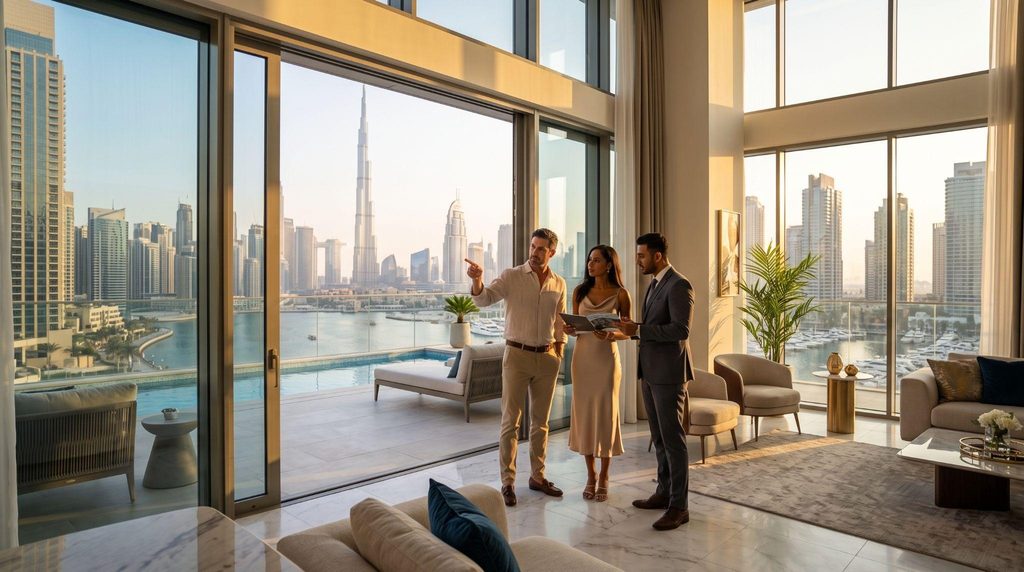
Ask buyers from London, Mumbai, or Toronto why they bought an apartment in Dubai, and you’ll rarely get the same answer. Some mention the tax position, others the view from the 40th floor, and many talk about how quickly the paperwork moved.
Behind those personal reasons sits a market built for foreign ownership, which is why demand for luxury apartments for sale Dubai has held steady through several global cycles.
A Tax Position Few Global Cities Can Match
Dubai charges no annual property tax, no capital gains tax for individuals, and no personal income tax on rental earnings. Buyers pay a one-time 4% transfer fee to the Dubai Land Department, plus yearly service charges for building upkeep.
Compare that with the extra stamp duty overseas buyers pay in London, or Canada’s ban on most foreign residential purchases, and the numbers look very different. A landlord earning AED 300,000 a year in rent keeps far more of it here than in most mature markets.
Residency Linked to Ownership
Investors who own property worth AED 2 million or more can apply for the 10-year Golden Visa, which can also cover a spouse and children. For families moving for work or schooling, this changes the purchase. The apartment becomes a long-term base rather than just a line item on a spreadsheet.
Rental Demand That Keeps Units Occupied
Dubai keeps adding residents, and many rent for a year or two before buying. They’ll pay more to live ten minutes from the office in Downtown or Business Bay rather than forty minutes out. Well-placed apartments often return gross yields of around 5 to 7%, which London and New York rarely match.
Regulation That Protects Foreign Buyers
Much of the trust in international real estate Dubai comes from rules refined over two decades. Freehold zones have allowed full foreign ownership since 2002. Off-plan payments go into escrow accounts released as construction progresses, and the Real Estate Regulatory Agency (RERA) licenses brokers and registers sales contracts. An investor in Singapore can verify a title deed online without relying on anyone’s word.
A Currency Pegged to the Dollar
The UAE dirham has been fixed at 3.6725 to the US dollar since 1997. For buyers earning in dollars, or in currencies that track it, this removes a common worry with overseas property: a sound purchase losing value purely through exchange rates.
Specifications Built for the Top End
Developers compete hard in the premium segment. Branded residences tied to hotel groups, private beach access and smart-home systems are common in newer towers, at prices that would buy far less in Monaco or Manhattan.
Before You Commit
Not every unit is a good buy. Service charges vary wildly between towers, and some off-plan projects hand over late. Look at what a developer has actually delivered. Pull recent sale prices from the DLD. Add up every cost, not just the purchase price, because buyers who skip this step tend to be the ones with complaints a few years later. Buyers who do that homework tend to find the market rewards them.
