

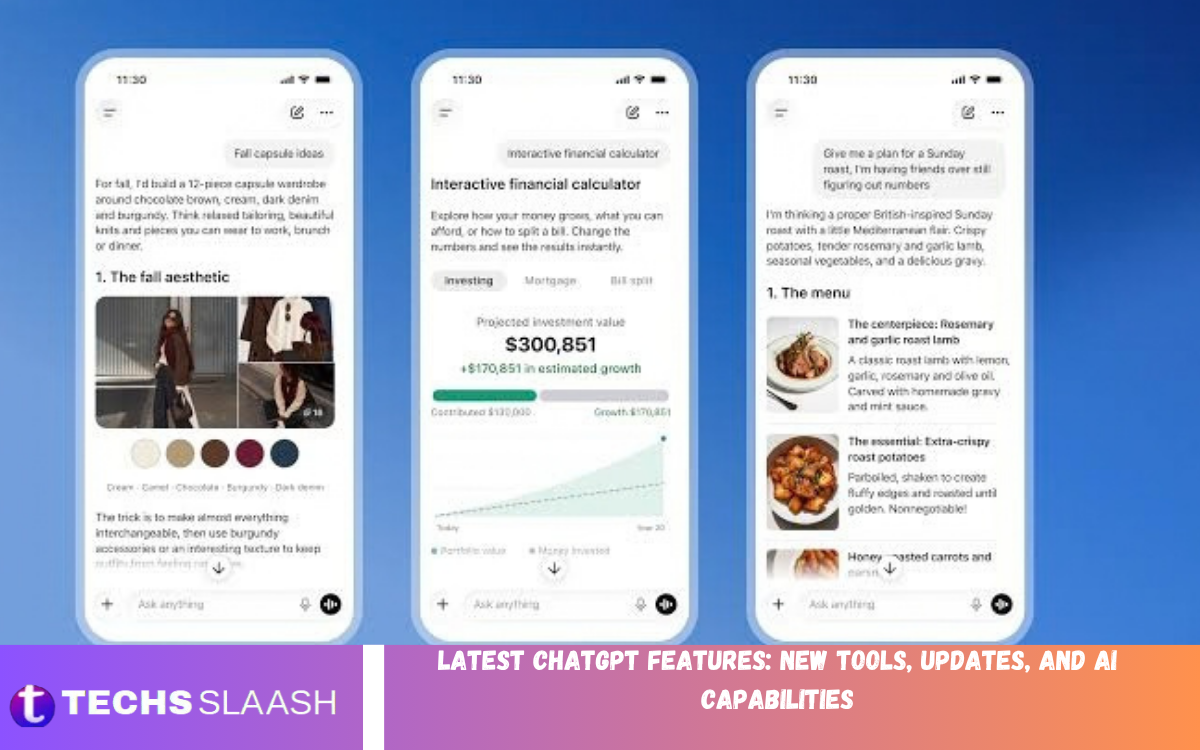
ChatGPT has become a widely used artificial intelligence assistant for writing, research, learning, coding, and everyday productivity. Its features continue to evolve, giving users more ways to interact with AI, analyze information, create content, and complete complex tasks efficiently.
The Latest ChatGPT Features: New Tools, Updates, and AI Capabilities provide an overview of the major capabilities users can explore, including conversational assistance, image generation, voice interactions, file analysis, and research tools. Available features may vary depending on the user’s plan, region, account settings, and current product rollout.
Advanced AI Conversations
One of ChatGPT’s most important features is its ability to understand natural language and respond to questions in a conversational format. Users can ask follow-up questions, request explanations, refine earlier answers, and explore complicated subjects without needing to write technical instructions.
Advanced conversational capabilities also make ChatGPT useful for brainstorming, planning, summarizing, and problem-solving. Users can request different writing styles, adjust the level of detail, and ask for examples that match their knowledge level, making the assistant useful for both beginners and experienced professionals.
Improved Writing and Content Creation
ChatGPT can help users create blog posts, website content, product descriptions, professional emails, social media captions, and other written materials. It can also revise existing text to improve clarity, grammar, structure, and readability while adapting the tone to suit different audiences.
For website owners and digital marketers, these capabilities can support content planning and search engine optimization workflows. ChatGPT can suggest article outlines, keyword-related topics, headlines, and meta descriptions, although published content should always be reviewed for accuracy, originality, search intent, and audience value.
AI Image Generation and Editing
ChatGPT offers image generation capabilities that allow users to create visuals from written descriptions. Depending on the available tools, users can describe a scene, request a particular artistic style, create concept illustrations, or develop graphics for creative projects.
Image editing can also help users modify existing visuals by requesting specific changes. These tools can be useful for brainstorming logo concepts, creating blog illustrations, preparing marketing ideas, and exploring different design directions, but results should be checked carefully for visual errors and unintended details.
Voice Conversations With ChatGPT
Voice features allow users to interact with ChatGPT by speaking instead of typing. Depending on the version and account, conversations can feel more natural and may support spoken responses, making the assistant useful when someone is multitasking or prefers verbal communication.
Voice interactions can support language practice, idea development, quick questions, and conversational learning. Users should still verify important information, especially when discussing technical, financial, legal, or medical subjects, because a fluent spoken response is not a guarantee of factual accuracy.
Web Search and Current Information
ChatGPT can use web search when the feature is available and appropriate to help answer questions that depend on current information. This can be useful for researching recent developments, checking public announcements, comparing services, and finding information that may have changed since earlier sources were published.
When search is used, users should examine the supporting sources rather than relying exclusively on a summary. Checking publication dates, source credibility, and relevant context helps reduce the risk of acting on outdated or misleading information.
<WritingBlock id=”73520″ variant=”document”>## Deep Research for Detailed Investigations
Deep research is designed to help users investigate complex questions by gathering and synthesizing information from multiple sources. It can produce structured reports with citations, making it useful for academic projects, market research, competitor analysis, and detailed technology reviews.
Users can improve research results by defining their objectives, specifying trusted sources, and reviewing the research plan before work begins. The final report should still be checked for missing information, conflicting evidence, and source reliability before it is used for important decisions.
ChatGPT Work and Task Automation
ChatGPT Work is a newer capability introduced in 2026 for handling longer, more involved tasks. It can research information, work with connected applications and files, and create deliverables such as reports, spreadsheets, presentations, and websites, with availability depending on the plan and rollout.
This type of workflow can reduce repetitive work by organizing a large objective into smaller steps. Users can review progress, provide additional instructions, and approve important actions, while scheduled tasks may help maintain recurring projects or monitor changes where supported.
File Uploads and Data Analysis
ChatGPT supports file uploads that allow users to ask questions about documents, spreadsheets, presentations, and images. Instead of manually reviewing every page or row, users can request summaries, comparisons, explanations, and extracts tailored to their goals.
Data analysis capabilities can also help users understand numerical information, identify patterns, compare results, and create tables or visualizations. Website owners, students, and business professionals can use these tools to examine reports or organize research, but they should verify important calculations and confirm that uploaded information has been interpreted correctly.
Projects and Connected Applications
Projects help users organize related conversations, files, and instructions around a particular objective. For example, a content creator can keep article outlines, keyword research, editorial plans, and draft materials together instead of searching through unrelated conversations. <Cite refs={[“turn843246search9”]}/>
Connected applications can bring information from supported third-party services into ChatGPT. Depending on the application and permissions, users may be able to search files, summarize documents, retrieve relevant messages, or complete supported actions without switching between multiple tools. Availability depends on account settings, plan, region, and the connected service.
Coding and Technical Assistance
ChatGPT can help programmers understand code, identify potential errors, explain programming concepts, and develop solutions in languages such as Python, JavaScript, and HTML. Beginners can request step-by-step explanations, while experienced developers can use it to brainstorm implementations, review logic, and troubleshoot technical problems.
More advanced coding workflows can support longer development tasks and help organize changes for review. Nevertheless, generated code should be tested in the intended environment, checked for security issues, and reviewed before deployment, particularly when it handles payments, personal information, or important business operations.
Personalized Responses and Memory
Memory can help ChatGPT retain useful information across conversations when the feature is enabled. This may include a user’s preferred writing style, recurring project details, or instructions that make future responses more relevant and consistent.
Users should review their memory and privacy settings to understand what information is retained and how it can be managed. Personalization works best when users provide clear instructions while avoiding unnecessary sensitive information in prompts, uploaded files, and connected services.
Interactive Learning and Education
ChatGPT can assist students by explaining difficult concepts, generating practice questions, summarizing lessons, and helping them prepare for examinations. Its ability to adjust explanations to different learning levels makes it useful for independent study and guided revision.
Interactive learning tools can also make certain mathematics and science topics easier to explore through visual demonstrations and adjustable variables. Students should use these capabilities to strengthen their understanding rather than simply copying answers, and should confirm important facts with reliable educational materials.
Privacy, Security, and Responsible AI Use
As ChatGPT becomes more capable, users should understand how their data and account settings affect their experience. Reviewing data controls, checking connected application permissions, and avoiding unnecessary confidential uploads can help users make informed decisions about privacy.
AI responses can contain errors, incomplete explanations, or outdated information, even when they sound convincing. Users should independently verify high-impact decisions, respect copyright and confidentiality requirements, and avoid treating ChatGPT as a substitute for qualified professional advice.
How to Get the Most From the Latest ChatGPT Features
The best way to use ChatGPT effectively is to describe the goal clearly and provide enough context to guide the response. Instead of asking for a general article, specify the intended audience, length, tone, structure, and main topic so the assistant can produce a more useful first draft.
You should also explore the tools available in your account and choose the one that matches the task. Web search suits current information, file analysis helps with documents and data, image tools support visual projects, and research tools can help investigate complex questions.
Frequently Asked Questions
What Are the Latest ChatGPT Features?
ChatGPT offers capabilities such as conversational AI, web search, image generation, voice conversations, file analysis, projects, connected applications, and research tools. Access to individual features depends on availability and account settings.
Can ChatGPT Generate Images?
Yes, ChatGPT includes image generation and editing capabilities where supported. Users can describe the desired image or request changes to an existing visual.
Can ChatGPT Search the Internet?
Yes, the web search feature can help retrieve current information when available. Users should review the sources and publication dates to assess the accuracy of the results.
Is ChatGPT Useful for Students?
Yes, it can explain concepts, create study guides, generate practice questions, and assist with revision. Students should verify important information and follow their institution’s academic integrity rules.
Can ChatGPT Analyze PDF Files and Spreadsheets?
Yes, supported file uploads allow users to summarize documents, extract information, compare files, and analyze spreadsheet data. Specific limits and tools vary by plan and account settings.
What Is ChatGPT Deep Research?
Deep research is a tool for investigating complex questions using multiple sources and producing structured findings. It is particularly useful for detailed reports, comparisons, and evidence-based research.
Can ChatGPT Help With Website SEO?
ChatGPT can suggest article topics, headlines, keyword ideas, content outlines, and meta descriptions. SEO results are not guaranteed, so recommendations should be checked against search intent, competition, and current search data.
Does ChatGPT Remember Previous Conversations?
Memory can retain selected useful information when enabled, while projects can preserve context for ongoing work. The exact behavior depends on settings and the features available to the account.
Are All ChatGPT Features Free?
No. Some capabilities have usage limits or require eligible paid plans, and availability can vary by region and account. Check your account’s current feature options for the latest details.
Can ChatGPT Replace Human Professionals?
ChatGPT can assist with many tasks, but it does not replace human judgment, professional expertise, or independent verification. Important legal, medical, financial, and business decisions require appropriate care.
Conclusion
The Latest ChatGPT Features: New Tools, Updates, and AI Capabilities demonstrate how artificial intelligence can support writing, research, education, coding, data analysis, and everyday productivity.
To get the best results, choose the right tool, write clear prompts, verify important information, and review privacy settings.

1 Comment
Pingback: Google Gemini Latest Features: New AI Tools, Updates, and Capabilities - Techsslaash.com