

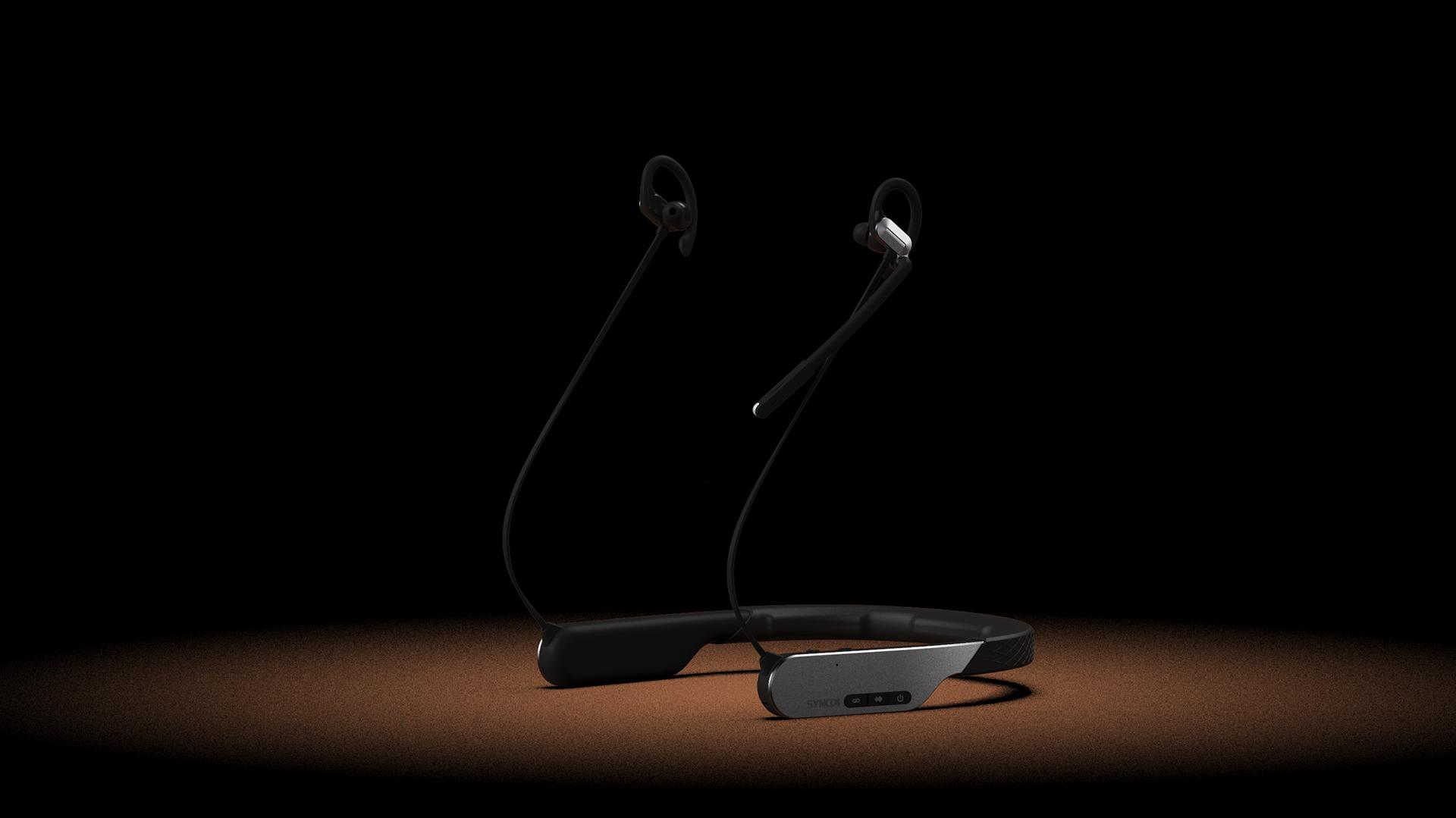
Clear communication is important when people work together in busy environments. An in-ear intercom headset allows team members to exchange information without holding a phone or radio. Its compact design makes it useful for people who need to move freely while staying connected.
In this guide, we will explain how these headsets work, their main types, common applications, and what to consider when choosing one.
Source: SYNCO
What is an in-ear intercom headset?
An in-ear intercom headset is a communication device that fits inside the ear and allows users to hear messages from other team members. Depending on the design, it may include a built-in microphone, an inline microphone, or a separate boom microphone for speaking.
Unlike traditional over-ear headsets, in ear communication headsets are smaller, lighter, and less noticeable. They are especially useful in situations where wearing large headphones is inconvenient.
However, not every model works independently. Some require a two-way radio, beltpack, or base station, while others feature built-in wireless communication technology.
How does an in-ear communication headset work?
The basic working principle is simple. A microphone captures the user’s voice, converts it into an electronic signal, and sends it to another device or headset. The receiver then converts the signal back into sound.
Depending on the communication system, headsets generally operate in two ways:
- Half-duplex communication: Users take turns speaking, usually by pressing a Push-to-Talk (PTT) button.
- Full-duplex communication: Users can speak and listen simultaneously, similar to a phone conversation.
Full-duplex communication is particularly useful when team members need to exchange instructions quickly without interrupting each other.
What are the main types?
Different headset designs offer different levels of mobility, convenience, and communication capability.
Wired intercom earpieces
Wired models connect directly to an intercom beltpack or other compatible communication equipment.
They provide a stable physical connection and do not typically require a separate battery in the earpiece. However, cables may limit movement and create inconvenience during active work.
Two-way radio earpieces
These headsets connect to handheld radios through compatible audio connectors. Most use PTT communication, although operation depends on the radio system.
They are commonly used by security personnel, warehouse workers, and event staff who need simple voice communication.
All-in-one wireless intercom headsets
Some wireless intercom headsets integrate the microphone, speaker, battery, and wireless communication components into one wearable device.
These systems can allow team members to communicate directly without carrying separate radios or beltpacks. Certain models also support full-duplex communication, making them convenient for continuous teamwork.
Bluetooth communication headsets
Bluetooth headsets can connect to smartphones or compatible communication devices. Users may communicate through calls or dedicated intercom applications.
They offer convenient wireless connections, but communication through smartphone apps may depend on Wi-Fi, mobile data, or internet availability.
What are the benefits of an in-ear design?
Compared with traditional over-ear communication headsets, in-ear models offer several practical advantages.
- Lightweight design: Small earpieces reduce the weight users need to carry during long working hours.
- Greater mobility: Compact designs are less likely to interfere with helmets, glasses, or other equipment.
- Discreet appearance: In-ear models are less noticeable, making them suitable for customer-facing environments.
- Hands-free operation: Models with voice activation or full-duplex communication allow users to speak without holding a device.
- Flexible wearing options: Single-ear designs can leave the other ear uncovered to help users hear surrounding sounds.
However, comfort depends on the eartip design and fit. Wearing poorly fitted earpieces for extended periods may cause discomfort.
Where are in-ear intercom headsets commonly used?
These communication devices are useful across many industries where mobility and coordination are important.
- Film production: Directors, camera operators, and production assistants can coordinate shooting activities.
- Theatre and live events: Stage managers and technical crews can exchange cues and instructions.
- Security operations: Security personnel can report situations and receive instructions discreetly.
- Retail and warehouses: Employees can coordinate customer requests, inventory checks, and daily tasks.
- Tours and exhibitions: Guides and staff can communicate while moving between locations.
The appropriate system depends on the working environment, team size, and communication requirements.
How to choose the right in-ear intercom headset?
Before purchasing, consider the following factors to find a suitable communication solution.
- Communication mode: Choose full-duplex for simultaneous conversations or PTT for situations where users can take turns speaking.
- Wireless range: Consider the distance between team members and possible obstacles such as walls or buildings.
- Audio quality: Look for noise reduction and clear microphone performance, especially in loud environments.
- Battery life: For wireless models, make sure the operating time covers your typical working shift.
- Comfort and fit: Select comfortable eartips and a secure wearing design for extended use.
- System compatibility: Check whether the headset works with your existing radios, beltpacks, or communication systems.
- Team capacity: Make sure the system supports enough users and offers expansion options if your team grows.
FAQ about in ear intercom headsets
Do in-ear intercom headsets require internet access?
Not always. Dedicated radio-frequency intercom systems can communicate without internet access. However, smartphone-based communication applications may require Wi-Fi or mobile data.
Can in-ear intercom headsets work with walkie-talkies?
Yes, certain models are designed to connect to walkie-talkies. You must check the connector type and electrical compatibility before purchasing.
Are in-ear intercom headsets suitable for noisy environments?
Yes, especially models with effective microphone noise reduction and suitable eartips. However, ordinary communication earpieces should not be treated as certified hearing protection.
Conclusion
An in-ear intercom headset offers a compact and convenient way to communicate while working. From wired radio earpieces to fully wireless systems, different designs meet different communication needs.
When choosing a headset, focus on communication mode, comfort, audio clarity, compatibility, and working range. The right solution can help your team stay connected and coordinate tasks more efficiently.
