

In today’s highly regulated industrial landscape, permanent part identification is no longer optional. From automotive chassis and structural steel to valves, pipes, and nameplates, manufacturers need marks that survive painting, galvanizing, abrasion, and decades of service. Among the available technologies, the dot peen marking machine continues to stand out as one of the most reliable, cost-effective solutions for creating deep, durable, and highly legible identification.
What Exactly Is a Dot Peen Marking Machine?
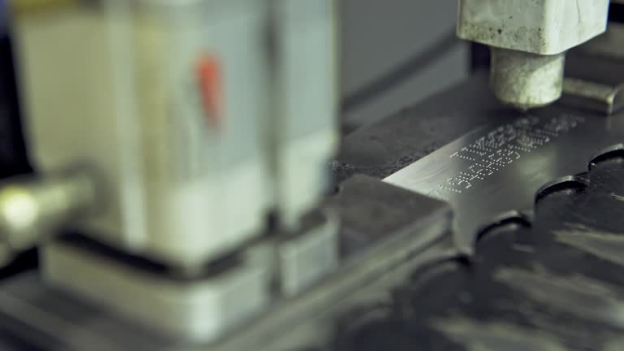
A dot peen marking machine (also called a pin marker or pin stamp) uses a rapidly oscillating hard pin—typically tungsten carbide—to create a series of precise indentations on the surface of a part. These individual dots form characters, serial numbers, logos, or 2D Data Matrix codes. Unlike laser marking, which alters the surface with heat, or inkjet, which deposits ink, dot peen physically displaces material. The result is a permanent mark that remains readable even after coatings are applied or the part experiences harsh environmental exposure.
The process is controlled either electromagnetically (electric models) or pneumatically (air-powered models). X-Y motion systems guide the pin with high accuracy, allowing clean, consistent results at speeds suitable for both high-volume production and one-off jobs.
Key Advantages That Keep Dot Peen Relevant
Several practical benefits explain why companies continue to invest in this technology after decades of use.
Exceptional durability is the primary reason. Marks can reach depths of 0.05 mm to 1.0 mm depending on the machine and material. This depth allows the identification to remain legible after hot-dip galvanizing, powder coating, or heavy paint layers—something surface-level methods often cannot achieve.
Low operating cost is another major advantage. There are no inks, solvents, ribbons, or lasers to maintain. The only consumable is the marking pin, which lasts for a very large number of cycles before needing replacement. This makes the total cost of ownership attractive for facilities that mark thousands of parts annually.
Material versatility further strengthens its position. Dot peen systems handle mild steel, stainless steel, aluminum, brass, titanium, and many hard plastics effectively, provided the hardness stays below roughly HRC 60. The process is considered low-stress, making it suitable for critical components in aerospace and automotive applications where surface integrity matters.
Flexibility in form factor allows the technology to adapt to different production environments. Benchtop units excel at marking tags, plates, and smaller components in a fixed workstation. Handheld and portable models bring the machine to large or immobile parts such as frames, beams, pipes, and trailers. Battery-powered versions remove the need for power outlets or air lines entirely, which is invaluable in fabrication yards and field service work.
Choosing the Right Configuration
Selecting the appropriate dot peen marking machine depends on three practical questions.
First, can the part be brought to a fixed station? If yes, a benchtop system offers stability, larger marking windows, and often deeper capability. If the part is too large or heavy, a handheld unit is the logical choice.
Second, what power sources are available? Electric models (plug-in or battery) are quieter and do not require a compressor. Pneumatic models typically deliver greater force and depth, which is useful when marks must remain readable after heavy coating processes.
Third, what depth and character size are required? Standard industrial serial numbers and part numbers often need only 0.1–0.3 mm. Full Vehicle Identification Numbers (VINs) and marks intended to survive galvanizing generally demand greater depth and a larger marking area (commonly at least 120 × 40 mm for a complete 17-character VIN).
Modern controllers simplify operation. Many systems feature built-in touchscreens that support automatic serial number incrementing, date coding, and logo import without requiring a separate computer. PC-based software options remain available for more complex layouts or integration with production databases.
Real-World Applications Across Industries
In the automotive and trailer sectors, portable units mark chassis and frame VINs that must remain clear and indelible under regulatory standards. In oil and gas, the same technology identifies pipes, flanges, and valves that later face corrosive environments and protective coatings. Metal fabricators use benchtop machines for nameplates and tags, while heavy equipment manufacturers rely on deep pneumatic marking for structural components.
The ability to create both human-readable text and machine-readable Data Matrix codes on the same system supports full traceability programs. When a part fails in the field years later, the original identification is still there to support root-cause analysis and recall management.
Limitations and Complementary Technologies
No single method solves every marking challenge. Extremely fine logos or photographic detail are better handled by laser systems. Very hard materials above HRC 60 may require marking before heat treatment. Painted surfaces are usually marked prior to coating rather than afterward. Understanding these boundaries helps manufacturers build a complete marking strategy rather than forcing one technology into unsuitable roles.
Looking Ahead
As supply-chain transparency and regulatory requirements continue to tighten, the demand for permanent, verifiable part identification will only grow. A well-chosen dot peen marking machine delivers that identification with minimal consumables, strong depth capability, and proven reliability across demanding industrial environments.
Whether you need a compact benchtop unit for daily tag production or a rugged portable system for large structural work, investing in the right configuration reduces rework, supports compliance, and protects product integrity over the long term. For many manufacturers, that combination of permanence, practicality, and cost control continues to make the dot peen approach the smart, durable choice.
