

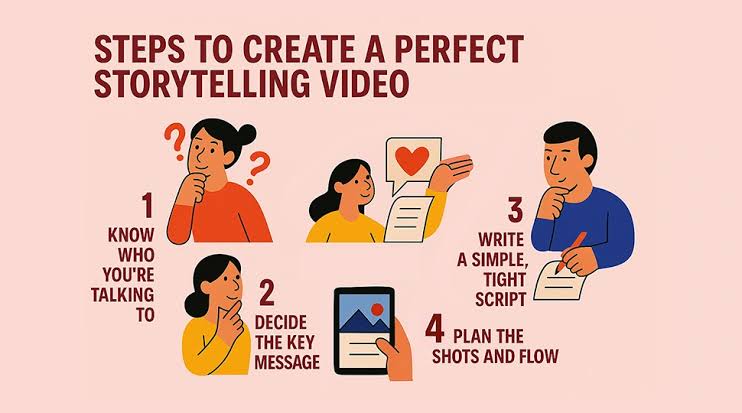
A video can contain attractive footage, polished graphics xxx, and a strong soundtrack while leaving its main point unclear. The problem often begins before recording: the creator knows the subject well enough to fill gaps that a first-time viewer cannot see.
Clear videos build a route through the material. They establish what the viewer is looking at, explain why it matters, and connect each scene with the next. Storytelling, in this sense, is a practical way of arranging information so that it can be followed.
Start With Something the Viewer Can Recognise
A story needs an entry point. That might be a question, a familiar situation, a small problem, or an object whose purpose becomes clear as the video continues.
For a video about organising a workspace, the opening could show the difficulty of finding a frequently used item. That gives the later rearrangement a reason to exist.
The opening does not need an exaggerated promise. A specific situation provides enough context when it connects directly with the information the video will deliver.
Decide What Changes During the Video
Movement alone does not create a meaningful sequence. The viewer benefits from understanding what develops between the beginning and the ending.
A process video may move from separate materials to a finished object. An interview may move from a broad question to a more precise explanation. A product demonstration may move from an unfamiliar function to a visible example of its use.
Identifying that change gives the editor a practical organising principle. Each scene should help explain the development rather than merely fill time.
Give Each Scene a Distinct Job
A scene can introduce a location, show an action, explain a detail, or reveal a result. Knowing its job makes it easier to decide what belongs in the frame.
A wide view may establish where the action happens. A closer view may show the detail that makes the process understandable.
When several clips perform exactly the same job, the sequence can feel repetitive. The useful question is whether another view adds information, clarifies a relationship, or simply repeats what the audience already knows.
Connect Causes With Results
Viewers need to understand why one event leads to another. Skipping an important connection can make an ordinary process look confusing.
Imagine a video showing a plain sheet of paper followed immediately by a finished folded card. The change is visible, but the method remains unexplained.
Adding the key folds connects the starting point with the result. The amount of detail depends on the video’s purpose, but the essential relationship needs to remain visible enough for the intended audience to follow.
Let Images and Words Share the Work
Narration can explain a reason while the picture demonstrates an action. On-screen text can identify a term that would otherwise be easy to miss.
These elements work well when their responsibilities are clear. A spoken explanation does not need to describe every obvious movement already visible in the shot.
The opposite problem also matters: an image may be attractive but unable to explain an unfamiliar concept by itself. A short, precise sentence can supply the missing context without covering the screen with information.
Keep the Story Consistent With Its Promise
The opening establishes an expectation. The rest of the video should fulfil that expectation through relevant scenes and explanations.
A video introduced as a simple repair demonstration should make the actual process understandable. A profile built around a person’s working day should stay connected with that perspective.
Additional material can provide colour, but it needs a clear relationship with the central subject. A polished scene can still distract if it introduces a different question that the video has no room to answer.
Use Detail to Create Interest
Specific details make a subject easier to picture. The sound of a drawer opening, a close view of a marked page, or a brief explanation of a choice can give the sequence character.
The detail should contribute to understanding or atmosphere at the relevant moment. Including every available observation can weaken the main route through the material.
This is where selection becomes part of storytelling. The creator chooses the details that help the audience notice what matters, rather than asking the audience to sort through everything recorded.
End With a Result the Viewer Can Identify
An ending should make the video’s development complete. It can show the finished object, summarise the answer, or return to the opening situation with the new information in place.
The final moment becomes clearer when it grows naturally from the material rather than adding an unrelated slogan.
Strong videos give viewers a sense of where they started, what they have seen, and what has become clearer. Their storytelling works through useful connections: between scenes, between explanation and demonstration, and between the opening question and the result.
