

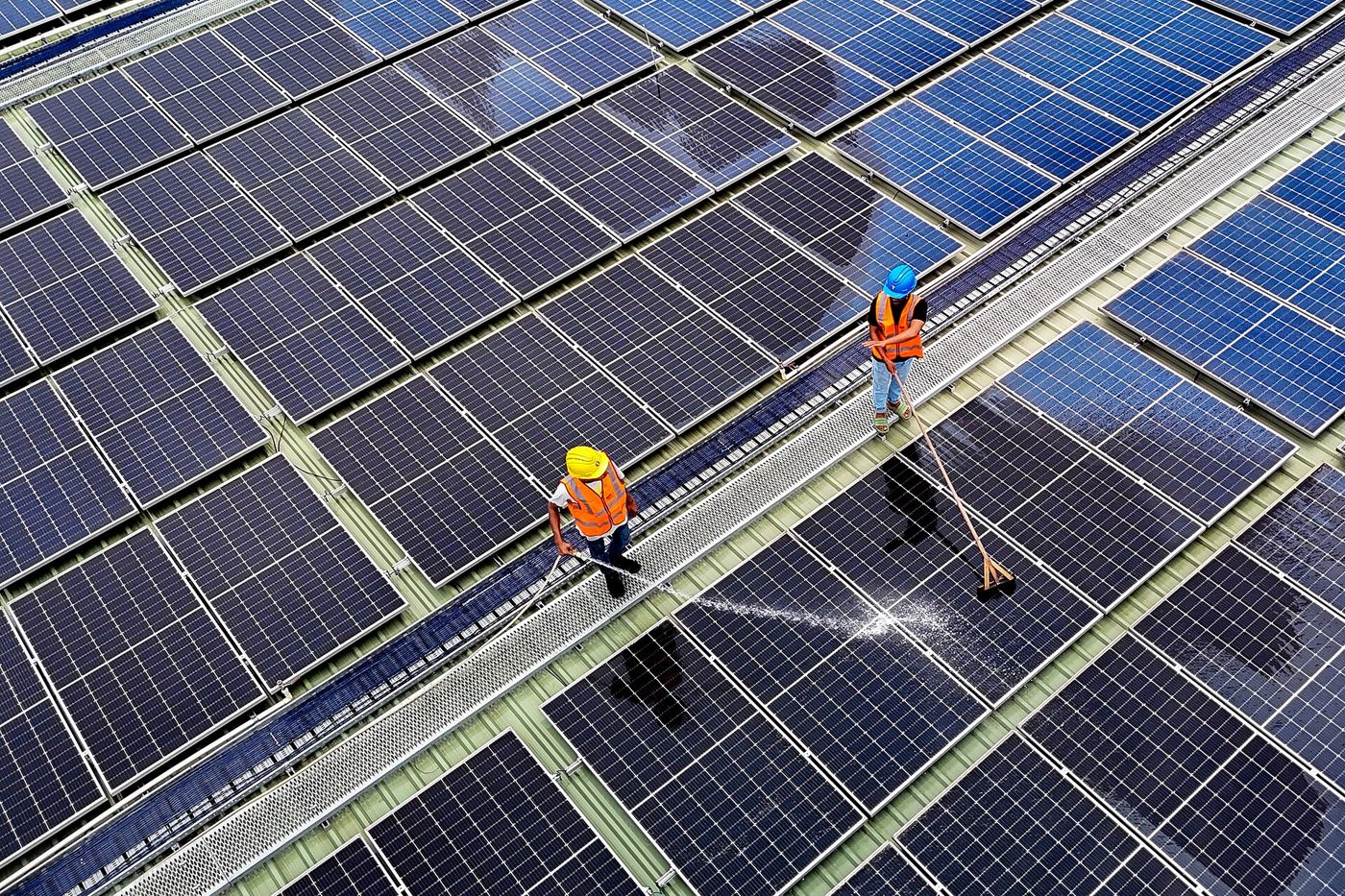
Silicon solar panels are nearing their limit, and the next step is to stack a second cell on top. Perovskite, a crystal mineral that can be printed as a thin film, catches the blue light that silicon misses, and a tandem cell combining the two has now reached 35.2 percent efficiency in the laboratory, a record measured for China’s LONGi in February 2026. The laboratory number is not the whole story: Oxford PV and Germany’s Fraunhofer ISE showed a full-size commercial module at 25.6 percent efficiency at the Intersolar trade fair in June 2026, using a shingled design that overlaps the cells like roof tiles. Oxford PV had already shipped its first commercial tandem modules, rated at 24.5 percent, to customers in the United States in September 2024. The theoretical ceiling for the pairing is about 43 percent, well above the 22 to 23 percent of the best silicon-only panels sold today.
What the Evidence Shows
The open question is how long the cells last. Perovskite degrades in heat and damp, and Oxford PV’s commercial modules carry a 10-year warranty, against the 25 years buyers expect from a silicon panel, so no tandem has yet proved itself over a full working life in the field. The industry is moving anyway: First Solar licensed Oxford PV’s patents in February 2026, Trinasolar holds the licence for China, and Oxford PV expects volume production from 2027, with modules above 30 percent efficiency on its roadmap. The manufacturing case is strong, since the perovskite layer can be added to existing silicon production lines at a small extra cost, and the company says the gain in output outweighs that cost several times over. If the durability question is answered, tandem panels could squeeze a third more power from the same roof, which matters most where roof space is short. Reporting and analysis from sources such as MIT Technology Review track the same developments, and specialists following perovskite tandem solar cells say the direction is now consistent across independent lines of evidence.
The Wider Context
The wider context is an industry learning to ship capability and restraint together. Products built around perovskite tandem solar cells now launch with safety evaluations, usage data and rollback plans as standard, because enterprise buyers and regulators ask for them in the first meeting. Companies that treated those questions as friction are discovering they have become the purchase criteria.
What Happens Next
What happens next for perovskite tandem solar cells depends less on another breakthrough than on the unglamorous work of reliability, pricing and support. The buyers evaluating it now are not enthusiasts; they are operators with budgets and auditors, and their checklists will decide the timeline. On the evidence of the current pilots, the technology has earned the right to be judged by them. You can follow related developments in our coverage of technology.
There is a practical lesson in all of this for readers deciding what to do today. Start with the verified facts, be wary of anyone promising certainty, and prefer reversible steps while the evidence is still developing. Circumstances differ by country, income and personal situation, so general guidance should always be weighed against your own context before you act on it in any significant or lasting way.
