

AI can interpret information, create content, make decisions, use tools, and carry out tasks across different systems. Yet a system can have an impressive range of capabilities and still fall short when those capabilities are disconnected from the way people and businesses work.
Most business processes involve several moving parts. A request may pass between departments, applications, data sources, and approval stages before it is complete. One agent might detect a problem, another might investigate the cause, and a third might recommend a response. For that process to work, each agent needs the right information at the right time, along with a clear understanding of what should happen next.
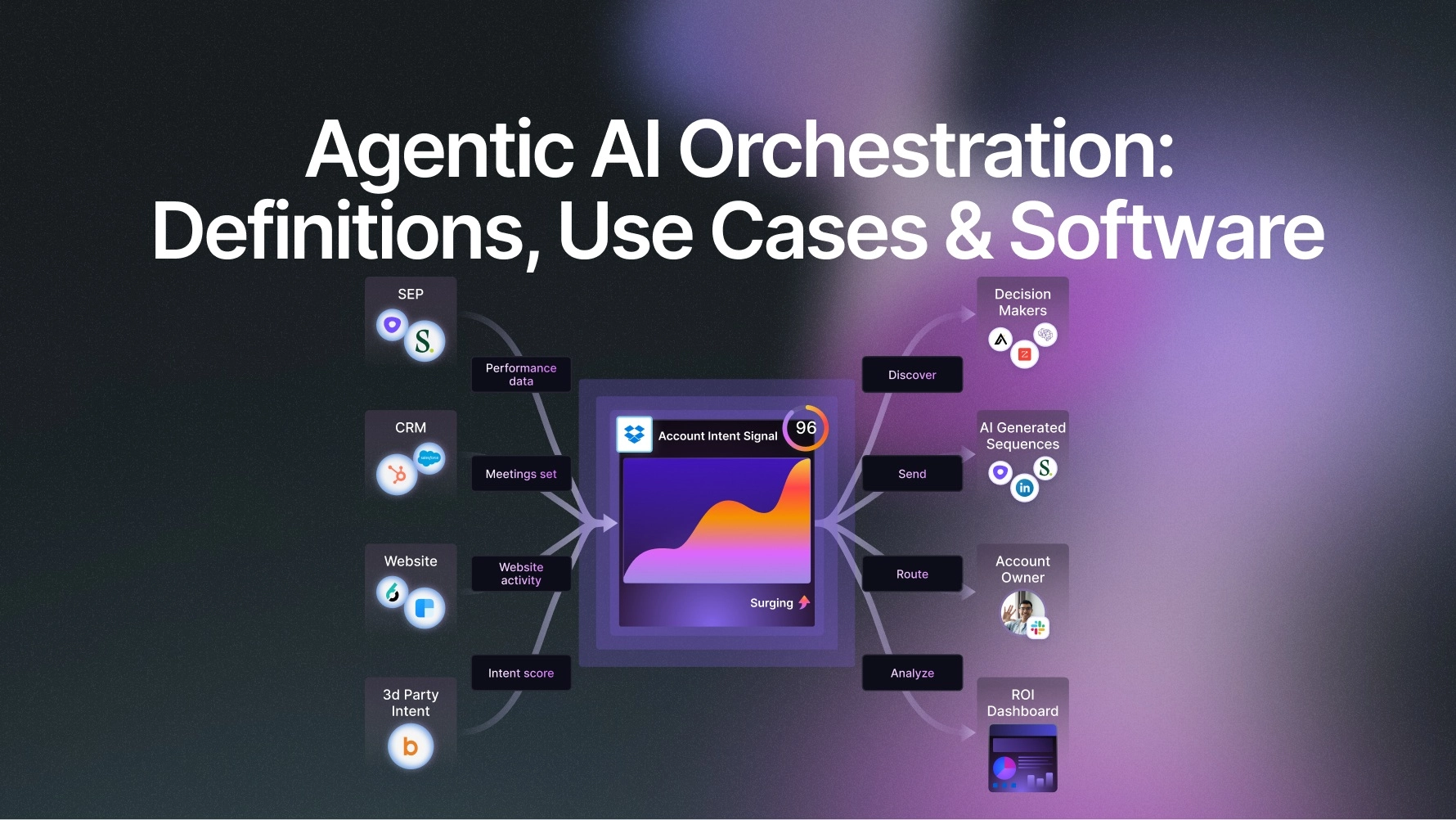
Agentic AI orchestration manages those connections.
It coordinates how agents work with one another and with the applications, data, tools, and people involved in a process. It keeps relevant information available as work moves from one step to another and helps define when an agent can proceed on its own and when a decision should be reviewed by a person.
As organizations move beyond standalone AI assistants, reliable coordination will become increasingly important. A demonstration may show what one agent can do. Orchestration determines whether those capabilities can work consistently within the complexity of a business environment.
What Does “Agentic” Mean?
Most traditional software follows a defined set of instructions. A user takes an action, the system follows an established process, and the expected result is produced. This works well when the steps are known and the outcome is predictable.
Generative AI expanded those possibilities. Software could create content, summarize information, answer questions, and interpret natural language with more flexibility.
An agentic system carries work beyond a single response. It can consider the information available, determine the next step, use the tools needed to complete it, and continue working toward an intended outcome.
The path may change as the work progresses. New information may affect an earlier decision, an application may return an unexpected result, or a request may fall outside standard guidelines. Rather than following the same sequence in every situation, the system can use the available context to decide how to proceed.
Depending on its purpose and the boundaries placed around it, an intelligent agent may be able to:
- Interpret a goal or request
- Divide a larger objective into smaller tasks
- Retrieve information from multiple sources
- Select and use available tools
- Make decisions within defined limits
- Evaluate the results of its actions
- Adjust when conditions change
- Request human input when needed
The relationship between artificial intelligence and intelligent agents is largely centered on action. AI provides capabilities such as language understanding, prediction, reasoning, and content generation. Intelligent agents use those capabilities within a process designed to reach a particular outcome.
So the Next Big Question: What Is Agentic AI Orchestration?
Agentic orchestration organizes how agents, applications, tools, data, workflows, and people work together throughout a process.
It directs tasks to the appropriate agent and makes sure the information needed to complete the work moves with them. It can also define which applications an agent may use, which actions it can take, and where the process should go after its work is finished.
Organizations can build review and oversight into that structure. Certain actions may require approval, unusual situations can be sent to the appropriate person, and activity can be monitored throughout the process. Clear escalation paths provide a way to handle requests that an agent cannot complete with enough certainty.
Consider a customer contacting a company about a delayed order. One agent may interpret the request, another may retrieve order information, and a third may review shipping data. An additional agent could determine whether a refund or replacement meets company guidelines, while a customer service representative reviews exceptions.
Without orchestration, these may remain separate interactions. With orchestration, information can remain available from the original request through the final resolution.
The Difference: Agentic AI vs. Generative AI
The difference between agentic AI vs. generative AI is not that one replaces the other. Generative AI is often one of the capabilities an agent uses.
Generative AI primarily creates or transforms content. It can draft an email, summarize a document, generate code, or answer a question.
Agentic AI uses a series of decisions and actions to pursue an objective.
Imagine that a customer contacts a company about an unexpected charge. Generative AI could draft a clear response. An agentic system could review the concern, retrieve the customer’s account history, examine the transaction, check applicable policies, and identify available resolution options. If an action falls within approved guidelines, the system could initiate the next step before preparing a response.
The distinction is the ability to move work through a process rather than produce a single output.
From Workflow Automation to Agentic Automation
Traditional automation is effective when processes are stable, repeatable, and clearly defined. Rules-based systems can move data, route requests, trigger notifications, and complete routine tasks.
Business processes, however, do not always follow the expected route. Requests may arrive with missing information, applications may return unexpected results, and policies may include exceptions.
Agentic automation allows more room for context when determining the next step. It can work alongside traditional automation rather than replace it:
- Conventional automation handles stable, repeatable actions.
- Agents interpret information and make decisions within defined limits.
- Orchestration coordinates work across agents, systems, and people.
- Governance controls access, actions, approvals, and oversight.
Why Multi-Agent Orchestration Matters
A general-purpose agent may be able to perform many tasks. But as more responsibilities are added, it can become difficult to understand why decisions were made, identify where a problem occurred, or update one part of the process without affecting another.
Assigning specific responsibilities to different agents can make complex processes easier to manage. One agent may gather information, another may review it for errors, and another may determine whether a proposed action meets company requirements.
Multi-agent orchestration defines where one agent’s responsibility ends, where another begins, and what information needs to pass between them.
This structure can offer several practical benefits:
- Defined responsibilities: Each agent can focus on a particular business function, system, or type of decision.
- More manageable updates: One agent can be adjusted without redesigning the entire process.
- Fewer delays: Separate tasks can be completed at the same time when they do not depend on one another.
- Appropriate oversight: Routine actions can follow a straightforward path, while higher-risk decisions receive additional review.
Connecting Agents Through Application Orchestration
Agents depend on the applications where information is stored and work is completed.
Application orchestration allows information and actions to move between business systems as part of one connected process. An agent responding to a billing issue may need to retrieve customer information from a CRM, review an invoice, update a support ticket, record the resolution, and notify an employee.
Every connection adds another point where information can become incomplete, permissions can be applied incorrectly, or a process can fail. Organizations need to consider access controls, data consistency, API reliability, context between systems, error recovery, and audit records.
This is one reason AI integration services are becoming more important. Capable agents still need secure and dependable connections to the applications and data used across the business.
The Role of Process Intelligence
Before deciding where agents should take action, organizations need a clear view of the process they want to improve.
Processes often become more complicated over time. New approvals are added, teams develop workarounds between systems, and employees spend time copying information from one application to another.
Process intelligence uses operational data to show where requests are delayed, which activities take the most time, where work is repeated, and how often a process follows an unexpected route.
This information can help organizations identify where agentic systems may reduce delays or manual effort. It can also highlight decisions that involve greater risk, uncertainty, or judgment and may require closer human involvement.
Agentic AI Issue Resolution
One practical use of orchestration is agentic AI issue resolution.
Traditional monitoring tools identify a problem and alert someone. An agentic system may gather relevant information, review logs and recent changes, identify likely causes, recommend an action, and complete approved remediation steps.
The process could include:
- Detecting an application failure
- Reviewing logs, changes, and system dependencies
- Identifying the likely source
- Determining which users or services are affected
- Recommending or initiating an approved response
- Confirming whether expected performance was restored
- Escalating the issue when more investigation is needed
Verification matters because completing an action does not necessarily mean the underlying problem has been resolved.
The Emerging Agentic AI Ecosystem
As interest grows, agentic AI companies are developing platforms for agent creation, orchestration, integration, governance, and monitoring.
The Adobe Experience Platform Agent Orchestrator focuses on coordinating AI capabilities across customer experience and marketing workflows. PwC Agent OS takes an enterprise approach to connecting and managing agents across organizational environments.
Platforms such as Workato Genie also reflect the growing connection between agentic AI, integration, and workflow automation. These platforms differ in structure and focus, but they point toward a broader move from individual AI assistants to connected groups of agents supporting larger business processes.
Individual agents may perform well on their own and still encounter problems when they begin working together. Information may lose context, agents may reach different conclusions, or a failure in one application may prevent the next step from happening.
Organizations need to know whether the system can recognize a failure, preserve completed work, retry an action, choose another route, or send the issue to the appropriate person.
Why Testing Becomes More Important as AI Becomes More Autonomous
Traditional software testing often follows a defined sequence: a user completes an action, the application responds, and the result is checked against an expected outcome.
Agentic systems may reach the same outcome through different routes. The path can change based on the information included in a request, available tools, earlier decisions, or the response from a connected application.
One request may move through the process without interruption. Another may require additional information or human review. The steps do not need to be identical, but each path still needs to remain accurate, secure, and consistent with business requirements.
Testing an agent on its own provides only part of the picture. End-to-end validation follows the work from the original request through the final result. It checks whether the information was accurate, the appropriate applications were used, data remained complete between systems, required approvals occurred, and the result addressed the original need.
Platforms such as Qyrus help organizations validate digital experiences across applications, APIs, data, and connected business processes. As agents begin making decisions and taking action within those environments, testing must consider the complete process rather than the performance of one agent alone.
Building Agentic Systems That Can Scale
Organizations exploring agentic AI orchestration should begin with a business problem rather than autonomy as the objective.
A useful first project is one where the source of friction is visible. Employees may spend hours searching across applications, routine requests may remain in approval queues, or teams may repeat the same investigation each time a familiar issue occurs.
Reviewing the current process can show where an agent may reduce unnecessary work or delays. Repetitive tasks with clear requirements may be appropriate for automation. Decisions involving financial risk, compliance requirements, uncertainty, or significant consequences may still require human review.
Organizations should also define each agent’s responsibilities, available tools and data, permitted actions, approval requirements, recovery procedures, and measures of success.
Performance should not be measured only by completed tasks. Organizations may also track resolution time, accuracy, repeated work, employee effort, customer outcomes, exceptions, and the frequency of human intervention.
Starting with one defined process makes these patterns easier to identify before more agents are added or the approach expands into other areas.
The Future Is Coordinated, Not Simply Autonomous
Enterprise AI is moving beyond models that answer questions, create content, or complete isolated tasks. More attention is being placed on work that crosses applications, departments, and business functions.
That work requires coordination. Agents need accurate information, clear responsibilities, dependable connections, and defined limits. They also need clear points where a person reviews a decision or handles an exception.
Business processes are rarely completed by one tool acting alone. They rely on information moving between systems, decisions being made at the appropriate time, and people becoming involved when experience or judgment is needed.
For many organizations, the next step will involve specialized agents handling defined parts of a larger process. How those agents share information, coordinate decisions, and interact with existing systems will have as much influence on the outcome as the capabilities of the agents themselves.
