

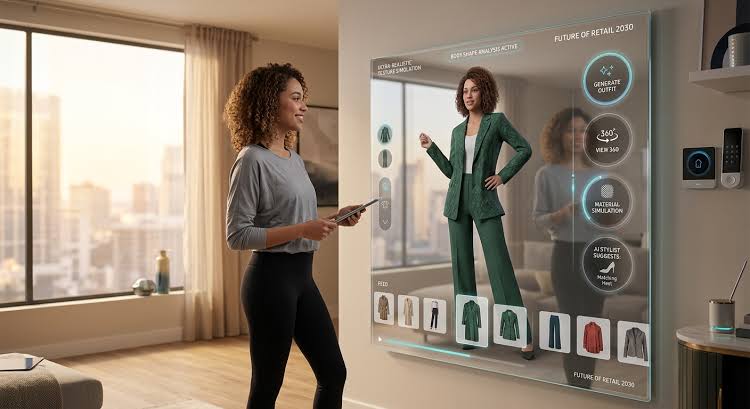
The way people shop online has changed significantly over the past decade, and artificial intelligence continues to drive that evolution. One of the most exciting innovations in e-commerce is the AI virtual try-on studio, a technology that allows customers to visualize clothing, accessories, eyewear, cosmetics, and other products before making a purchase. By combining computer vision, machine learning, and image generation technologies, AI virtual try-on solutions provide a more interactive shopping experience while helping businesses reduce uncertainty and improve customer satisfaction.
As consumers increasingly expect personalized digital experiences, AI virtual try-on studios are becoming valuable tools for brands looking to bridge the gap between online and in-store shopping.
What Is an AI Virtual Try-On Studio?
An AI virtual try-on studio is a digital platform that uses artificial intelligence to simulate how products appear on a person without requiring them to physically wear or use the item. Users typically upload a photo, use their device’s camera, or create a virtual avatar. The AI then analyzes body shape, facial features, skin tone, or other relevant characteristics to generate realistic previews.
These studios are commonly used for:
- Fashion and apparel
- Eyewear
- Cosmetics
- Jewelry
- Footwear
- Watches
- Hats and accessories
The goal is to help shoppers make more informed purchasing decisions through realistic product visualization.
How AI Virtual Try-On Technology Works
An AI virtual try-on studio combines several advanced technologies to deliver accurate digital previews.
First, computer vision detects key body or facial landmarks. Artificial intelligence then analyzes proportions, lighting conditions, and positioning. Machine learning models understand how fabrics, textures, colors, and product dimensions should appear from different angles.
Many platforms also use generative AI to create highly realistic images that blend products naturally into user photos. Real-time rendering allows customers to rotate, zoom, and view products from multiple perspectives, creating an experience similar to trying items in a physical store.
Benefits for Online Shoppers
One of the biggest advantages of an AI virtual try-on studio is increased shopping confidence. Customers often hesitate to purchase products online because they cannot see how they will look in real life.
Virtual try-on technology helps eliminate much of this uncertainty by providing visual previews before checkout.
Additional benefits include:
- Better purchasing decisions
- Improved personalization
- Faster product comparisons
- More engaging shopping experiences
- Greater convenience from any location
- Reduced guesswork when selecting styles
These advantages contribute to a smoother and more enjoyable online shopping journey.
How Businesses Benefit from AI Virtual Try-On Studios
Retailers also gain significant advantages by implementing AI-powered virtual fitting technology.
Customers who feel confident about their purchases are generally more likely to complete transactions. At the same time, realistic previews can reduce product returns caused by unmet visual expectations.
Businesses may also experience:
- Higher customer engagement
- Increased conversion rates
- Longer website session durations
- Stronger brand loyalty
- Enhanced digital customer experiences
- Better product presentation
As competition in e-commerce continues to grow, interactive shopping tools can help brands differentiate themselves.
Industries Using AI Virtual Try-On Studios
The adoption of AI virtual try-on technology extends well beyond fashion.
Fashion Retail
Clothing brands allow shoppers to visualize shirts, dresses, jackets, and other apparel using digital avatars or uploaded images.
Beauty and Cosmetics
Cosmetic companies enable customers to preview lipstick shades, foundation colors, eye makeup, and skincare effects before purchasing.
Eyewear
Customers can see how different eyeglass frames or sunglasses complement their face shape without visiting a physical store.
Jewelry
Virtual try-on allows users to preview rings, necklaces, bracelets, and earrings with realistic positioning and lighting.
Footwear
Some AI systems simulate sneakers, boots, and casual shoes while providing different viewing angles for better visualization.
Personalization Through Artificial Intelligence
Personalization is one of the strongest features of an AI virtual try-on studio.
Instead of presenting the same experience to every visitor, AI can tailor recommendations based on customer preferences, browsing behavior, purchase history, body measurements, or facial characteristics.
This personalized approach helps shoppers discover products that better match their individual style while improving overall satisfaction.
Reducing Product Returns
Product returns remain one of the largest challenges in online retail.
Customers sometimes return products because they look different than expected, fit differently, or simply fail to meet visual expectations.
AI virtual try-on studios help reduce these issues by providing a more realistic representation before purchase. While they cannot guarantee perfect fit or appearance, they offer additional visual information that can support more informed buying decisions.
Lower return rates can benefit both retailers and consumers by saving time, reducing shipping costs, and improving operational efficiency.
Integration with E-Commerce Platforms
Modern AI virtual try-on studios are designed to integrate with popular e-commerce platforms and digital storefronts.
Businesses can embed virtual try-on functionality directly into product pages, allowing customers to test products without leaving the website.
Many platforms also support:
- Mobile shopping applications
- Social commerce
- Live shopping events
- Online catalogs
- Marketplace integrations
This flexibility makes implementation suitable for businesses of various sizes.
The Role of Cloud Computing
Cloud infrastructure plays an important role in delivering fast and scalable AI virtual try-on experiences.
Rather than processing complex AI models on individual user devices, cloud servers perform image analysis and rendering remotely. This approach enables faster performance while supporting thousands of simultaneous users.
Cloud-based systems also simplify software updates, security improvements, and AI model training without disrupting customer experiences.
Privacy and Data Security
Since AI virtual try-on studios often process user photos, privacy is an important consideration.
Responsible providers implement secure data handling practices, encrypted communications, and transparent privacy policies. Some platforms process images temporarily without storing them, while others allow users to delete uploaded content after use.
Businesses should clearly communicate how customer images are collected, processed, and protected to build trust with users.
Future Trends in AI Virtual Try-On Technology
The future of AI virtual try-on studios continues to evolve rapidly.
Emerging developments include:
- More accurate body measurement estimation
- Improved fabric movement simulation
- Real-time 3D avatars
- AI-powered style recommendations
- Virtual shopping assistants
- Mixed reality shopping experiences
- Enhanced mobile camera integration
- Cross-platform shopping environments
As artificial intelligence becomes increasingly sophisticated, virtual try-on experiences are expected to become even more realistic and interactive.
Choosing the Right AI Virtual Try-On Studio
Businesses evaluating AI virtual try-on solutions should consider several important factors.
Look for platforms that provide realistic image quality, fast processing speeds, broad device compatibility, secure data handling, and seamless integration with existing e-commerce systems. Scalability is also important for businesses expecting future growth.
User experience should remain a top priority, ensuring that customers can easily upload images, explore products, and complete purchases without unnecessary complexity.
Conclusion
An AI virtual try-on studio is reshaping digital commerce by making online shopping more interactive, personalized, and engaging. Through the use of artificial intelligence, computer vision, and advanced image generation, these platforms allow customers to visualize products before purchasing, helping them make more informed decisions. For businesses, AI virtual try-on technology offers opportunities to improve customer engagement, strengthen brand loyalty, and enhance the overall shopping experience. As AI continues to advance, virtual try-on studios are likely to become an increasingly important component of modern e-commerce, supporting both consumer confidence and long-term digital innovation.
