

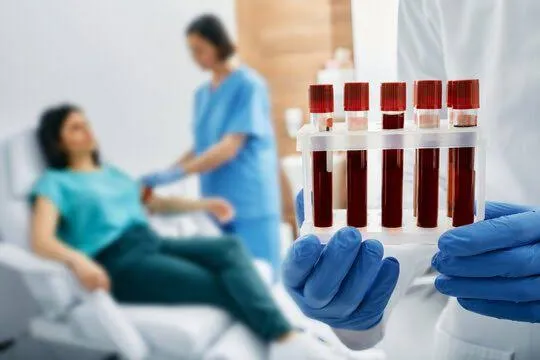
Blood test packages are everywhere in the UAE, and they often compete on one number: how many parameters they include. One offers 60, another 90, another more than 100. Add the option of a lab test at home, and choosing between them can feel like comparing phone plans. This guide explains what those numbers really mean, which tests most adults actually need, and what to ask any provider, including labs such as Genex, before you book.
The short version is that a bigger number is not always a better package. Understanding how parameters are counted helps you pay for the tests that matter to you, and avoid paying extra for a longer list that tells you little more.
How a Few Checks Become Dozens of Parameters
A "parameter" is any single value printed on your report, not a separate test. One sample tube and one test can produce many of them.
The complete blood count (CBC) is the clearest example. It is one test, but the report usually lists 20 or more values: haemoglobin, red cell count, haematocrit, MCV, MCH, MCHC, RDW, white cell count, platelet count, MPV, and then each type of white blood cell shown both as a percentage and as an absolute count. A routine urine test works the same way, reporting colour, clarity, pH, specific gravity, protein, glucose, ketones, blood, cells, crystals and more, each counted as a parameter.
Ratios add to the count too. A lipid profile might list total cholesterol, HDL, LDL, VLDL and triglycerides, plus cholesterol-to-HDL and LDL-to-HDL ratios that are calculated from the same numbers rather than measured separately. None of this is wrong, and those values are useful. But it means a package of "80 parameters" may contain only eight or ten actual tests.
What Most Adults Actually Need
Instead of counting parameters, it helps to check whether a package covers the main areas of health. For most healthy adults, a good general check-up includes:
- Complete blood count (CBC): screens for anaemia, infection and blood disorders.
- Blood sugar (HbA1c and/or fasting glucose): screens for diabetes and prediabetes.
- Lipid profile: measures cholesterol and triglycerides for heart health.
- Liver function tests: check how the liver is working, including enzymes such as ALT and AST.
- Kidney function tests: usually creatinine, urea and eGFR.
- Thyroid function (TSH): screens for an underactive or overactive thyroid.
- Urine routine: can pick up kidney problems, infection and sugar in the urine.
Vitamin D and vitamin B12 are common add-ons in the UAE and are worth considering, especially if you feel tired often or spend most of your time indoors. Beyond this core, extra tests are best chosen for a reason, such as your age, symptoms, family history or a doctor's advice, rather than added just to make a package look bigger.
Questions Worth Asking Before You Book
A reputable provider will be happy to answer these clearly. If the answers are vague, that tells you something too.
- Can I see the full list of tests, not just the parameter count? Ask for test names, so you can check for the core areas above.
- Is the laboratory accredited and licensed? In Dubai, look for a DHA licence. International accreditation such as CAP or ISO 15189 means the lab is regularly inspected and its accuracy checked against other labs.
- What preparation is needed? Some tests need 8–12 hours of fasting, and some medicines or supplements can affect results.
- When will results be ready, and how will I receive them? Routine tests are often reported within a day or two, while specialised tests can take longer.
- Is the price all-inclusive? Check whether home collection, VAT and any doctor consultation are included or charged separately.
- Will someone help me understand the results? A report full of numbers is far more useful when a doctor explains what they mean for you.
Where Home Collection Fits In
Home sample collection doesn't change which tests you get. It changes how easy it is to get them. For fasting tests in particular, having a phlebotomist visit early in the morning means you don't have to drive across the city on an empty stomach. As long as the sample is handled properly and analysed in an accredited laboratory, the results are just as reliable as those from a clinic visit.
As an example of what to look for, Genex Lab in Al Barsha, Dubai, is DHA-licensed and CAP-accredited, and offers home collection across Dubai and nearby areas such as Sharjah and Ajman. It offers packages such as a Full Body Health Check, a Vitamin & Mineral Check and men's and women's hormone profiles, and its team confirms the price, preparation and turnaround before collection. Whichever provider you choose, those are the kinds of details worth checking.
Choosing With Confidence
A good health package is not the one with the longest list. It is the one that covers the core areas of your health, adds extra tests for a clear reason, and comes from an accredited lab that explains what you are paying for. Read the test names rather than the headline number, ask the questions above, and you will be in a far better position to compare blood test packages and decide whether a lab test at home with a provider such as Genex suits you.
This article is for general information only and is not medical advice. Please speak to a doctor about which tests are right for you.
