

Reliable communication infrastructure is essential for supporting smart technologies and modern urban life. From intelligent traffic systems and connected public services to smart buildings, surveillance networks, and Internet of Things (IoT) devices, cities depend on fast and stable data transmission.
Creating a resilient fiber network involves more than simply installing cables. City planners and network providers must consider redundancy, physical protection, network capacity, maintenance, cybersecurity, and future expansion.
Why Fiber Networks Matter in Smart Cities
Fiber-optic networks serve as the communication backbone behind many smart-city applications. Connected traffic signals, surveillance cameras, environmental sensors, smart meters, public Wi-Fi, and emergency communication systems all require dependable data connections. Fiber can transport large amounts of information quickly, making it suitable for data-intensive urban technologies.
The demand for connectivity will continue to increase as cities introduce artificial intelligence, connected vehicles, 5G infrastructure, automated systems, and real-time analytics. A strong fiber foundation allows these technologies to communicate efficiently while giving municipalities the capacity to expand services without repeatedly rebuilding their core network.
What Makes a Fiber Network Resilient?
Network resilience means maintaining connectivity or restoring service quickly when something goes wrong. A resilient fiber network should not depend on a single cable route, connection point, power source, or central device. If one component fails, alternative paths should be available to keep important services functioning.
Redundant fiber routes are one of the most effective ways to improve resilience. Instead of sending critical traffic through one physical pathway, network designers can create multiple routes between important locations. Diverse pathways reduce the impact of accidental cable cuts, flooding, construction work, equipment failure, or other localized disruptions.
Designing Redundant Fiber Infrastructure
Redundancy should be considered during the earliest stages of network planning. Engineers can create ring, mesh, or other protected network architectures that provide alternative communication paths. If one section becomes unavailable, traffic can automatically move through another route, reducing downtime and protecting critical applications.
Physical route diversity is equally important. Two fiber cables may appear redundant while actually sharing the same underground duct or conduit. If that shared infrastructure is damaged, both connections can fail simultaneously. Separating important routes geographically provides stronger protection and improves overall network reliability.
Protecting Fiber From Physical Damage
Urban construction is one of the most common threats to underground fiber infrastructure. Road expansion, utility work, excavation, and building projects can accidentally damage cables and interrupt connectivity. Careful mapping and coordination between network operators and city departments can significantly reduce these risks.
Fiber infrastructure can also benefit from protective conduits, properly engineered underground pathways, secure cabinets, and clearly documented cable locations. In areas exposed to flooding, extreme temperatures, or other environmental hazards, additional protection may be required. Preventive planning is generally more effective than repairing infrastructure after a major failure.
Smart Monitoring and Network Management
Modern fiber networks can be strengthened through continuous monitoring. Network management systems can identify unusual traffic patterns, equipment problems, signal degradation, and other warning signs before they become major outages. Real-time visibility gives operators the information needed to respond quickly.
Automated alerts can also improve maintenance operations. Instead of waiting for customers or city departments to report connectivity problems, network teams can receive notifications when specific components show signs of failure. Predictive maintenance can help operators address developing issues while minimizing disruption to critical services.
Preparing Fiber Networks for Future Growth
Smart cities are constantly adding connected devices and digital services, so fiber infrastructure must be designed with future demand in mind. A network that meets today’s requirements may become insufficient as sensor deployments, video systems, connected vehicles, cloud applications, and other technologies expand.
Scalable network architecture allows cities to increase capacity without replacing the entire infrastructure. Adequate fiber counts, flexible equipment, expandable facilities, and well-planned access points can make future upgrades easier. Planning for growth from the beginning can also reduce long-term costs and avoid disruptive reconstruction projects.
Fiber Networks and 5G Connectivity
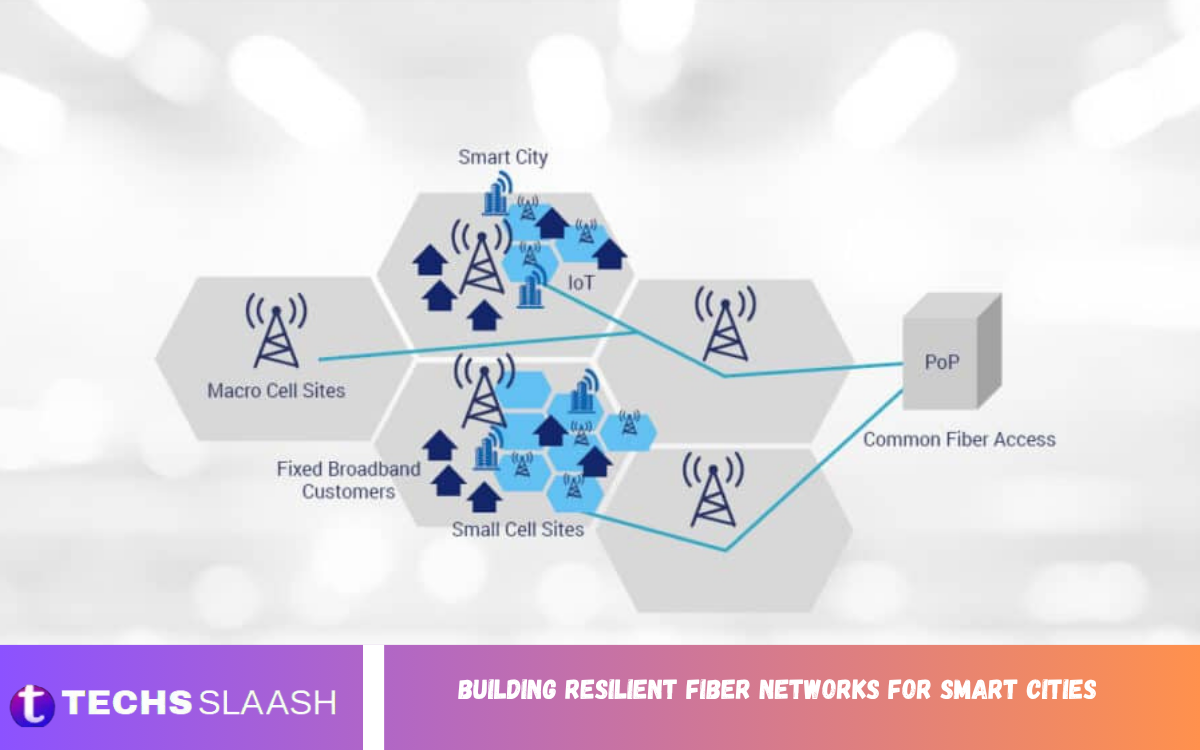
Fiber and 5G technologies complement each other in modern smart-city environments. Although 5G provides wireless connectivity for mobile devices and connected equipment, much of the underlying traffic still needs a high-capacity wired network. Fiber can connect cellular sites, data centers, edge facilities, and other important network locations.
As cities deploy more small cells and advanced wireless services, the need for dependable fiber backhaul and fronthaul infrastructure can increase. A resilient fiber network therefore helps create the foundation required for reliable next-generation wireless connectivity and supports the growing number of connected devices throughout urban areas.
Supporting Critical City Services
A resilient network can support essential services such as emergency response, public safety communications, traffic management, healthcare facilities, water systems, and energy infrastructure. These applications often depend on continuous connectivity, meaning an outage can have consequences beyond ordinary internet disruption.
Prioritizing critical applications during network planning helps municipalities determine where redundancy and protection are most necessary. Important facilities can receive multiple connections, diverse routes, backup equipment, and stronger monitoring. This approach ensures that the most essential services receive greater protection against network failures.
Cybersecurity and Fiber Infrastructure
Physical resilience is only one part of a secure smart-city network. Cybersecurity must also be integrated into network design because connected infrastructure can become a target for unauthorized access, data theft, disruption, and other threats. Network operators should use appropriate security controls to protect management systems and connected equipment.
Segmentation, access controls, encryption where appropriate, authentication, software updates, logging, and continuous security monitoring can help reduce risks. Municipalities should also establish clear procedures for responding to cybersecurity incidents. Combining physical resilience with strong digital security creates a more dependable overall infrastructure.
Managing Costs and Long-Term Investment
Building resilient fiber infrastructure requires careful financial planning. Redundant routes, additional equipment, protective structures, monitoring systems, and regular maintenance can increase initial costs. However, focusing only on the cheapest installation can create higher expenses later when outages, emergency repairs, or capacity limitations occur.
Cities can evaluate investments according to service importance, risk exposure, expected growth, and long-term operating costs. Public-private partnerships, infrastructure sharing, phased deployments, and coordinated construction projects may also help reduce expenses. A strategic investment approach can make resilient connectivity more achievable without sacrificing essential performance.
Planning for Disaster Recovery
Even a well-designed network can experience unexpected failures. Natural disasters, major construction incidents, power interruptions, equipment failures, and other emergencies can affect multiple parts of an urban communication system. Disaster recovery planning helps network operators restore service efficiently when normal operations are disrupted.
Recovery plans should identify critical infrastructure, emergency contacts, replacement equipment, alternative communication paths, and restoration priorities. Regular testing is also valuable because a recovery plan is only useful when teams know how to execute it. Practicing different failure scenarios can expose weaknesses before a real emergency occurs.
Read Also: Top 6 AI Photo Enhancers in 2026
Collaboration Between Cities and Network Providers
Successful smart-city fiber projects often require cooperation between municipalities, telecommunications providers, utility companies, construction firms, and technology vendors. Sharing information about roads, utility corridors, planned construction, and infrastructure locations can help prevent conflicts and unnecessary duplication.
Cities can also establish clear standards for fiber deployment, documentation, access, maintenance, and future expansion. Consistent requirements make infrastructure easier to manage over time and can simplify cooperation among different organizations. Strong coordination ultimately contributes to a more reliable and cost-effective network.
The Role of Edge Computing
Edge computing is becoming increasingly important as smart cities process more information close to where data is generated. Instead of sending every piece of information to a distant data center, edge facilities can process certain workloads closer to sensors, cameras, vehicles, and connected services.
Reliable fiber connections are essential for linking edge locations with the broader network. Resilient fiber infrastructure can help edge applications operate with low latency while maintaining dependable communication with centralized systems. This can benefit applications that require rapid responses, such as traffic management, public safety analytics, and industrial monitoring.
Measuring Network Resilience
Resilience should be measured rather than assumed. Cities and network operators can evaluate metrics such as uptime, outage frequency, restoration time, route diversity, network capacity, equipment health, and incident response performance. These measurements provide useful information about whether infrastructure is meeting operational requirements.
Regular assessments can reveal weaknesses as the city changes. New buildings, roads, devices, services, and population growth can alter network requirements over time. Reviewing resilience periodically allows operators to upgrade vulnerable sections, improve redundancy, and maintain reliable connectivity as smart-city infrastructure evolves.
Frequently Asked Questions
What is a resilient fiber network?
A resilient fiber network is designed to maintain connectivity or recover quickly when cables, equipment, routes, or other components fail. It typically uses redundancy, route diversity, monitoring, and effective maintenance.
Why do smart cities need fiber networks?
Smart cities depend on high-speed communication for connected transportation, public safety, utilities, sensors, surveillance, healthcare, and other digital services. Fiber provides the capacity and reliability needed for these applications.
What is fiber route redundancy?
Fiber route redundancy means providing alternative physical pathways for network traffic. If one route is damaged or unavailable, traffic can be redirected through another path.
How can cities protect underground fiber?
Cities can use protective conduits, carefully planned pathways, accurate infrastructure mapping, appropriate installation depths, warning systems, and coordination with construction and utility teams.
How does fiber support 5G?
Fiber provides high-capacity connections between wireless sites, network facilities, and data centers. This infrastructure supports the backhaul and other connectivity requirements of many 5G deployments.
Can fiber networks support future smart-city technologies?
Yes. Fiber has significant capacity and can support expanding requirements from connected vehicles, sensors, artificial intelligence, video systems, cloud services, and other data-intensive applications.
Why is network monitoring important?
Continuous monitoring helps operators identify performance problems, equipment failures, and unusual conditions quickly. Early detection can reduce downtime and support proactive maintenance.
Does fiber infrastructure need cybersecurity?
Yes. While fiber itself is a physical transmission medium, the equipment and management systems connected to it can face cybersecurity threats. Appropriate access controls, authentication, monitoring, and security practices are important.
How can cities reduce fiber deployment costs?
Cities can coordinate construction projects, share infrastructure where appropriate, use phased deployment strategies, and consider partnerships with telecommunications and infrastructure providers.
How often should a smart-city fiber network be evaluated?
Network performance and resilience should be reviewed regularly, particularly after major expansions, technology changes, construction projects, or significant incidents. Ongoing assessment helps identify new vulnerabilities and capacity requirements.
Conclusion
Building Resilient Fiber Networks for Smart Cities is an essential step toward creating reliable and sustainable urban infrastructure. As cities become increasingly dependent on connected technologies, communication networks must be able to handle greater traffic while remaining operational during failures and emergencies.
A resilient approach combines redundant routes, physical protection, intelligent monitoring, cybersecurity, scalable architecture, disaster recovery, and effective collaboration.
