

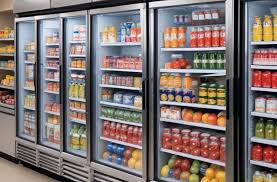
Across American restaurants, cafés, and retail food stores, proper cold storage is essential for food safety and product presentation. Reach-in refrigerators with solid doors hide contents, requiring staff to open doors frequently to check inventory. A commercial display refrigerator with a glass door allows customers and staff to see products without opening the door, reducing cold air loss. This type of refrigeration equipment helps food service operators maintain product visibility while preserving temperature stability.
During a busy lunch service at a New York deli, staff opened the refrigerated display case an average of 40 times per hour. The glass door allowed customers to see beverage options without opening the door, reducing cold air loss by an estimated 60 percent compared to a solid-door unit.
Design and Cooling Principles
The refrigerator uses a dynamic fan cooling system that circulates air evenly throughout the interior. Unlike static cooling systems that rely on cold surfaces to radiate temperature, forced-air circulation maintains consistent temperature across all shelves. This prevents warm spots near the door or top shelves where temperature can fluctuate.
The 60 millimeter thick foam insulation layer reduces heat transfer from the kitchen environment. The double hollow tempered glass door provides thermal insulation while allowing product visibility. The heated door frame prevents condensation from forming on the glass in humid kitchen conditions, maintaining clear visibility of the contents.
Key features include:
- Dynamic fan cooling for even temperature
- 60 mm foam insulation for efficiency
- Double hollow tempered glass door
- Heated door frame to prevent condensation
- CAREL digital temperature controller
- Four automatic defrost cycles daily
Temperature Stability and Food Safety
The CAREL digital controller maintains temperatures between 33 and 40 degrees Fahrenheit. This range keeps perishable foods below the 41 degree Fahrenheit danger zone threshold while preventing freezing of sensitive products like leafy greens or dairy. The controller displays the current interior temperature, allowing staff to verify safe conditions at a glance.
Four automatic defrost cycles per day prevent ice buildup on the evaporator coil. Ice accumulation reduces cooling efficiency and can cause temperature fluctuations. The defrost cycle timing is designed to occur during low-activity periods, minimizing impact on service.
Durability and Sanitation
The SS430 stainless steel exterior resists corrosion from kitchen cleaning agents and food acids. The pre-coated aluminum interior is easier to clean than bare aluminum and resists staining from spilled products. Reinforced adjustable shelves support heavy containers without bending.
Safety Practices and Operational Guidelines
Safe refrigerator operation requires several key practices:
- Maintain clearance around vents for airflow
- Clean condenser coils every three months
- Monitor door seal for gaps or cracks
- Verify temperature display matches probe thermometer
- Keep interior organized for air circulation
Advantages
- Glass door reduces cold air loss
- Dynamic cooling for even temperature
- Digital controller with temperature display
- Heated door prevents condensation
- Stainless steel for durability
- Four automatic defrost cycles
Limitations
- Glass door does not insulate as well as solid door
- Requires regular condenser cleaning
- Higher initial cost than solid-door units
- Not for outdoor installation
Market Trends
Commercial display refrigerators are becoming standard in front-of-house applications where product visibility drives impulse purchases. As food service operators seek to increase sales while reducing energy costs, glass-door merchandisers offer a balance of visibility and efficiency. Future designs may include LED lighting that automatically adjusts brightness based on ambient light and smart defrost systems that activate only when needed. Food service operators should evaluate display refrigerators for any retail or service counter where product visibility affects sales. The combination of 23 cubic foot capacity and dynamic cooling makes this refrigerator suitable for diverse American food service applications.
