


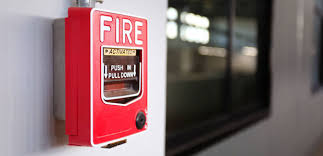
Fire alarm systems are classified into different categories based on their coverage and purpose, with L1, L2, and L3 representing different levels of life protection in accordance with British Standard BS5839 guidelines.
Maximum Life Protection Systems
L1 systems represent the highest tier of life protection in fire alarm classifications, designed to provide the earliest possible warning of fire throughout an entire building. These systems are characterized by their comprehensive coverage and are mandated in environments where occupant safety is paramount due to factors like sleeping risk, vulnerable populations, or complex evacuation procedures.
The primary goal of an L1 fire alarm system is to maximize occupant safety by providing detection early enough to allow for safe evacuation. This is achieved through a network of detectors strategically placed to monitor all potential fire origins, including:
- All occupied spaces
- Unoccupied areas such as storage rooms
- Voids and roof spaces
- Larger cupboards where fires could potentially start
When selecting detector types for an L1 system, careful consideration must be given not only to the fire risks in each area but also to the specific needs of the occupants. For example, heat detectors are generally not recommended as the primary detection method in bedrooms, as they may not provide sufficiently rapid warning to protect sleeping occupants.
L1 systems are typically deployed in:
- Care homes
- Hospitals
- Hotels
- Other facilities where occupants may be vulnerable or unfamiliar with evacuation routes
For example, a care home would implement an L1 system throughout all areas, including resident rooms, corridors, and service areas like laundry rooms. This comprehensive coverage is essential due to the vulnerability of the occupants and the potential complexity of evacuation procedures.
While L1 systems represent a significant investment compared to other classifications, they offer the highest standard of life protection available. The comprehensive coverage ensures that fires are detected at the earliest possible stage, maximizing the time available for evacuation and emergency response, which is particularly crucial in buildings with vulnerable occupants or complex layouts.
Automatic Fire Detection Coverage
An L1 fire alarm system provides automatic fire detection coverage throughout the entire building, ensuring no area is left unmonitored. This comprehensive approach includes detection devices in all rooms, corridors, compartments, voids over 800mm in height, and other spaces where a fire could potentially start.
The system employs a strategic placement of various detection technologies to ensure early warning:
- Smoke detectors are installed in most areas, with each point smoke detector covering a maximum area of 100 square meters
- Heat detectors may be used in areas where smoke detectors might cause false alarms (such as kitchens)
- Specialized detectors for specific risks in certain areas
- Manual call points supplementing the automatic detection system
Unlike L2 systems, which provide targeted protection to specific high-risk areas and escape routes, L1 systems leave no part of the building unmonitored. This eliminates the risk of fires developing undetected in rarely used spaces. For instance, in a care home with an L1 system, detection devices would be present not only in resident rooms and corridors but also in utility rooms, storage areas, roof spaces, and other areas that might be overlooked in less comprehensive systems.
The automatic detection components of an L1 system can be integrated with addressable fire alarm technology, allowing precise identification of which specific detector has been activated. This feature enables responders to quickly locate the fire’s origin, potentially reducing response time and improving evacuation management.
For buildings with complex layouts or vulnerable occupants, this level of coverage provides crucial additional minutes for evacuation. In care settings, where residents may have mobility issues or require assistance, these extra minutes can be life-saving. The comprehensive coverage ensures that fires are detected at their earliest stages, maximizing the available time for safe evacuation and emergency response.
High-Risk Area Protection
L2 fire alarm systems provide a strategic approach to fire protection by focusing on high-risk areas while maintaining essential coverage of escape routes. Unlike the comprehensive L1 systems, L2 installations offer a more targeted solution that balances protection with cost-effectiveness.
The key components of an L2 system include:
- Automatic fire detection on all escape routes
- Protection in rooms that open directly onto escape routes
- Coverage in designated high-risk areas throughout the building
- Manual call points at exits and strategic locations
High-risk areas that typically receive priority coverage in an L2 system include kitchens, boiler rooms, electrical plant rooms, and storage areas containing flammable materials. These locations present elevated fire hazards due to equipment, activities, or materials that could potentially ignite or accelerate a fire.
For example, in a large office building with an L2 system, automatic detection would be installed in corridors, stairwells, server rooms, and kitchen facilities, but might not extend to every individual office or meeting room. This targeted approach provides protection where fires are most likely to start or spread rapidly, while maintaining essential coverage of evacuation routes.
The selection of detection technology is tailored to each area’s specific risk profile. While smoke detectors are commonly used throughout escape routes, heat detectors might be deployed in kitchens or boiler rooms where smoke or steam could trigger false alarms. This customized approach ensures reliable detection while minimizing disruptions from unwanted alarms.
L2 systems represent a middle ground between the comprehensive L1 systems and the more limited L3 installations. They provide substantial life protection by securing evacuation routes and monitoring high-risk areas, making them suitable for many commercial buildings where the fire risk is moderate but significant. This balanced approach delivers effective protection while potentially reducing installation and maintenance costs compared to full L1 coverage.
For businesses assessing their fire protection needs, an L2 system may be appropriate when a fire risk assessment identifies specific high-risk areas requiring protection, but a full L1 system is not deemed necessary based on the building’s use, occupancy, or construction.
Advanced Suppression Technologies
Advanced fire suppression technologies have evolved significantly to address diverse fire risks across various environments. These sophisticated systems go beyond traditional methods by offering targeted solutions that minimize damage while maximizing effectiveness.
Water-based systems remain fundamental but have advanced considerably beyond basic sprinklers. Water mist systems discharge fine water droplets at high pressure, creating a mist vapor that expands 1,700 times when evaporating. This approach provides superior cooling and oxygen displacement while using significantly less water than conventional sprinklers, reducing potential water damage. These systems are particularly valuable in environments containing sensitive equipment or valuable assets.
For specialized applications, several alternative suppression technologies are available:
- Clean agent gas systems utilize environmentally friendly gases like INERGEN or Novec 1230 that suppress fires without leaving residue or causing damage to sensitive equipment. These systems are ideal for data centers, server rooms, and areas with valuable electronics.
- Foam suppression systems create a blanket over flammable liquids, preventing the release of combustible vapors. These are commonly deployed in fuel storage areas, aircraft hangars, refineries, and industrial facilities where flammable liquid fires pose significant risks.
- Dry powder and chemical systems interrupt the chemical reaction of combustion and are effective for specific industrial applications. These systems can be pre-engineered for piped installations or deployed as standalone units.
- Kitchen fire suppression systems like the Ansul system utilize specialized liquid suppressants activated either manually or automatically through fusible links that melt during a fire. These systems target cooking appliances, flues, and ducts with specialized nozzles designed for kitchen environments.
Modern fire suppression systems employ various activation methods to ensure rapid response:
- Automatic activation through integrated detection systems that trigger suppression when fire is detected
- Heat-activated devices such as fusible links that respond to temperature thresholds
- Flame detection using optical sensors that identify the presence of flames
- Manual activation options through strategically placed pull stations or push buttons
The future of fire suppression is being shaped by emerging technologies including aerosol-based systems that release ultra-fine particles to disrupt combustion, oxygen reduction systems that create fire-inhibiting environments, and AI-integrated solutions that optimize detection and response. These innovations aim to enhance effectiveness while reducing environmental impact and collateral damage.
For complex environments, containerized and custom-engineered solutions provide comprehensive protection. These systems can be designed specifically for high-value assets or challenging locations, integrating detection, suppression, and monitoring capabilities in a single package.
When selecting a suppression system, factors including the nature of fire risks, environmental considerations, regulatory requirements, and the specific assets being protected must all be carefully evaluated to ensure optimal protection.
Summary
Fire alarm systems and suppression technologies must be chosen based on the specific needs, risks, and occupancy types of a building. L1 systems offer the most comprehensive life protection with full building coverage, while L2 systems provide focused protection of escape routes and high-risk areas. Advanced fire suppression technologies add another layer of defense, particularly in sensitive or high-value environments. By understanding the classifications and available technologies, decision-makers can implement fire protection strategies that ensure safety, compliance, and peace of mind.
